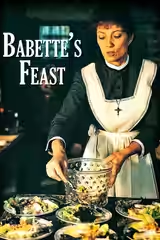
Most critics warm to Babette’s Feast, and the reviews are strikingly steady across the twenty-five years they span. The praise gathers around the same table: the banquet itself, which several reviewers describe as sumptuous and regenerative, and the way Axel lets it become a quiet reckoning for villagers who have spent their lives refusing pleasure. Audran’s performance draws particular admiration, as do the restraint of the storytelling and the film’s handling of exile, self-sacrifice and thwarted love. More than one critic insists it is a parable rather than middlebrow comfort.
The reservations are few and mild. Time Out finds the film cosy and appetising but slightly complacent, pitched at less adventurous viewers, and that is the nearest thing to a dissent. Nobody argues the film is bad; the spread runs from admiring to rapturous, and the gap is mostly a matter of how much weight a gentle drama can be asked to carry.