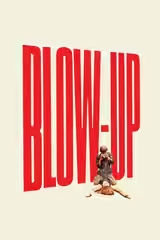
Bowen finds the film moving and influential, though its critique of art’s limitations is tempered by an unexpectedly idealistic turn. He praises the sequence in which Thomas enlarges photographs of the park, turning them into an unsettling meditation on truth and perception.
Newman calls the film an absolute must, framing it as a portrait of swinging alienation rather than a straightforward mystery. He praises Antonioni’s eerie, attractive portrayal of London away from its familiar tourist settings.
Murray finds the film’s central mystery less compelling today than its atmosphere, but still recommends enjoying its mod decadence and ennui. He singles out Antonioni’s sour, exhausted view of Swinging London and the film’s deliberately unresolved approach to meaning.
The article appears to be a review of Antonioni’s Blow-Up, but its text is inaccessible. I cannot determine the critic’s verdict or what the review singles out for praise or complaint.
The critic calls the film an absolute must despite considering it Antonioni’s worst, while faulting it for shallowness. They single out its glossy depiction of swinging London and its unconvincing party and club scenes for criticism.
The review describes a film with flashes of brilliance but ultimately finds it weighed down by pretension and longueurs. It also says the film fails as a portrait of its subject.
The critic finds the film’s intended meaning inaccessible and calls its commentary on modern humanity a failure. They single out the London backgrounds and the leads’ performances for making an impression.
The review finds the film’s style impressive but sometimes obscuring, and its experience can feel numbing. It singles out Antonioni’s direction and the film’s compelling use of urban space for praise.
Ordered by the weight we give each publication, then by score. Scores are normalised to 100; * means inferred from an unrated review. Summaries are ours, not quotations; follow the links for the reviews themselves. How we rate