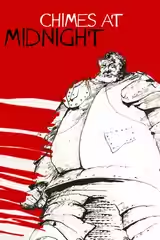
Most critics regard Chimes at Midnight as one of Welles’s major works, and the praise gathers in two places. The first is his own Falstaff, described as mercurial and moving, with several reviews noting the lonely pride and fear beneath the swagger. The second is the Battle of Shrewsbury, singled out again and again for its staging, its rhythmic editing and its refusal to make violence look handsome. Gielgud’s performance draws mention, as does the poignancy of Falstaff’s treatment by Hal, and more than one review credits Welles with making a great deal from a small budget.
The reservations are mild and remarkably consistent: distracting flaws, an unfinished feel, an occasional lack of coherence. Nobody lets these lower the verdict beyond a shrug. The spread is narrow, and the only mixed notice is also the earliest, from Variety in 1965, which admires the performance more than the film around it. The warmest reviews arrive with the 2016 restoration.