Critics’ reviews

Constantine (2005)

12 reviews from 12 publications. Critics’ score 50: 2 positive, 6 mixed, 4 negative.

Back to our review of Constantine

50
Positive
2
Mixed
6
Negative
4

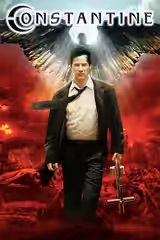
The consensus on Constantine is mixed, with praise clustering around its Gothic atmosphere, inventive visual details and special effects. Even several less persuaded critics admire the imagery and the sense of supernatural unease. Performances draw more selective approval: Tilda Swinton’s Gabriel and Rachel Weisz receive praise, while Eye for Film also welcomes the chemistry between Weisz and Keanu Reeves. The recurring reservation is that the images offer more interest than the story or its religious ideas.

The reviews range from qualified enjoyment to outright rejection. Empire finds a wry pleasure despite weaknesses in the script and supporting characters; elsewhere, complaints centre on confusing exposition, thin substance and Reeves’s unconvincing performance. Time Out treats his wooden portrayal as a central problem, rather than a drawback the atmosphere can overcome. The New Yorker offers the sharpest dissent, regarding the use of Catholic doctrine and imagery as exploitative spectacle.

Empire
1 January 2000 · William Thomas
70*

The critic finds Constantine an enjoyable, wry pleasure despite flaws in its script and supporting characters. They praise its eerie, stylishly Gothic world and inventive details.

Read the full review →
Screen Daily
8 February 2005 · John Hazelton
64*

The accessible page identifies this as a review, but its text is behind a registration wall. The critic’s verdict and any specific praise or complaint are not visible.

Read the full review →
The New York Times
18 February 2005
64*

The page appears to be a review of the 2005 film, but its verdict cannot be determined from the accessible text. No specific praise or complaint is available to report.

Read the full review →
RogerEbert.com
17 February 2005 · ★★½/4 · Roger Ebert
62

Ebert finds the film visually stylish but lacking in substance. He singles out its striking visual style, while faulting the film for having little point.

Read the full review →
Radio Times
★★★ · Leslie Felperin
60

Felperin finds the adaptation diluted but visually arresting. The striking visuals stand out, while the supernatural exposition and relic subplot are criticized as silly.

Read the full review →
Slant Magazine
17 February 2005 · ★★/4 · Nick Schager
50

Schager finds the film’s religious ideas and story unoriginal, with Keanu Reeves’s performance too vacant to make the protagonist convincing. He praises Francis Lawrence’s skill at creating an atmosphere of otherworldly unease.

Read the full review →
The Guardian
20 March 2005 · Philip French
35*

French finds the film obscure and ludicrous, though not entirely unenjoyable. He singles out its expensive special effects as the punchline to its moral lesson.

Read the full review →
Time Out
· LZ
30*

The review is dismissive of the film. It singles out Keanu Reeves’s wooden portrayal as a central weakness.

Read the full review →
Variety
7 February 2005 · Brian Lowry
30*

Lowry finds the film stylish but ultimately weak, with a confusing narrative and little substance. He praises its powerful imagery, especially its depiction of hell and Tilda Swinton’s angel Gabriel.

Read the full review →
The New Yorker
27 February 2005 · David Denby
15*

Denby condemns Constantine as a tawdry, exploitative spectacle. He singles out its use of Catholic doctrine and imagery as schlock.

Read the full review →
Eye for Film
30 March 2005 · John Gallagher
75*

The critic finds the film enjoyable and engaging despite a couple of irritating, clichéd elements. They praise the special effects and the chemistry between Keanu Reeves and Rachel Weisz.

Read the full review →
Den of Geek
6 March 2013 · 2 Out of 5 Stars · Tony Sokol
54*

The review finds the film overloaded with clumsy gloom and ultimately too dingy to leave a bleak impression. It praises Rachel Weisz’s multilayered performance and Tilda Swinton’s morally ambiguous Gabriel.

Read the full review →

Ordered by the weight we give each publication, then by score. Scores are normalised to 100; * means inferred from an unrated review. Summaries are ours, not quotations; follow the links for the reviews themselves. How we rate