Óscar Pedraza’s adaptation of Mercedes Ron’s novel has a handsome cast, a clean look and a plot that goes exactly where its first ten minutes promise. It is competent and airless, and the two leads never once make us believe it would cost them anything to touch.
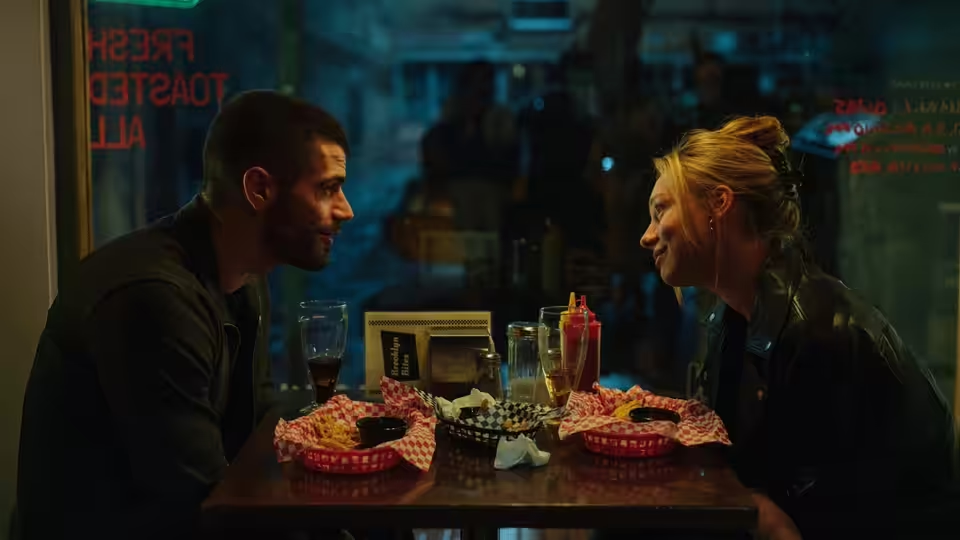
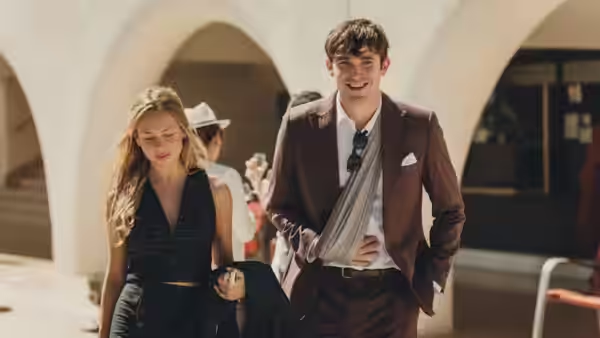
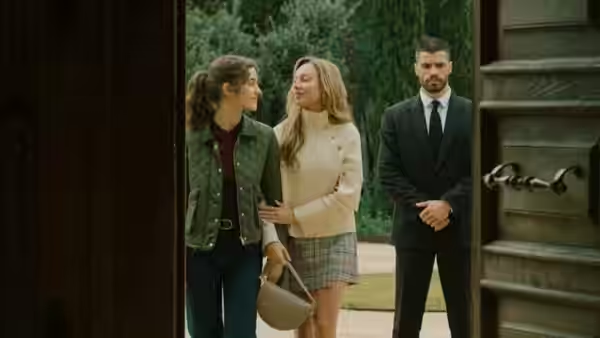
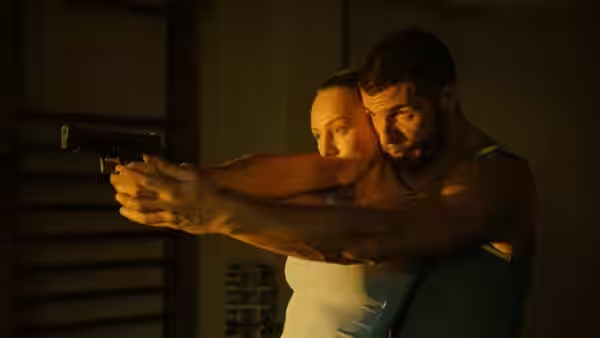
Óscar Pedraza’s Drawn Together, released in Spain as Enfrentados: Marfil, turns Mercedes Ron’s novel into 104 minutes of a rich man’s daughter and the man paid to keep her breathing. Marfil (Ester Expósito) lives inside money that comes with enemies. Sebastian (Hugo Diego Garcia) is the bodyguard, and the film knows from their first look where it is going. So do we. The only question a film like this has to answer is whether the walk there is worth taking, and here the answer is mostly no.
Sofía Cuenca’s screenplay keeps Ron’s pieces on the board: the money, the men who circle it, the girl watched wherever she goes. The gangster strand exists to supply guns and reasons for two people to be alone in a car, which is a perfectly honourable job for a gangster strand. What it does not supply is a scene in which anyone says a thing they did not have to. Alejandro Cortés (Pablo Molinero) glowers. Logan (Lluís Homar) is given weight and nowhere to put it. Ray (Joaquín Ferreira) turns up when a threat is required and leaves when it has been delivered.
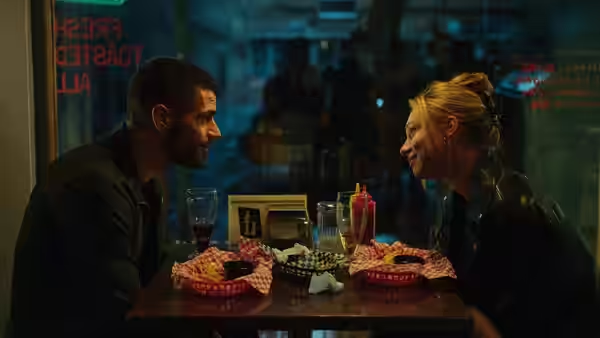
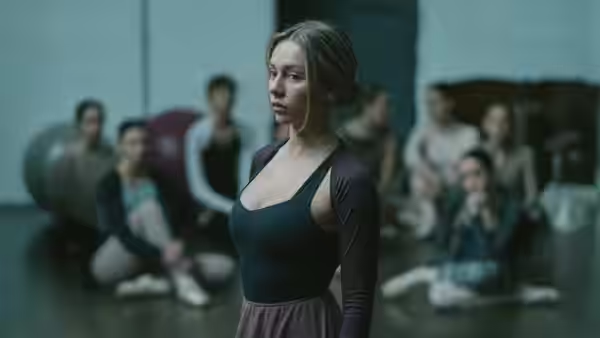
Expósito has a still, watchful face that David Acereto’s camera plainly likes, and for the first half hour that stillness reads as a woman biding her time. Garcia is handsome and level in the way the genre thinks bodyguards ought to be. The trouble is that a forbidden romance needs the forbidding to hurt, and nothing between them ever does. We waited for the moment when their looks across a room would turn into something we could feel from a sofa, and when the kiss finally came we caught ourselves noting how well lit it was. That is not what a kiss is for.
The craft is tidy and tells on the film. Acereto shoots everything bright and clean, glass and white walls and cars that have just been washed. Paula Jaraba’s interiors are expensive rooms nobody appears to live in, which suits Marfil’s situation but gives the eye nothing to rest on. Elixabet Nuñez changes Expósito’s wardrobe more often than the script changes her mind. Luis Almau’s score arrives a beat before each scene to explain what the scene wants from us, and Antonio Frutos cuts the fights so neatly that you can see every join; punches land without weight and bodies fall without consequence.
The plain ancestor is The Bodyguard, from 1992, and the film does not pretend otherwise. Against that model it is shorter, quieter and less interested in the job itself; we never learn how Sebastian does what he does, only that he is there. The odder comparison is with its own producers. Álex de la Iglesia and Carolina Bang put their names on this, and de la Iglesia’s films as a director, from The Day of the Beast onwards, are loud, crowded and happy to make a mess. None of that appetite has rubbed off. This is the most orderly thing to carry his name in years, and order is not what it needed.
Only one review has reached us so far and it is unkind, calling the film a bland rerun of a story we have all seen. We are close to it. We would add that the actors are not the problem; Expósito in particular is doing a real, small piece of work in a film that keeps cutting away from it to show us another car arriving at another gate.
Readers of Ron’s book will get their scenes in the right order and their two leads looking the way they imagined, and for them that may be enough. Anyone else should know that at 104 minutes it never feels long, which is the kindest thing we can say about the editing, and that the second half takes turns we will not describe but which you will see coming from the first act.