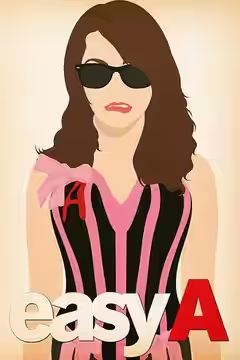
Easy A is a funny high-school comedy carried by Emma Stone and an unusually enjoyable adult cast. The gossip becomes less convincing as it goes, but the performances make it worth an evening.
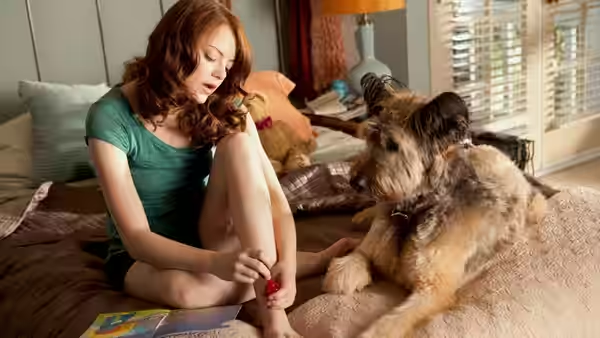
Easy A is a funny, uneven high-school comedy with an unusually good person to spend 93 minutes watching. Emma Stone makes Olive alert to the absurdity of her surroundings without letting her seem immune to them. Will Gluck gives her room to be quick and occasionally awkward, and that combination carries the film through some doubtful writing. We recommend it to anyone who likes the genre, with a warning that its treatment of reputation is sharper than its plotting.
Bert V. Royal writes dialogue that gives his lead plenty to do, occasionally more than anyone could reasonably manage between lessons. Olive’s clever answers sound as though they occur to her as she speaks, which is an achievement when the writing is this pleased with its own wit. The performance leaves enough uncertainty visible to make her worth caring about. A comedy about school reputations needs that vulnerability. A heroine who seemed comfortably above everybody else would soon become tiresome, however good her lines.
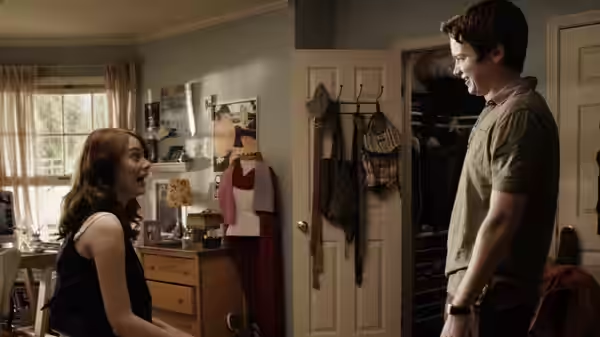
The adult cast provides another reason to stay. Patricia Clarkson plays Rosemary and Stanley Tucci plays Dill, Olive’s parents, with an ease that makes all that wit feel like a family habit. We laughed hardest at their exchanges with Olive, because the teasing remains affectionate even when the dialogue is working hard. They give their co-star something to respond to besides the pressure of carrying the comedy. These performances suggest people who enjoy one another’s company, a pleasure that the school material cannot always provide.
The craft is capable without being especially memorable. Michael Grady’s cinematography keeps attention on the performers, while Marcia Hinds’s production design does little to compete with them. Both choices serve a dialogue-led comedy, though neither gives the school much personality of its own. Brad Segal’s music is similarly undemanding, and we came away remembering the delivery of the jokes rather than anything in the score.
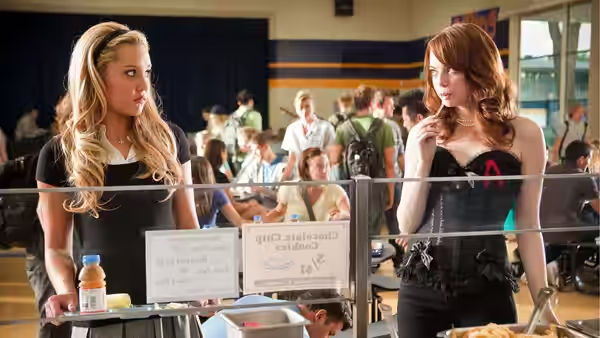
Susan Littenberg’s editing is most persuasive when sustaining individual exchanges; the whole story proves harder to keep moving. The early comic energy is difficult to maintain, and the later stretch feels increasingly scattered. Much of that difficulty belongs to the screenplay, which asks the gossip to carry more weight than its plausibility allows. The effort becomes noticeable when another judgement about Olive matters enormously to the plot, although the people making it have scarcely become convincing enough to command our attention.
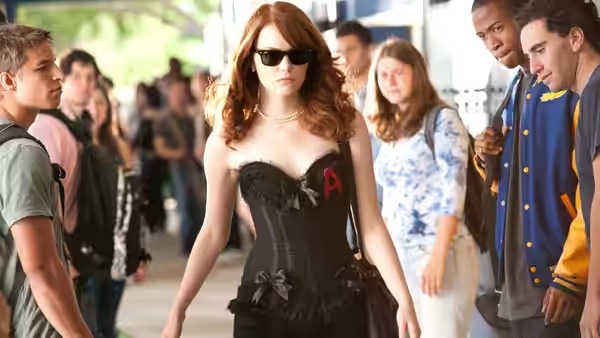
The references to The Scarlet Letter suggest that the film wants to think seriously about public shame. It makes a start, but the literary connection never seems as useful as the lead performance’s understanding of adolescent confusion. Teen comedy can accommodate a school full of exaggerated behaviour, and there is nothing wrong with enjoying that fantasy. Here, the attempts at social observation encourage us to question things the jokes need us to accept. The film is less assured when it asks its school gossip to explain something larger about people.
Those shortcomings keep it from being as perceptive as its dialogue initially promises. They do not cancel the pleasure of a cast that knows how to deliver a joke without making every character sound entirely heartless. The parents, especially, supply warmth without demanding that the comedy stop to acknowledge it. If teen comedy is your choice tonight, Emma Stone makes this one worth the trouble.