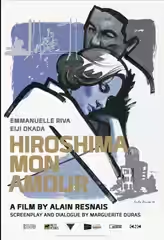
Most critics respond warmly to Hiroshima Mon Amour, with praise clustering around its treatment of memory and the ways its images, dialogue and editing bring past and present together. The reviews admire the associative cutting, documentary-informed imagery and inventive storytelling, particularly where the lovers’ histories meet the catastrophe of Hiroshima. Several find considerable emotional force in these methods, praising the performances, Marguerite Duras’s dialogue and the expressive cinematography of the nighttime riverside scene.
The spread is wide, though the reservations are concentrated rather than shared across most reviews. Variety offers the clearest dissent: it respects the sombre, tactful direction but finds the film too literary and cerebral, its pace plodding and its love story insufficiently palpable. The central disagreement is over emotional impact: most critics find longing, regret and trauma in the formal experimentation, while Variety finds the lovers remain too symbolic to feel convincing.