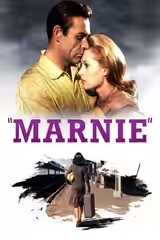
The reviews split almost evenly, with as many critics dismissing Marnie as admiring it. Where praise lands, it lands on Hitchcock’s direction: even The New Yorker, which finds the film trashy and badly acted, enjoys his abrupt, showy visual storytelling. Tippi Hedren draws steadier support, with Empire singling out her scenes with Marnie’s mother and the injured horse, and Variety calling her credible while blaming Hitchcock for giving her too little to vary.
The reservations cluster around the film’s finish and its surfaces. Time Out notes the common complaint that it lacks suspense; Radio Times warns that the artificial sets and back projection will not suit everyone; Variety finds the climax misses its point, and Sight and Sound thinks the whole thing falters after a promising opening. The spread is wide, from Slant’s view of it as Hitchcock’s defining late work to reviews that find the performances and later stretches rough. The admirers tend to read it as psychology rather than as a thriller.