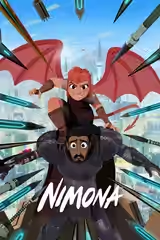
Most critics like Nimona, and the praise gathers in two places: the animation and the title character. The hybrid, comic-book-derived look and the medieval-futurist setting are singled out again and again, and several reviews credit Chloë Grace Moretz’s voice performance with carrying the character’s mischief and hurt. The film’s treatment of queer identity and belonging is widely judged sincere rather than preachy, and the relationship between Nimona and Ballister is called nuanced more than once.
The reservations are mild and cluster around the story. Several critics find the plot predictable even as they enjoy it, and admirers of the source comic regret how much has been changed; Polygon in particular mourns the lost complexity of Ballister and Ambrosius’s relationship. Vulture thinks the ending settles for hope where it might have asked harder questions. The spread is narrow, with one clear dissenter: Eye for Film finds the film overfamiliar and short on a personality of its own.
E
Empire
21 June 2023 · Ben Travis
90*
Travis finds Nimona an irreverent, sincere revisionist fairytale that succeeds both visually and narratively. He particularly praises its distinctive hybrid animation and Nimona’s rebellious, funny energy.
The critic finds the film a consistently delightful, subversive animation and wants a sequel. They especially praise Chloe Grace Moretz’s uproarious voice performance and the character design that brings Nimona’s emotions to life.
Ide finds the film a rambunctious, engaging adventure with a serious message about tolerance and LGBTQ+ acceptance. She singles out its distinctive animation and striking medieval-futurist setting for praise.
The critic finds Nimona a nuanced, bittersweet story of belonging that challenges authoritarianism. They praise its openly portrayed gay romance and storybook animation style.
Murray finds Nimona imaginative, boisterous and politically pointed without becoming preachy. He praises its puckish wit, adventurous pace and celebration of living freely at the margins.
Willmore finds the film refreshing and worthwhile, though its ending clings to the hope of belonging rather than confronting the work of changing society. She praises the nuanced relationship between Nimona and Ballister and the film’s clear-eyed treatment of queer identity and the status quo.
Debruge finds the film’s irreverent, inclusive spirit appealing, though its story becomes surprisingly predictable. He especially praises the distinctive, comic-book-inspired animation style.
The accessible page identifies this as an Annecy review, but its verdict is behind the paywall. The standfirst highlights the voice performances, without revealing what the critic praises or criticizes.
The critic calls Nimona a triumph, praising its fresh story and deftly integrated themes. He especially singles out the vibrant animation and Chloë Grace Moretz’s energetic voice performance.
Mullor calls the film one of the year’s best and a bold, entertaining work. She singles out its striking visuals and Nimona’s refreshing, gender-fluid characterization.
The critic finds the film wonderful, creative and heartfelt, despite a predictable plot. They especially praise its chaotic action and thoughtful message about challenging prejudice and labels.
The critic calls the film a bold, worthwhile animated adventure that succeeds despite some visual roughness. They single out Nimona as a fantastic, relatable protagonist and praise the film’s vibrant world and queer-coded story.
Wright finds the adaptation thoughtful and enjoyable, preserving the story’s queer politics despite changes to its scope. They praise the affectionate portrayal of Nimona and Goldenloin’s relationship, while faulting the reduced attention to disability and the use of familiar songs.
The film is a fun, worthwhile adaptation, but the critic regrets how much it changes the comic’s story. They single out the lost complexity of Ballister and Ambrosius’ relationship as the adaptation’s biggest shortcoming.
Kermode finds the film overfamiliar and lacking depth, ultimately failing to develop a personality of its own. She praises its queer themes and notes that young neurodivergent and LGBTQ+ viewers may relate to Nimona.
Ordered by the weight we give each publication, then by score. Scores are normalised to 100; * means inferred from an unrated review. Summaries are ours, not quotations; follow the links for the reviews themselves. How we rate