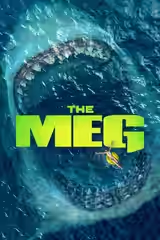
The reviews lean towards disappointment, though most critics find at least some entertainment in The Meg’s giant-shark premise. Praise centres on Jason Statham, whose charm and physical commitment keep several reviewers interested when the dialogue and drama do not. The shark encounters earn qualified approval for their scale, absurdity and occasional tension. Even some sceptical reviews acknowledge that individual suspense sequences work, but enthusiasm for the spectacle rarely extends to the whole film.
The main divide is over how much fun survives the weak dialogue, uneven tone and stretches spent with uninteresting characters. Opinions on the effects and pacing vary, and verdicts range widely. Consequence enjoys the cast’s commitment and welcomes the attention paid to the characters; The Ringer finds the film lifeless despite Statham. Between those positions, the recurring complaint is straightforward: a film about an enormous shark ought to provide more excitement than this.
S
Screen Daily
9 August 2018 · Demetrios Matheou
64*
The review text is behind a paywall, so its verdict cannot be determined. No specific praise or complaint is visible in the accessible text.
Schwartz finds the film successful as a Jason Statham vehicle, despite its adolescent quality beside Jaws. He praises Statham’s screen presence for commanding attention even when the computer-generated shark is on screen.
Strong finds the film overcomplicated and short on thrills, leaving its potential largely wasted. She singles out Statham’s world-weary charm as the main source of laughs.
Ide finds the film an enjoyable but silly romp, weakened by a cliché-ridden script and tonal problems. She praises Jason Statham’s jaunty charm, which helps carry the film despite its flaws.
Farley finds the film forgettable but undeniably fun, best enjoyed as a ridiculous summer spectacle. He praises the tension in Jonas’s high-risk encounters with the shark, while criticizing the weak effects and flat dialogue.
Kohn finds the film a guilty pleasure when Statham battles the shark, but says it falters between cartoonish action and conventional sci-fi drama. He singles out Statham as the most effective part of the film, while criticizing the shark’s limited animation and the weak dialogue.
Jones calls the film entertaining but toothless, and says it is big, glossy and stupid without being fun enough. The review’s accessible description singles out its monster-movie entertainment value, while the headline suggests that limited fun is the main complaint.
Vishnevetsky finds the film dull, poorly paced, and less entertaining than its giant-shark premise promises. He singles out the late beach attack’s potential for gleeful mayhem, which the gore-free PG-13 treatment fails to deliver.
Norman finds the film a weak, often ridiculous attempt at so-bad-it’s-good entertainment. He singles out its implausible details and flat characters, while conceding that some of the jokes are genuinely funny.
The review finds the film less fun and frenetic than its premise promises. It faults the film for failing to deliver the lively, trashy thrills audiences might expect.
Chang finds the film derivative and surprisingly low on tension, though he sees some life in its better-executed suspense sequences. He singles out Jonas’s attempt to attach a tracking device to the shark as scary, ridiculous and neatly executed.
Gleiberman finds the film a generic, disappointing shark thriller, neither good enough nor bad enough to be truly entertaining. He praises Jason Statham’s screen presence and the spectacle of the giant shark, but faults the restrained attacks and lack of tactile terror.
Yoshida finds the film neither smart nor dumb enough to be fun, and criticizes its slow focus on human characters. She praises a few taut man-versus-shark sequences but says the film neglects the shark’s scale and wastes its potential.
The critic finds the film boring and unsuccessful at balancing action with self-aware fun. They single out Rainn Wilson as the only cast member who seems to be enjoying himself.
McCarthy pans the film as mechanical, bland, and emotionally empty. He singles out Jason Statham’s swimming as its only notable strength, while faulting the editing and derivative storytelling.
The critic finds The Meg preposterous but thoroughly entertaining, an ideal late-summer movie outing. They praise its committed, charismatic cast and the attention the film gives its characters.
The critic finds The Meg uneven but ultimately a rollicking creature-feature success. The giant-shark action and Jason Statham’s fearless performance are singled out for praise, while the dramatic scenes drag.
Fletcher finds The Meg shamelessly stupid but exuberantly entertaining, calling it the best worst movie of the summer. She praises its bonkers creature-feature set pieces, while criticizing the romance and attempts at emotional nuance.
Grierson finds the film passable but forgettable, criticizing its lazy execution and lack of lasting impact. He praises its brisk pacing and occasional diverting shark attacks, while faulting the hokey dialogue and strained emotional moments.
The review is broadly unimpressed, finding the film’s familiar CGI shocks and repetitive storytelling uninspiring. It gives Jason Statham credit for helping the film deliver the entertainment it promises.
The critic finds the film entertaining in bursts but weighed down by dull characters and slack pacing. The realistic visual effects and the Meg itself provide the strongest scares.
The critic sees The Meg as a missed opportunity: too silly to be scary and too unimaginative to sustain interest. They single out the frequent, oversized shark appearances as quickly dulling the threat.
Nayman finds the film so dull and lifeless that even Jason Statham cannot make it engaging. He particularly criticizes its bland visual style and lack of gore or tension.
Ordered by the weight we give each publication, then by score. Scores are normalised to 100; * means inferred from an unrated review. Summaries are ours, not quotations; follow the links for the reviews themselves. How we rate