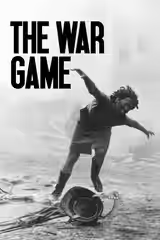
The critics are in broad agreement that Peter Watkins’s film still works. Most call it grim, horrifying and necessary, and the praise clusters on the same thing: the newsreel manner, the documentary techniques that make an imagined nuclear attack on Britain look like something a camera happened to record. Several single out the research behind it and the discipline of Watkins’s direction, and critics writing decades apart return to the same pictures of social collapse and ash-covered schoolchildren, which they find they cannot shake.
The spread is narrow, running from warm to unreserved, and nobody dismisses it. The one qualified voice is Slant Magazine, which rates it more modestly than the rest while still calling it an essential warning about war and the officials who withhold the truth; the reservation is one of degree rather than kind. Some of the older notices are more concerned with the film’s history with the BBC than with the film itself, so the consensus rests on fewer detailed verdicts than the count suggests.