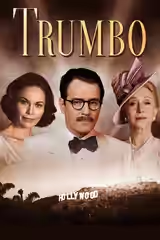
The reviews are divided almost down the middle, with a slight lean towards approval. Most critics agree the film is lively and easy to sit through, and the praise gathers around Bryan Cranston, whose performance is repeatedly called commanding and is often the reason a lukewarm review tips into a positive one. The supporting cast draws warm notices too, especially Helen Mirren’s Hedda Hopper, John Goodman’s scene of comic force and Michael Stuhlbarg’s Edward G. Robinson. Several critics single out the black-market screenwriting episodes as the film’s most entertaining stretch.
The reservations are consistent. The film is called conventional, cautious and morally simplistic, with the blacklist and Trumbo’s politics flattened into clichés, and a few find the story played too much for laughs. The spread is wide: Deadline calls it hugely entertaining and absorbing, while Collider finds it flat and dramatically unconvincing. The Evening Standard dissents on Cranston too, finding the performance overworked.
L
Los Angeles Times
5 November 2015 · Rebecca Keegan
75*
Keegan finds the film engaging and timely, though occasionally too conventional and morally simplistic. She especially praises Bryan Cranston’s confident performance and the vivid period details, including the costumes.
The review finds the film visually and structurally plain but ultimately positive, thanks to the heroism of its subject. It singles out Bryan Cranston’s commanding performance as the film’s chief strength.
The review finds the film rewarding despite a slow start and an overworked performance from Bryan Cranston. It praises Helen Mirren’s portrayal of Hedda Hopper and John Goodman’s comic force.
Robinson finds the film an engaging but unfocused history lesson that never makes its central figure’s genius convincing. She praises the vivid supporting performances, while criticizing the film for failing to show what made Trumbo’s writing effective.
13 September 2015 · festival review · Henry Barnes
70*
Barnes finds the film lively and ultimately a fitting tribute, though its Hollywood self-regard and tonal wobbles invite skepticism. He praises Helen Mirren’s sharply balanced portrayal of Hedda Hopper.
Erbland finds the film a serviceable but shallow biopic, weakened by uneven direction and a script that never digs deeply into its subject. She praises Michael Stuhlbarg’s Edward G. Robinson as nearly transcendent and singles out John Goodman’s scene as the film’s best.
Simmonds finds the biopic fast and funny but somewhat flimsy, and says it fails to convey the full injustice of the blacklist. She praises Bryan Cranston’s commanding, multifaceted performance as the film’s heart and soul.
Lane finds the film entertaining but hampered by a story whose ethical steadfastness leaves little dramatic development. He praises Bryan Cranston’s stylish portrayal and the lively supporting performances, while questioning whether Trumbo is more compelling as a figure in the shadows.
The critic finds the biopic bland and overly cautious, saying it drains power from Trumbo’s story. He faults its simplistic screenplay and shallow treatment of Trumbo’s political ideals and compromises.
The review presents Dalton Trumbo’s story as compelling but says it suffers from being played for laughs. It singles out Bryan Cranston’s stature and eccentricity in the role as a strength.
13 September 2015 · festival review · Peter Debruge
40*
Debruge finds the biopic clumsy, stodgy, and overly simplistic, though ultimately an important reminder of how democracy can fail. He praises the King Brothers scenes as the film’s most entertaining stretch, while noting that Helen Mirren’s Hedda Hopper also livens up the movie.
Ebiri finds the film uneven, with its historical and political treatment reduced to shallow clichés. He praises Bryan Cranston’s performance and the lively, funny scenes involving Trumbo’s work for low-budget filmmakers.
Hammond finds the film hugely entertaining, absorbing, and worthwhile, and calls it one of the year's must-see pictures. He especially praises Bryan Cranston's commanding performance as Dalton Trumbo.
The critic gives the film a strongly positive verdict, calling Cranston’s portrayal of Dalton Trumbo his finest feature performance to date. They also praise the film’s depiction of the blacklist and Trumbo’s fight for free expression.
The critic finds the film a lively and engaging account of survival during an oppressive era, despite occasional didactic moments. They praise its focus on the screenwriters’ day-to-day struggles and the strong performances, especially Louis C.K., Helen Mirren, and Diane Lane.
Crow finds the film a respectable but overly simplistic drama, elevated by Bryan Cranston’s playful, compelling performance. He praises Cranston’s portrayal while criticizing the film’s black-and-white treatment of its history and characters.
Goldberg finds the biopic safe, flat, and dramatically unconvincing. He praises the cast, especially Michael Stuhlbarg and John Goodman with Stephen Root, while wishing Bryan Cranston had a more fully developed character.
Kurchak finds the biopic uneven and overly heavy-handed, though its middle section is more engaging. She praises the lively dialogue, comic timing, and mix of drama and humor in Trumbo’s black-market screenwriting episodes.
The critic finds the film enjoyable but conventional, ultimately a missed opportunity to explore its rich subject matter. They praise its nimble pacing and sly, entertaining depiction of blacklisted writers finding work, while faulting its lack of depth and dramatic surprise.
Ordered by the weight we give each publication, then by score. Scores are normalised to 100; * means inferred from an unrated review. Summaries are ours, not quotations; follow the links for the reviews themselves. How we rate