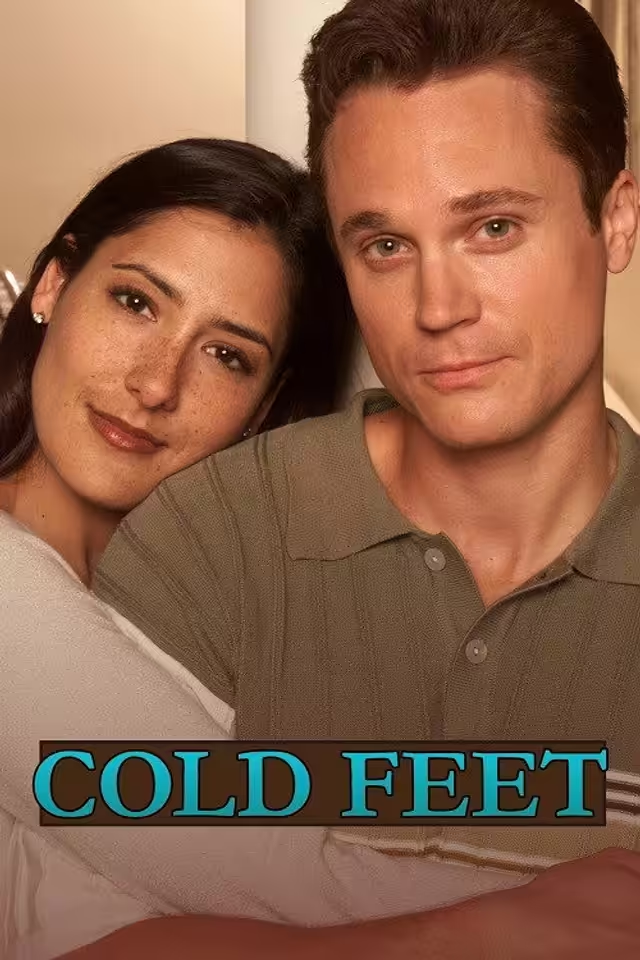
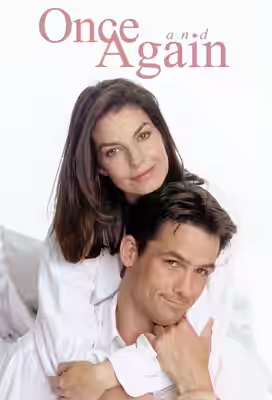
The earlier verdict cannot be substantiated. The available credits identify this series, but the critical material largely concerns a different production, leaving too little evidence for a reliable recommendation.
We cannot responsibly turn the earlier draft into a finished review. Its account of Portland, the courtship, the rose and the domestic scenes is not supported by the available verified information. Neither are its descriptions of the lighting, editing or performances. Keeping those passages would preserve the appearance of a considered viewing without the evidence to support it.
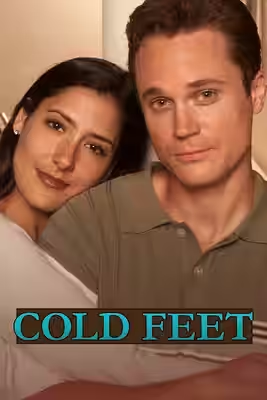
The critical selection also needs separating by production. Three summaries discuss returning series in 2017, 2019 and 2020; only the 1999 review appears to address the title identified here. Most critics in that selection rate Cold Feet higher than the earlier draft does, but that does not establish a meaningful disagreement about this particular series. We cannot honestly explain why those critics are wrong when they are largely discussing something else.
The 1999 review describes an entertaining premiere while questioning its staying power. That is useful context, but it cannot supply our own response to scenes, performances or craft. An attributed account of another person’s reaction would not justify claiming that we laughed, felt embarrassed or found the characters forgettable.
The credited actors give us something solid to identify, but not enough to judge a programme. We can name Jean Louisa Kelly as Shelley Sullivan and David Sutcliffe as Adam Williams without guessing how their characters meet or what either wants. We can also identify Jenny Lombardi and Pete Lombardi, played by Dina Spybey and Billy Keane, without treating their shared surname as a verified account of their relationship. A synopsis built from assumptions about those names would be more fluent, but it would not be more accurate.
The four listed episodes do not establish how far any story develops, and the stated 60-minute runtime tells us nothing about the pace of an individual scene. Those details cannot support a complaint about repetition, an assurance that the series finds its footing, or a recommendation based on a satisfying conclusion. We would need an account of what happens before making any of those judgements. The same caution applies to calling the programme warm, cynical or romantic on the strength of its title.
There is no cinematographer, editor, composer or production designer identified in the supplied credits. Naming any of them would mean adding information we cannot verify, while describing their work would require specific scenes and sounds that are not documented here. An empty crew list does not imply that the programme lacks accomplished craft; it means we have no basis for discussing that craft. Even a modest claim about how a conversation is cut, or how music changes its tone, needs something more than a cast list.
The score of 56 is retained solely as the earlier draft’s supplied integer, not as a substantiated rating or a recommendation for publication. Completing the review requires verified opening-episode details, relevant crew credits and critical material matched to this production. Until then, the unsupported draft should not be published.