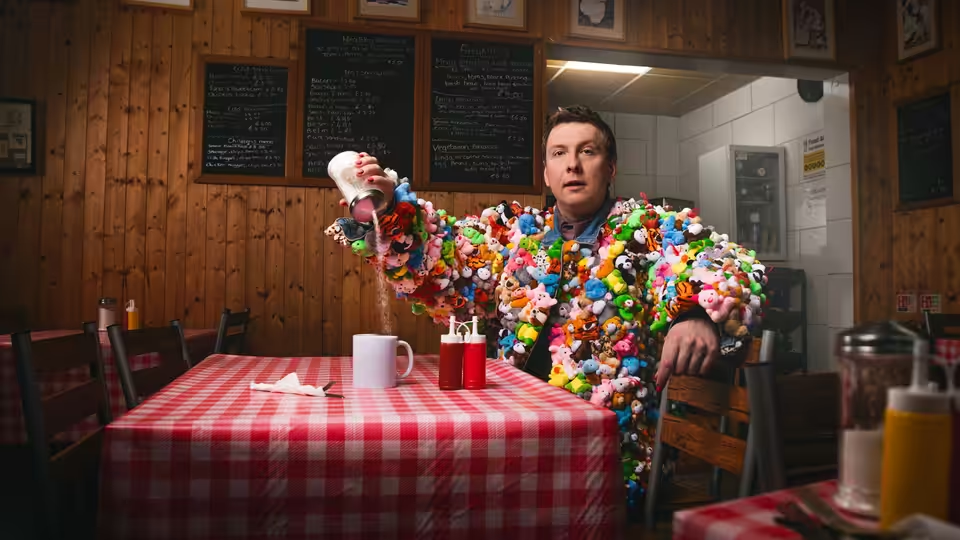
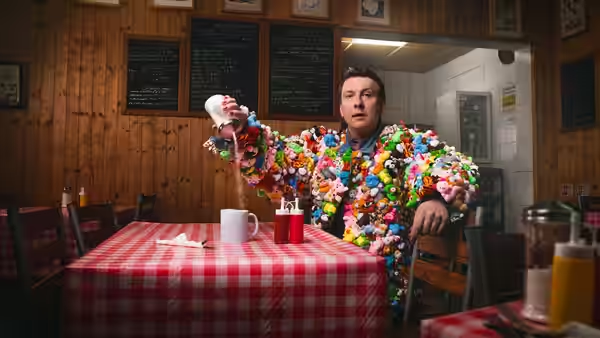
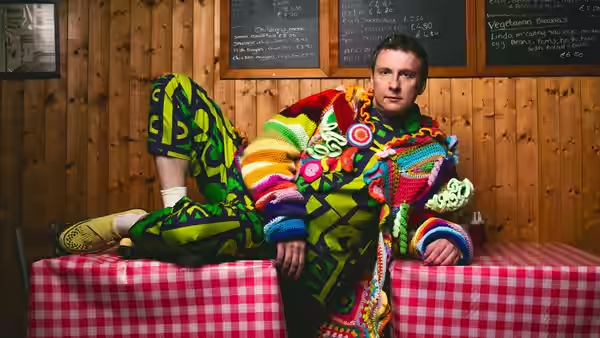
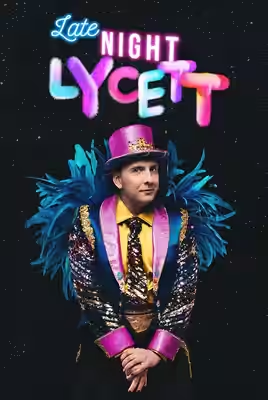
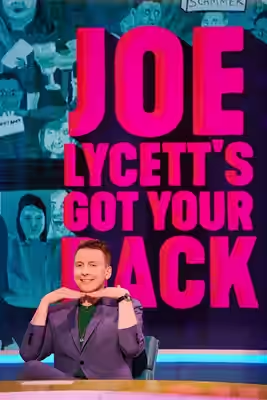
Joe Lycett takes the chat show live to Birmingham and builds the hour out of things that might go wrong. It is the loosest chat show on British television in years, and when a bit dies you get to watch it happen.
The British chat show has been dying politely for years. Four guests on a sofa, each with something to sell, a host who has read the notes, a house band, and an hour recorded in advance and trimmed of anything that went wrong. Joe Lycett’s answer is to go out live on a Friday night, leave London for Birmingham, and fill the running time with things that might not work. Each episode runs about 49 minutes. The first series of five began on 31 March 2023 and a second of six followed from 12 April 2024.
The guest list is the familiar one. Alison Hammond, Joanna Lumley, Katherine Ryan, Alesha Dixon, Paddy McGuinness, Alexander Armstrong and Carol Vorderman all pass through, and so does the usual sprinkling of comedians, Sophie Willan and Jack Rooke among them. What is different is what is done with them. They are not here to tell the anecdote they told the last show; they are handed props, sent into the audience and asked to judge things. Lumley gets a few minutes of being Joanna Lumley before she is enlisted, and takes to it with the air of a woman who has been waiting years to be asked. Hammond, who could host this herself, very nearly does.
Then there is Sinitta. The credits list her as “Hunderstudy”, and the joke is exactly what it sounds like: she is on hand to take over should Lycett be unable to continue. The show keeps cutting back to her, standing by, ready, and the fourth or fifth time it did we laughed out loud at nothing more than a patient woman in a good outfit. That is Lycett’s method in one credit. He has planned for the show’s collapse and finds the plan funnier than the show.
Lycett himself is the reason it holds. He is soft-voiced and immaculately dressed, a man who looks as if he has never once been flustered and who has built an entire hour out of being flustered on purpose. When a bit dies, and bits die, because it is live, he does not hurry past it. He stands in the wreckage, tells the audience what was supposed to happen, and gets a bigger laugh than the bit would have. We have watched a great many presenters pretend a segment worked. There is a real pleasure in one who lets you watch it fail.
The audience is the other star. Birmingham is not a city television visits often and the audience knows it. The crowd is loud and local and plainly delighted to be there, and the cameras keep finding faces in it rather than retreating to a wide shot, so the laughter has people attached.
What does not work is what you would expect. Because nothing is allowed to settle, the conversation is thin, and you will learn almost nothing about any of the guests that you did not already know. Then there is the Liz Truss business. Lycett’s running joke about the former prime minister is a fair target the first time. By its third return it has stopped being a joke and become a show kicking someone who has already left, and it is the one place the warmth drains out of the thing. We were not the only ones to notice.
Set against the polished sofa shows it is competing with, this is a different trade: a variety hour that happens to have guests in it. It is uneven by design, which means some Fridays are better than others, and a bad one is still a man grinning through it for 49 minutes.
Watch it live if you can. Recorded, it loses half its point; the whole reason for the format is that anything could happen, and knowing that it already has takes the edge off. It is not a programme to put on in the background. It wants your attention, and most weeks it earns it.