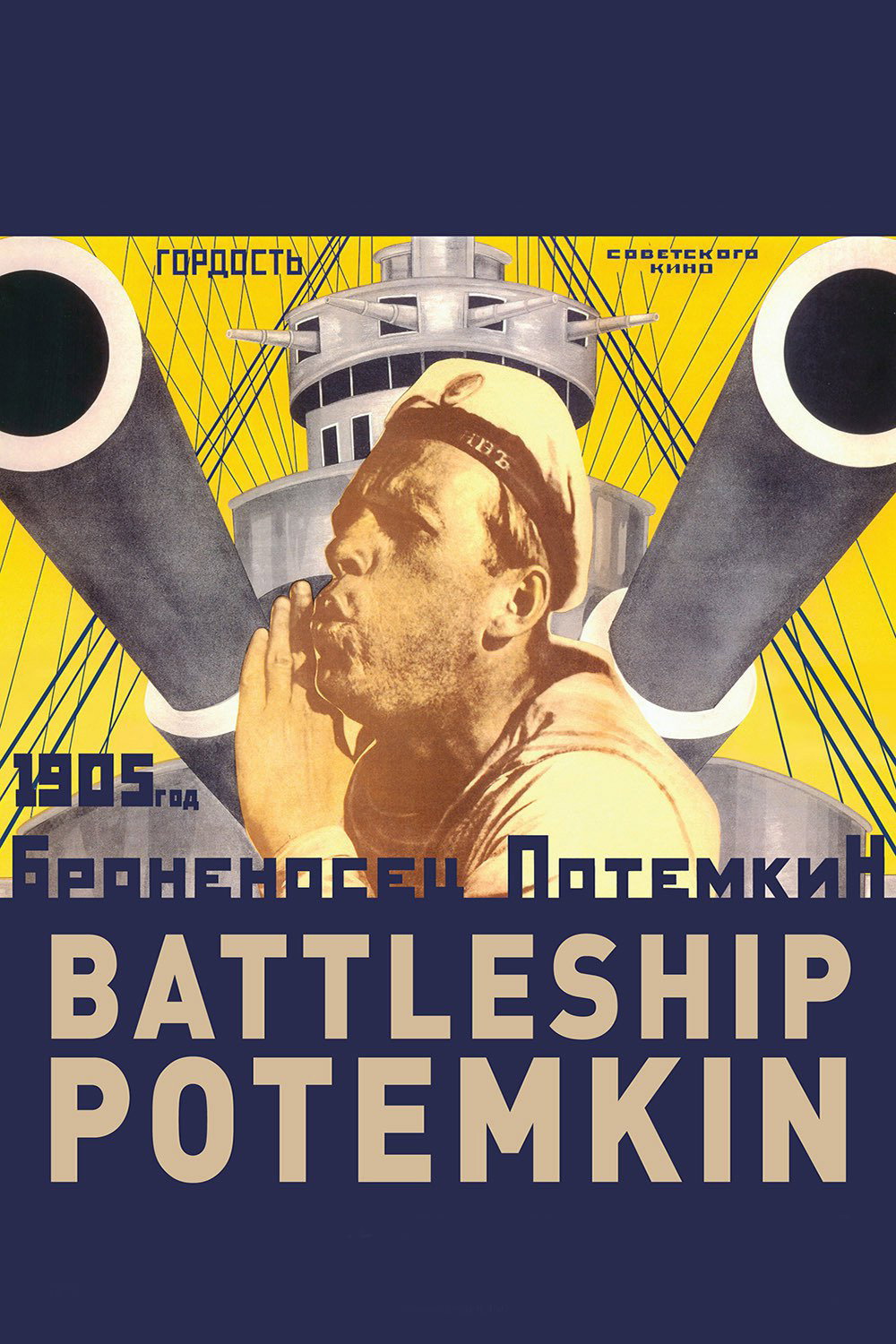
Most critics are strongly positive about Battleship Potemkin, with praise centred on Eisenstein’s rhythmic editing and its ability to make political conflict immediate and emotionally forceful. The Odessa Steps sequence dominates discussion, but the reviews also value the movement of crowds, symbolic imagery and control of pace beyond that sequence. Several find that restored prints clarify the images and renew the film’s urgency, while its influence on subsequent filmmaking is a recurring theme.
The spread is wide, but dissent is isolated: fourteen reviews are positive and one is negative. Reservations concern familiarity and musical accompaniment more than the filmmaking. RogerEbert.com argues that familiarity reduces the surprise, even as the montage retains its power. The Times welcomes the Pet Shop Boys score as a source of fresh emotional impact. The Guardian finds it fervent but insufficiently responsive to the film’s dramatic changes.
R
Radio Times
★★★★★ · David Parkinson
100
The critic calls it a masterpiece of editorial dexterity that shows symbolic imagery can match narrative in emotional and intellectual impact, singling out the plate-smashing mutiny trigger, fog scene, roaring lion and Odessa Steps massacre as powerful and accessible elements that make it essential cinema.
Read the full review →T
The Times
21 August 2025 · ★★★★★ · Kevin Maher
100
The critic celebrates the restored print paired with the Pet Shop Boys’ 2004 score as giving the 1925 masterpiece fresh urgency and emotional impact, calling the combination immense and a successful marriage of revolutionary cinema and modern pop energy.
Read the full review →A
The AV Club
31 October 2007 · A · Noel Murray
95
The review praises the Kino DVD restoration for coming closer to Eisenstein's original vision than any prior version by restoring title cards, images, and the score. It highlights the film's relentless drive of revolution and its lasting influence on action cinema.
Read the full review →E
Empire
1 January 2011 · David Parkinson
90*
The critic calls it a masterpiece that proved symbolic imagery could match narrative logic in emotional impact. The plate smashing, fog scene, Odessa steps massacre and roaring lion are highlighted among cinema's most famous images.
Read the full review →L
Los Angeles Times
18 March 2011 · Kenneth Turan
90*
Turan calls the restored print a knockout that reveals the film’s virtuoso filmmaking, pictorial beauty, and full sweep beyond the Odessa Steps sequence, describing it as a thrilling piece of cinematic adrenaline.
Read the full review →S
Slant Magazine
10 January 2011 · Jesse Cataldo
90*
The review celebrates the new 35mm restoration and Eisenstein's focus on the dynamic movement and unity of crowds as living entities rather than mere symbols. It singles out the fluid, organic depiction of motion in sequences like the Odessa Steps as what gives the film its enduring aesthetic power beyond its political context.
Read the full review →I
The Independent
17 January 1998 · HHHH
90*
The critic hails a new print of Eisenstein's masterpiece for providing textbook lessons in pace and structure. It is praised as a masterful fusion of fact and fiction, with the Odessa Steps sequence singled out as its most famous element.
Read the full review →N
The New York Times
23 October 2007 · Dave Kehr
90*
Kehr praises the restored version of Eisenstein’s influential 1925 propaganda film for returning the full Odessa Steps sequence and other details, highlighting its rhythmic editing and emotional impact as a landmark of montage cinema.
Read the full review →G
The Guardian
21 August 2025 · Peter Bradshaw
85*
The critic hails the restored 100th-anniversary version of Eisenstein’s 1925 silent classic as a still-potent revolutionary masterpiece whose innovative montage and iconic Odessa Steps sequence continue to inspire. The new Pet Shop Boys score is described as fervent but not fully attuned to the film’s dramatic light and shade.
Read the full review →E
Evening Standard
10 April 2012
80*
The review recommends seeing this luminous revival of the 1926 epic on a proper print. It singles out the Odessa Steps sequence as one of the greatest moments in screen history that has been endlessly copied.
Read the full review →T
Time Out
26 April 2011 · ★★★★ · Wally Hammond
80
The critic finds the film exciting, dynamic and immediate even today in its restored form with Meisel’s score, praising its ability to capture the danger, drama and energy of civil war through the rhythmic montage of the Odessa Steps sequence.
Read the full review →R
RogerEbert.com
19 July 1998 · Roger Ebert
70*
Ebert views the film as a fundamental landmark of cinema whose famous Odessa Steps sequence retains power through montage and rhythm, though familiarity has reduced its surprise value over time.
Read the full review →V
Variety
31 December 1924 · Variety Staff
30*
The review outlines the historical incident of the 1905 mutiny aboard the Potemkin and notes its presentation as Soviet propaganda found in czarist archives.
Read the full review →C
Collider
21 December 2025 · Liam Gaughan
90*
The critic calls Battleship Potemkin an all-time great masterpiece and one of the most defining silent films, still timely as a political text and essential viewing for cinephiles. They single out its pioneering use of Soviet montage editing as a major innovation that influenced generations of filmmakers and changed cinematic storytelling.
Read the full review →E
Eye for Film
28 April 2011 · Jennie Kermode
90*
The critic praises the film's masterful filmmaking, stunning cinematography, deft editing, and its enduring power as a cinematic and political work, noting the restored version's quality. They highlight how it remains highly watchable and a triumph despite simple ideas.
Read the full review →Ordered by the weight we give each publication, then by score. Scores are normalised to 100; * means inferred from an unrated review. Summaries are ours, not quotations; follow the links for the reviews themselves. How we rate