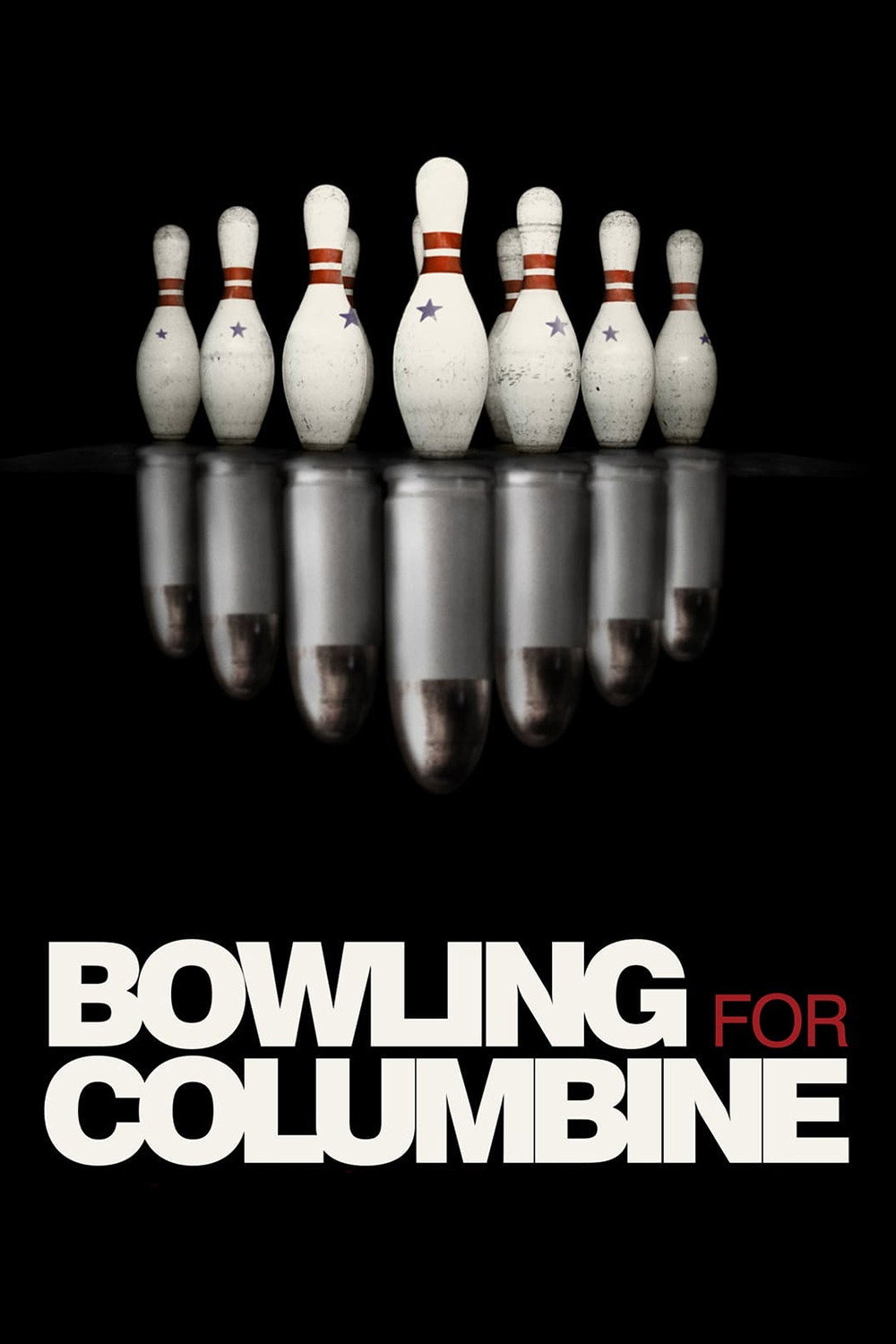
Most critics like Bowling for Columbine, and none dislike it outright. The reviews agree that Moore’s mix of savage comedy and real horror is the film’s engine: the animated history of the bullet, the K-Mart confrontation and the interview with Charlton Heston are named again and again as the sequences that land. Several credit it with reaching past guns to a wider argument about a country run on fear.
The reservations are about Moore rather than the material. Admirers and doubters alike call it scattershot; the more measured reviews go further: self-aggrandising, glib, loose with logic and inclined to fight too many battles at once. The Evening Standard notes a selective compression of the facts while still finding the whole powerful. The spread is narrow. The mixed notices from The New York Times, the Los Angeles Times and The Independent still find it disturbing and often funny, and hold back only because the method frustrates them.
R
Radio Times
★★★★★ · Andrew Collins
100
Moore leaves no stone unturned in exploring the root causes of America's gun deaths with humour and pathos. The film is important and outspoken, if uncomfortable to watch.
Read the full review →Moore's emotive exploration of America's gun culture is a wide-ranging, often shockingly funny documentary that balances wicked wit with serious insight into paranoia and violence.
Read the full review →S
Sight and Sound
1 November 2002 · Jon Ronson
90*
Moore's film is a brilliant polemic that interweaves macro and micro issues with archive material and savage comedy. It ultimately examines America's culture of fear.
Read the full review →V
Variety
16 May 2002 · festival review · Lisa Nesselson
90*
The review describes the documentary as rollicking and incendiary, praising Moore's blend of research, satire and chutzpah while noting he is not objective. It highlights effective sequences like the animated bullet segment and K-Mart confrontation.
Read the full review →Moore's documentary is a brave and important piece of filmmaking that asks difficult questions about America's gun culture and national psychology. The critic singles out the inventive K-Mart confrontation scene and the Heston interview for particular praise.
Read the full review →E
Evening Standard
10 April 2012 · Alexander Walker
80*
Moore's agitprop documentary records a vast volume of testimony about the high value placed on gun-owning and the low price of human life in America. The critic notes Moore's occasional scattergun approach and selective compression of truth but finds the overall impact powerful.
Read the full review →G
The Guardian
15 November 2002 · Peter Bradshaw
75*
The critic finds Moore's documentary angry and uproarious in its examination of America's gun culture but notes its ambiguities and lack of clear answers, describing it as refreshing yet exasperating. He singles out the confrontational interview with Charlton Heston as a memorable highlight amid the mix of interviews, clips and satire.
Read the full review →S
Slant Magazine
4 October 2002 · Ed Gonzalez
70*
The critic finds the film broad in its gun-control argument and notes that Moore knows everyone shares responsibility to some degree, with the strongest case made against the media's role in fostering a culture of fear. He criticizes Moore's frequent self-aggrandizement and shrill sanctimoniousness while acknowledging that the director ultimately puts powerful figures in their place.
Read the full review →A
The AV Club
11 October 2002 · Nathan Rabin
70*
The review describes the film as a tonally scattershot but unforgettable examination of America's gun violence and culture of fear, mixing smart satire with tough humanism. It notes flaws like grandstanding, glib sarcasm, and petty bullying but praises how Moore touches nerves with horrific footage and emotional interviews, rooted in genuine horror and concern.
Read the full review →N
The New Yorker
21 October 2002 · David Denby
70*
The review pairs the film with another release in a current cinema column and discusses its approach to American violence. Denby engages with Moore's provocative style and the film's examination of gun culture.
Read the full review →T
Time Out
10 September 2012 · GA
70*
Moore's argument about US gun violence and the NRA is persuasive and often hilarious, though it can be self-aggrandising or over-simplifying at times.
Read the full review →L
Los Angeles Times
11 October 2002 · Kenneth Turan
50*
The critic calls the film troubling and troublesome, noting its scattershot randomness as both strength and source of frustration. Moore hits some targets in provoking thought about violence even if the approach is imperfect.
Read the full review →I
The Independent
15 November 2002
50*
Moore's film is an assault on flag-waving rhetoric, using humour, tight editing and a great soundtrack to powerful effect. The critic praises the undercover reporting style but complains that Moore reinforces stereotypes in one section and loses focus by fighting too many battles.
Read the full review →N
The New York Times
11 October 2002 · Critic's Pick · A. O. Scott
50*
The critic finds the film disturbing, infuriating and often very funny but notes its slippery logic and tendentious grandstanding. Moore's vision of a society racked by fear and armed to the teeth is riveting when he keeps his own biases in check.
Read the full review →E
Eye for Film
9 October 2002 · Angus Wolfe Murray
90*
The critic finds the documentary as moving as it is disturbing and often very funny. Moore's ironic questions and confrontations, including with Charlton Heston, are highlighted as effective.
Read the full review →R
The Ringer
21 September 2018 · Sean Fennessey
90*
The piece calls Bowling for Columbine Moore’s magnum opus and a bridge to mainstream success. It highlights its skillful balance of the sublime, ridiculous, and gut-wrenching in addressing gun violence and its lasting impact.
Read the full review →The critic ranks Bowling for Columbine as Moore’s second-best film overall. It praises the film’s sharp examination of American gun culture and fear, noting its enduring relevance despite some dated stunts.
Read the full review →Ordered by the weight we give each publication, then by score. Scores are normalised to 100; * means inferred from an unrated review. Summaries are ours, not quotations; follow the links for the reviews themselves. How we rate