Moore’s film about American guns is funny, furious and, when it stops talking, properly horrifying. It is also an argument that keeps changing its own terms, and the stunts that made it famous are the parts that age worst.
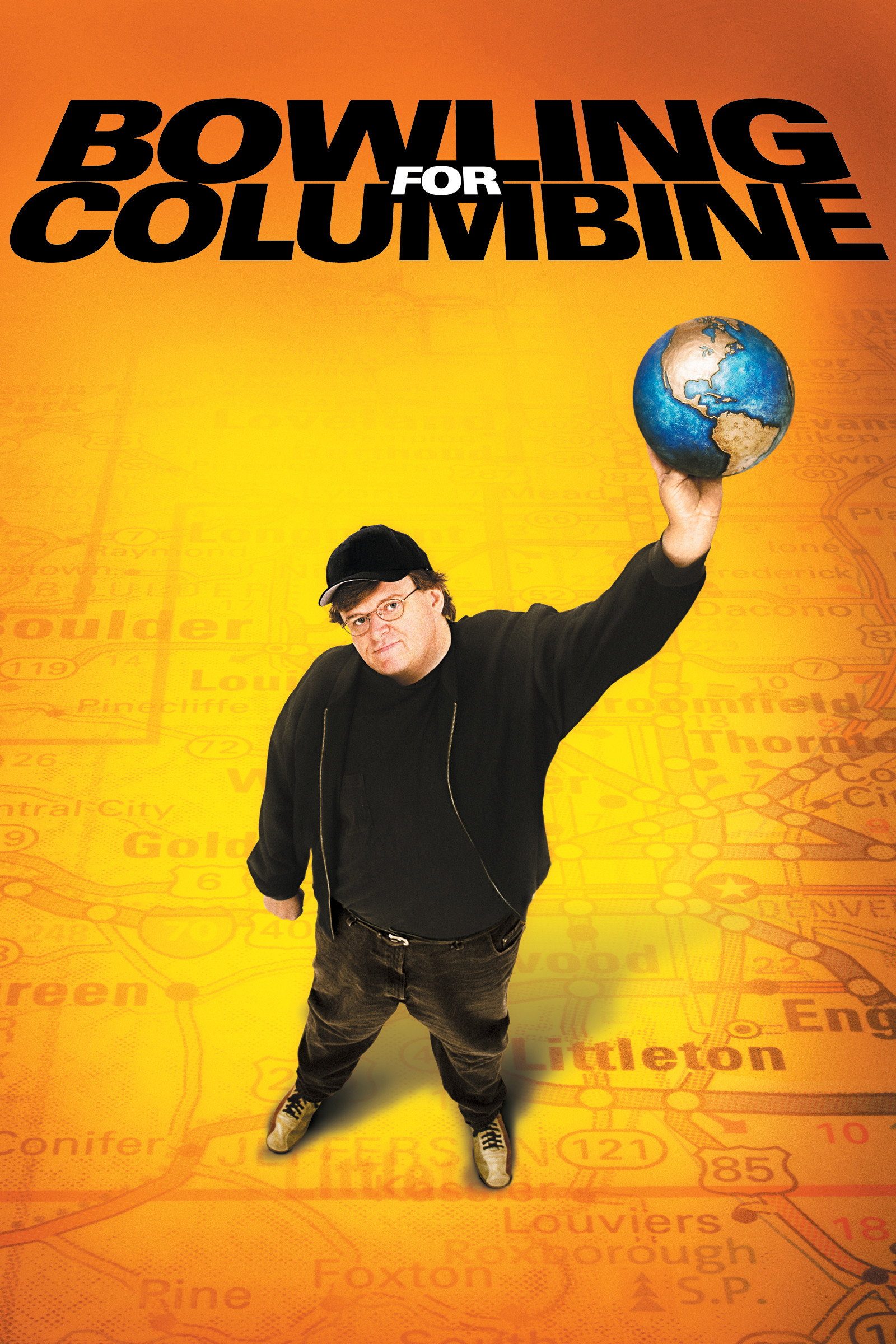
The question is on the poster: are we a nation of gun nuts or are we just nuts? Michael Moore spends 120 minutes asking it, in Flint, Michigan, where he grew up, in Littleton, Colorado, where two boys shot up Columbine High School on 20 April 1999, and across the border in Ontario, where people own guns and do not seem to use them on each other. The film is angry, it is often very funny, and it is far better at showing than at proving. We think it is worth your evening. We also think it should be watched with your guard up.
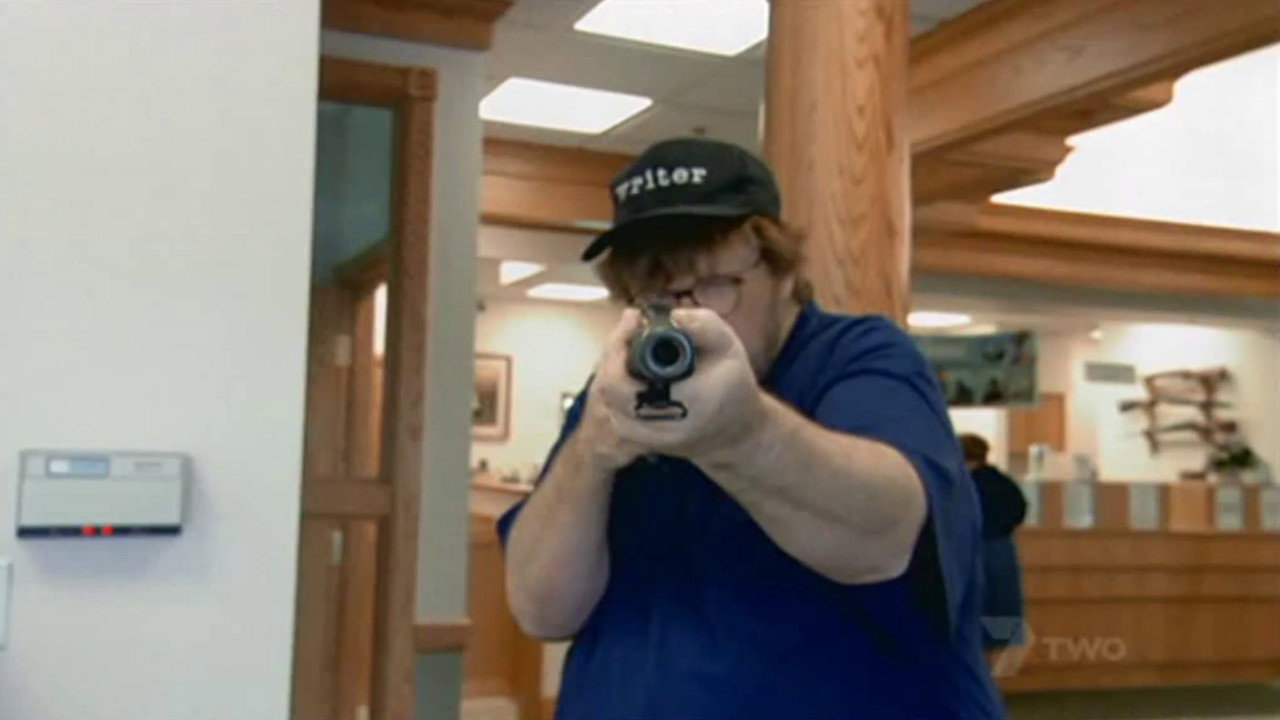
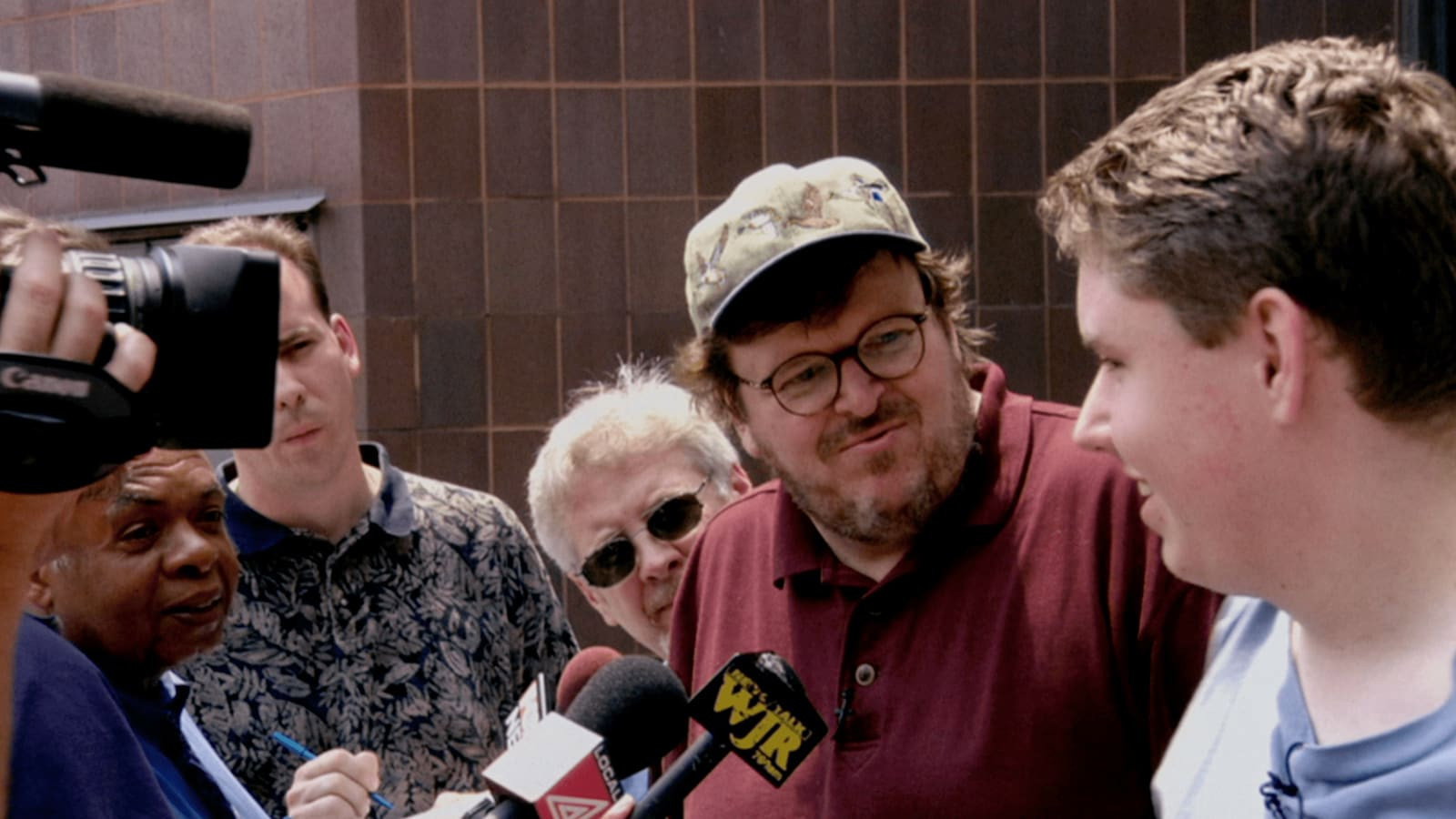
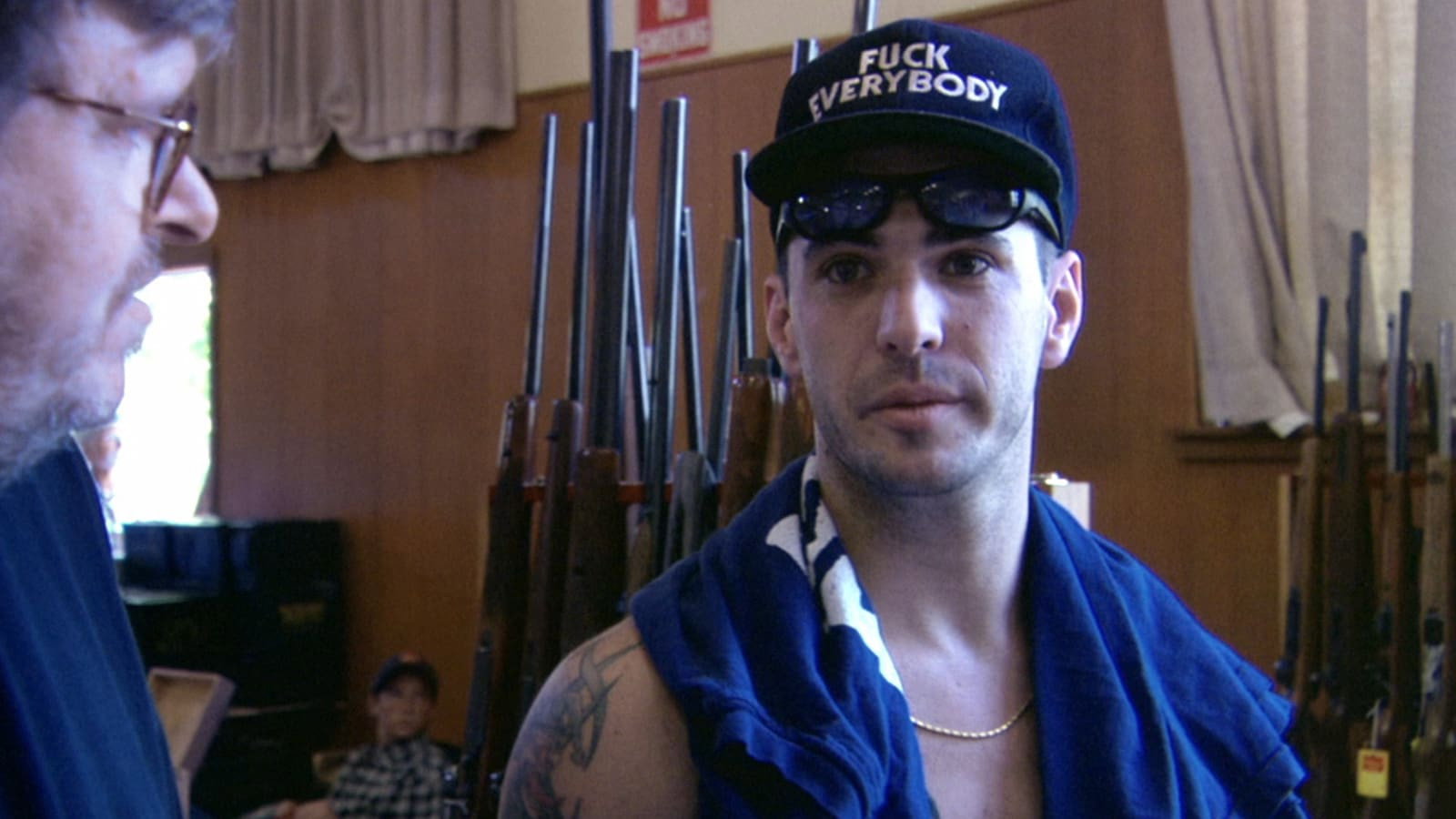
It opens with the best joke Moore ever found, which is that he did not have to write it. A bank in Michigan gives you a rifle for opening an account, and Moore opens one, and walks out with the gun. What follows in the first half hour is a run of people saying things into his camera that no scriptwriter would have dared: militiamen, teenagers, a man who sleeps with a pistol under the pillow. Moore is good at this. He asks a plain question and waits, and people fill the silence.
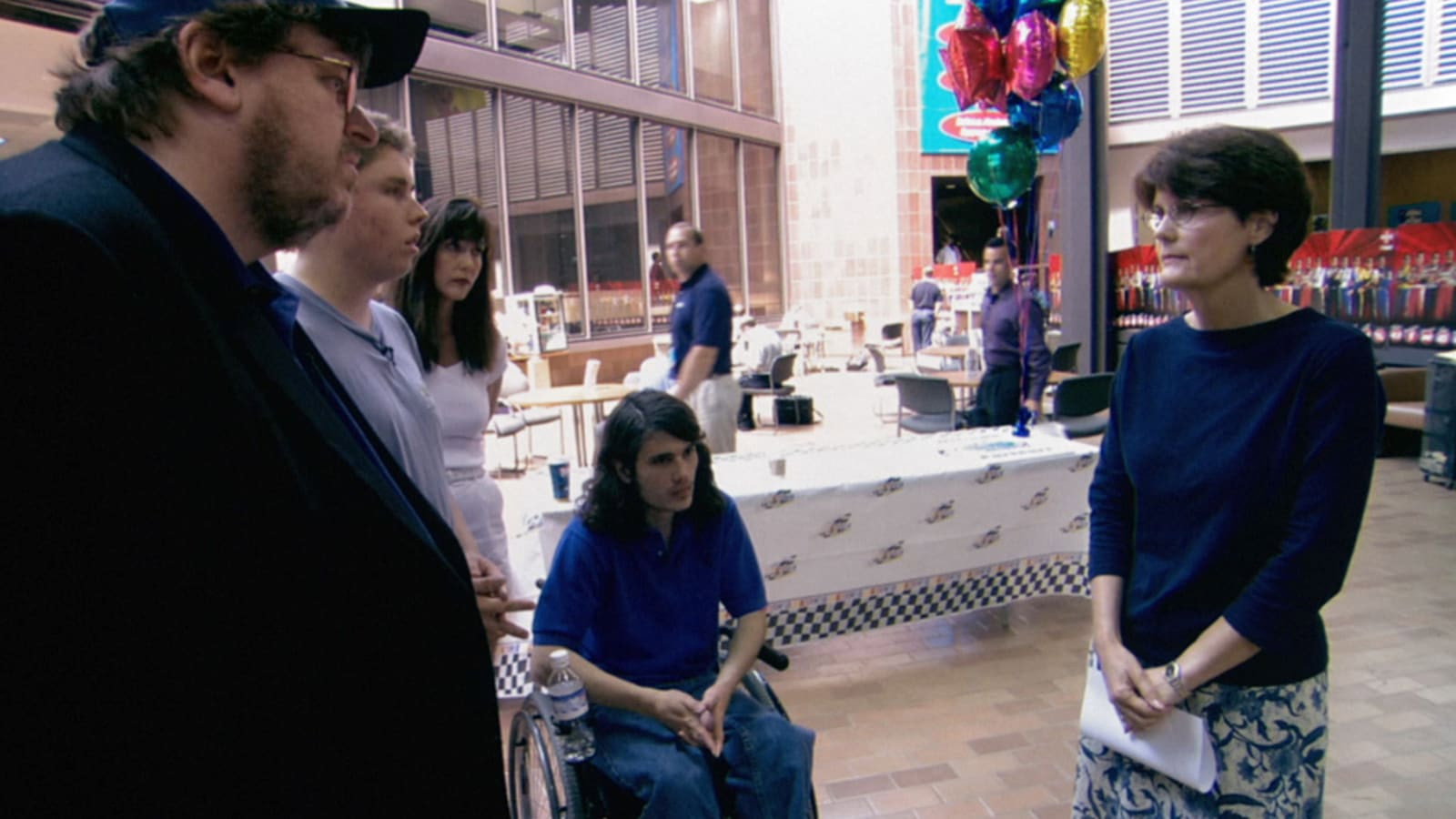
Then he goes to Columbine, and the film changes. Kurt Engfehr cuts together the security camera footage from the school cafeteria, grey and silent, with the emergency calls from that morning laid over it, and holds it far longer than a news bulletin would. There is no music from Jeff Gibbs here and no narration from Moore. We were horrified, and it was the ordinariness that did it: tables, a drinks machine, children under the tables, and a voice on the phone asking someone to stay calm. Richard Castaldo, who was shot that day, sits in a wheelchair and answers questions without self-pity. These are the minutes the film is remembered for, and they earn it.
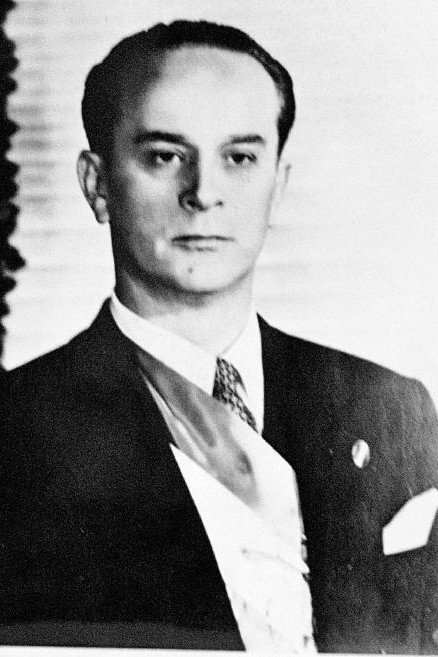
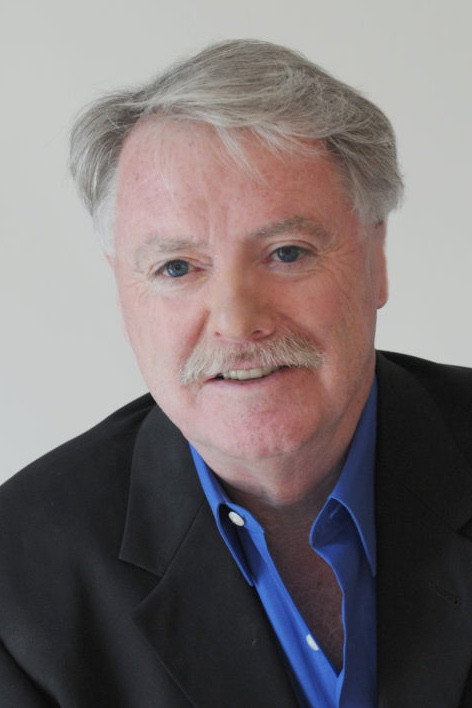
Engfehr is the film’s real weapon and its worst habit. His montage of American interventions abroad, including the removal of Jacobo Árbenz in Guatemala, is cut to Louis Armstrong singing What a Wonderful World, and it is funny and cheap in exactly equal measure. An animated potted history of the United States, done as a cartoon, gets a laugh and settles nothing. The Canadian section is gentler and better. Mike Bradley, the Mayor of Sarnia, Ontario, sits in his office and explains that his town has guns and no dead schoolchildren, and Moore walks down a residential street trying front doors, which open. It is a stunt, but it is a stunt with a point.
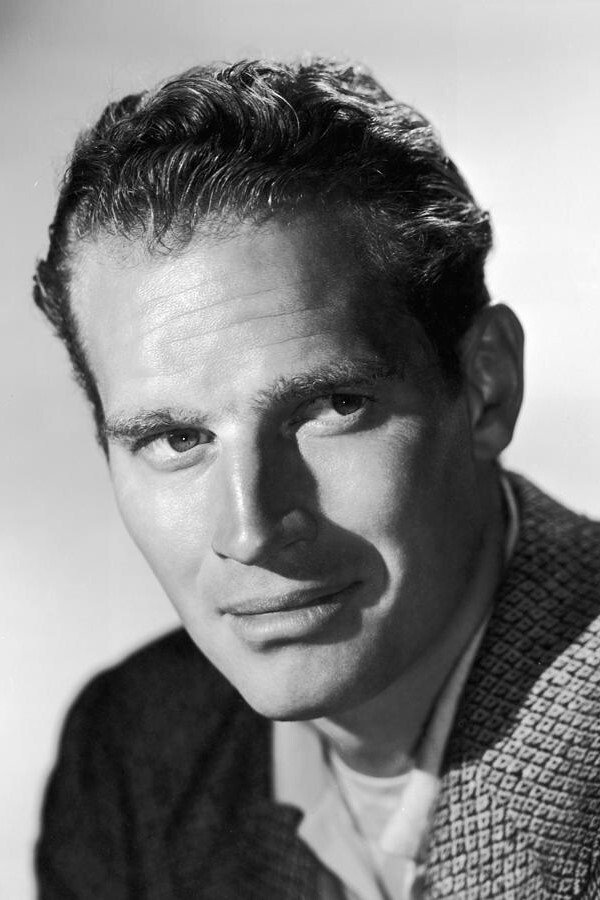
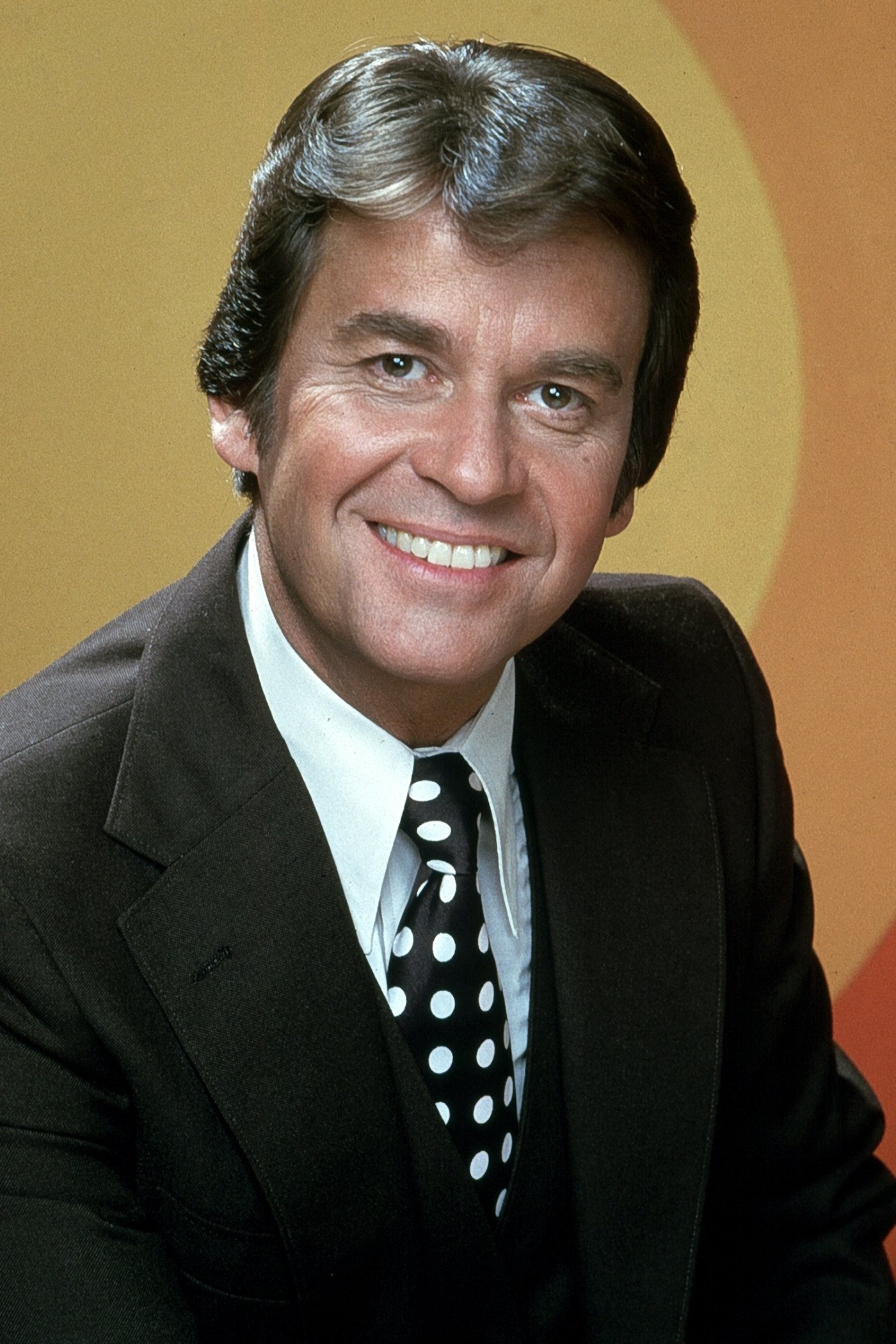
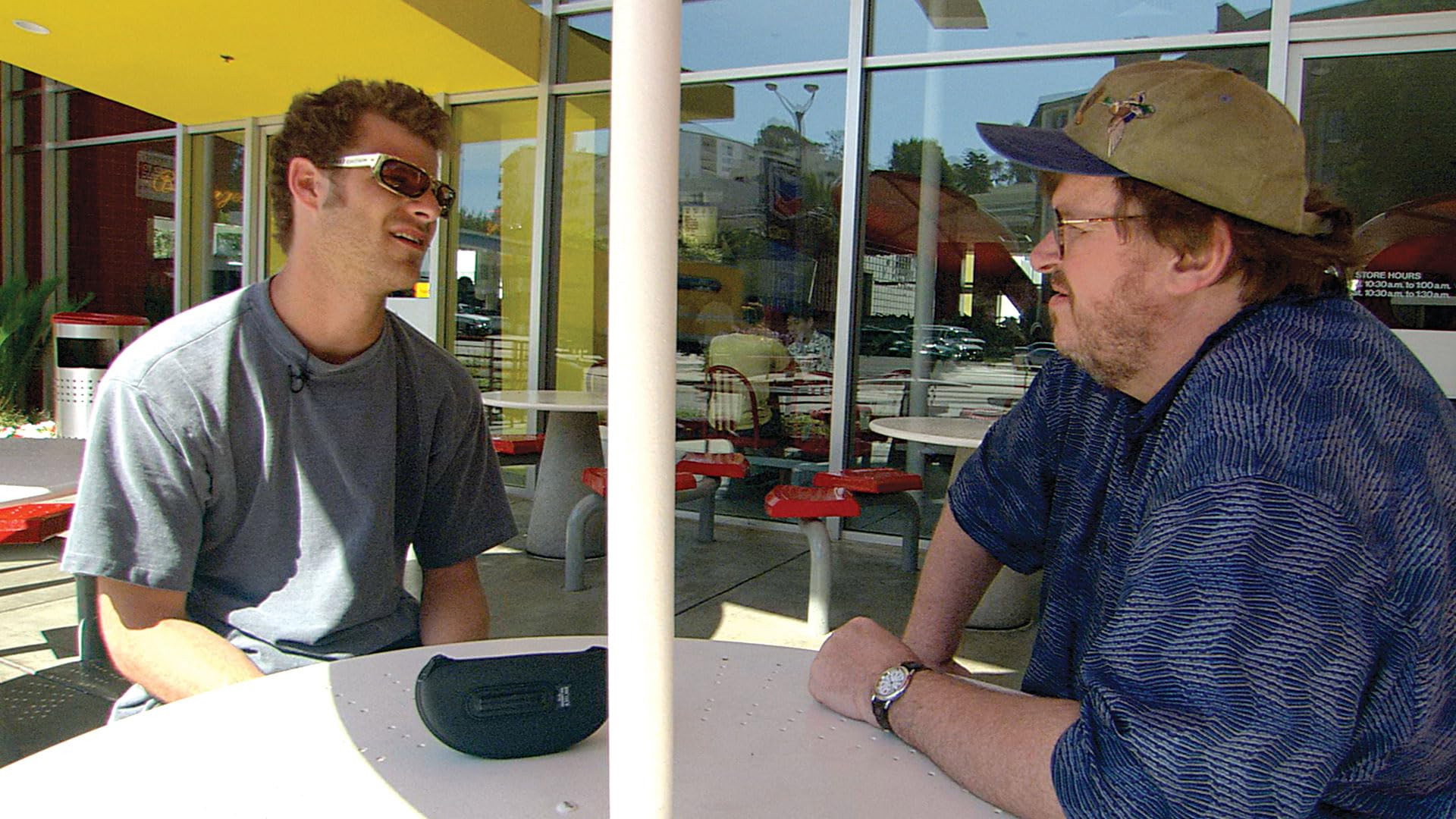
The trouble is that Moore cannot decide what his point is. He rules out guns, because Canada has them. He rules out poverty and violent films and heavy metal, and he sits Marilyn Manson down to say so. He lands on fear, stoked nightly by local television news, and that section is the strongest case in the film. But he also wants the Lockheed Martin plant outside Littleton to be guilty, and a welfare-to-work scheme in Flint, and Charlton Heston personally. Arthur A. Busch, the county prosecutor in Flint, gives a careful, decent interview about a shooting involving a six-year-old, and Moore cuts away from him to chase Dick Clark across a car park because a company Clark part-owns is involved. The interview with Heston, at his own home, we will not describe. It plays as an old man being ambushed by a younger one with a camera, and the film’s case is weaker for it, not stronger.
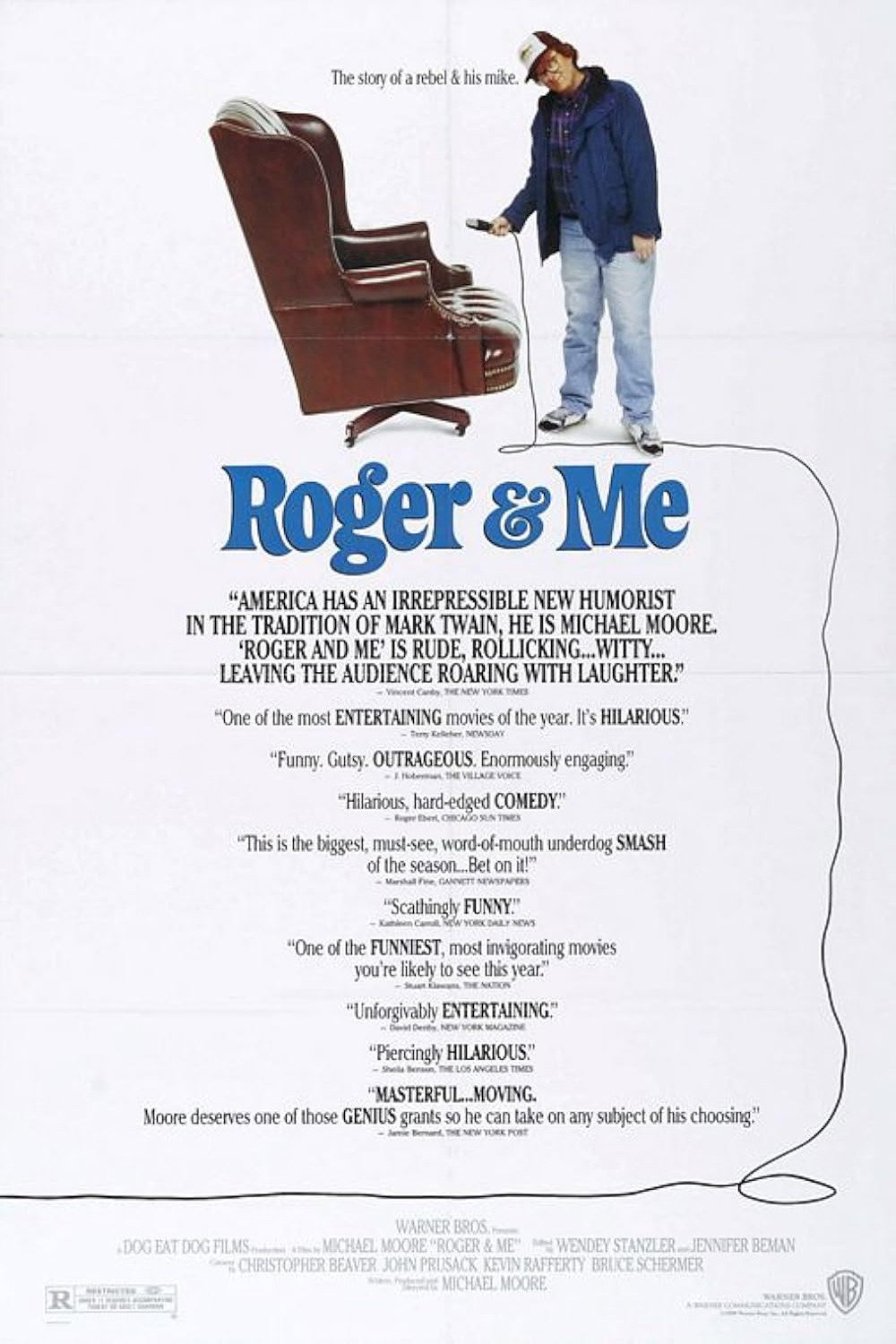
Moore’s Roger & Me (1989) had one target and hit it. This has a dozen, and the editing is doing work the argument should be doing; several joins have been questioned since, and once you notice one you start looking for others. Most critics rate the film higher than we do, and we understand why: nothing this rude and this alive about guns had been put in a cinema before. But a film that asks to be believed has to play straight, and this one does not always.
See it for the people Moore stops and listens to, and for those grey cafeteria minutes, which have lost none of their force. When he starts to enjoy himself, you are allowed to look away. Certificate 15, and for once the certificate is not about the language.