Film review

The Thin Blue Line

1988 · Directed by Errol Morris · 1h 43m

In a sentenceA milkshake falls in slow motion, Philip Glass plays, and Texas is entirely sure of itself

CrimeDocumentary

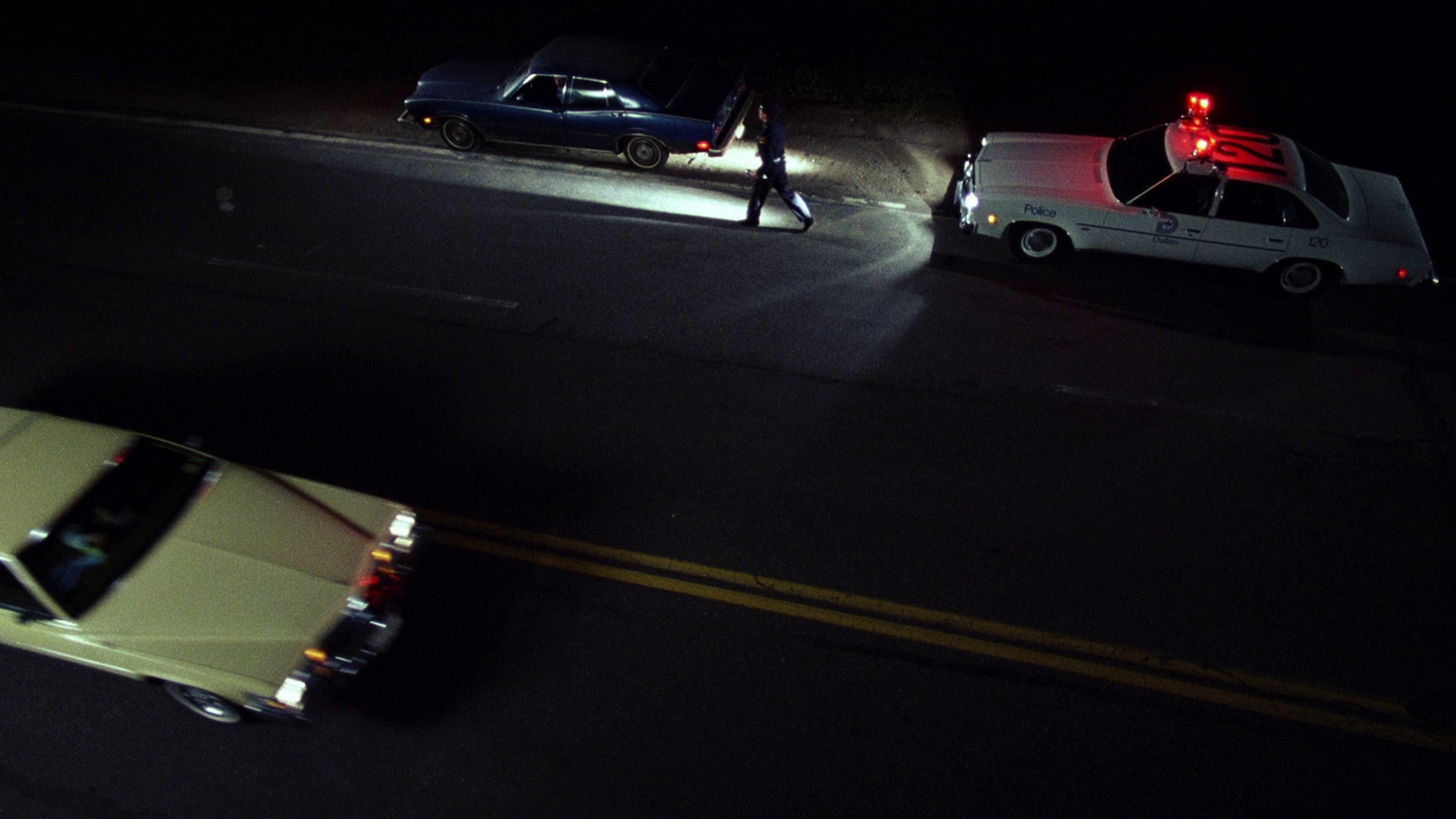
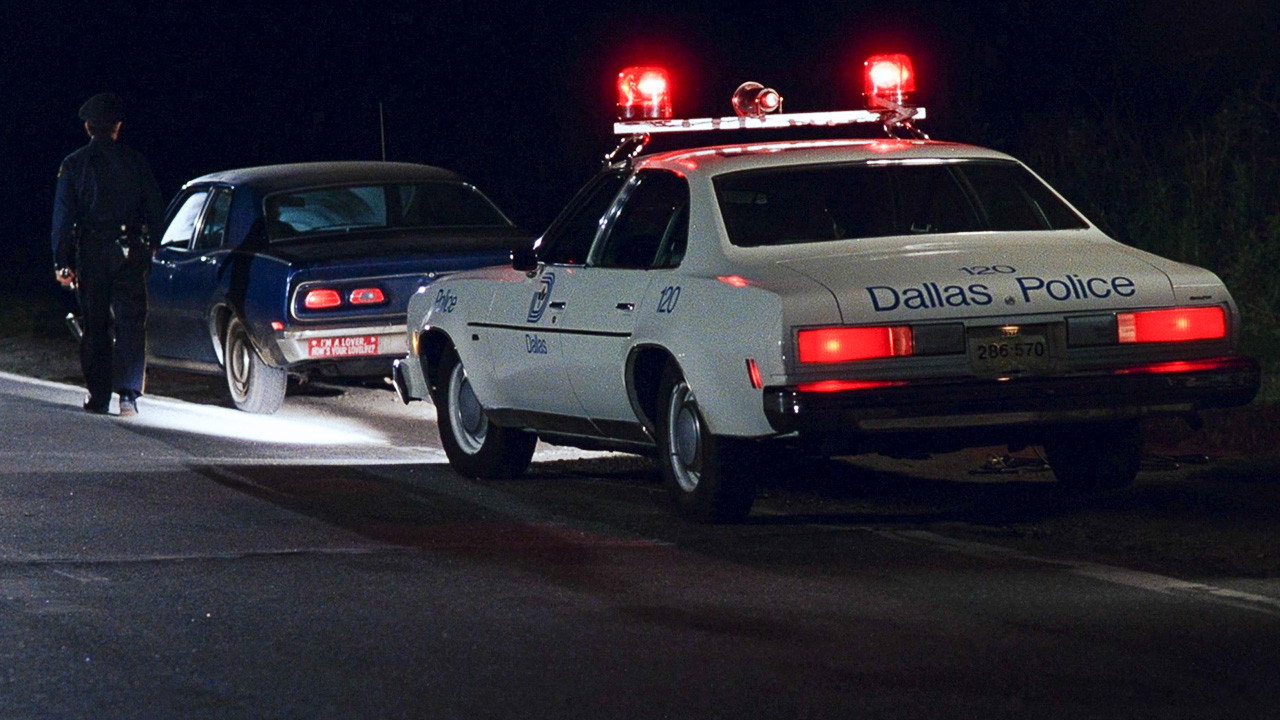
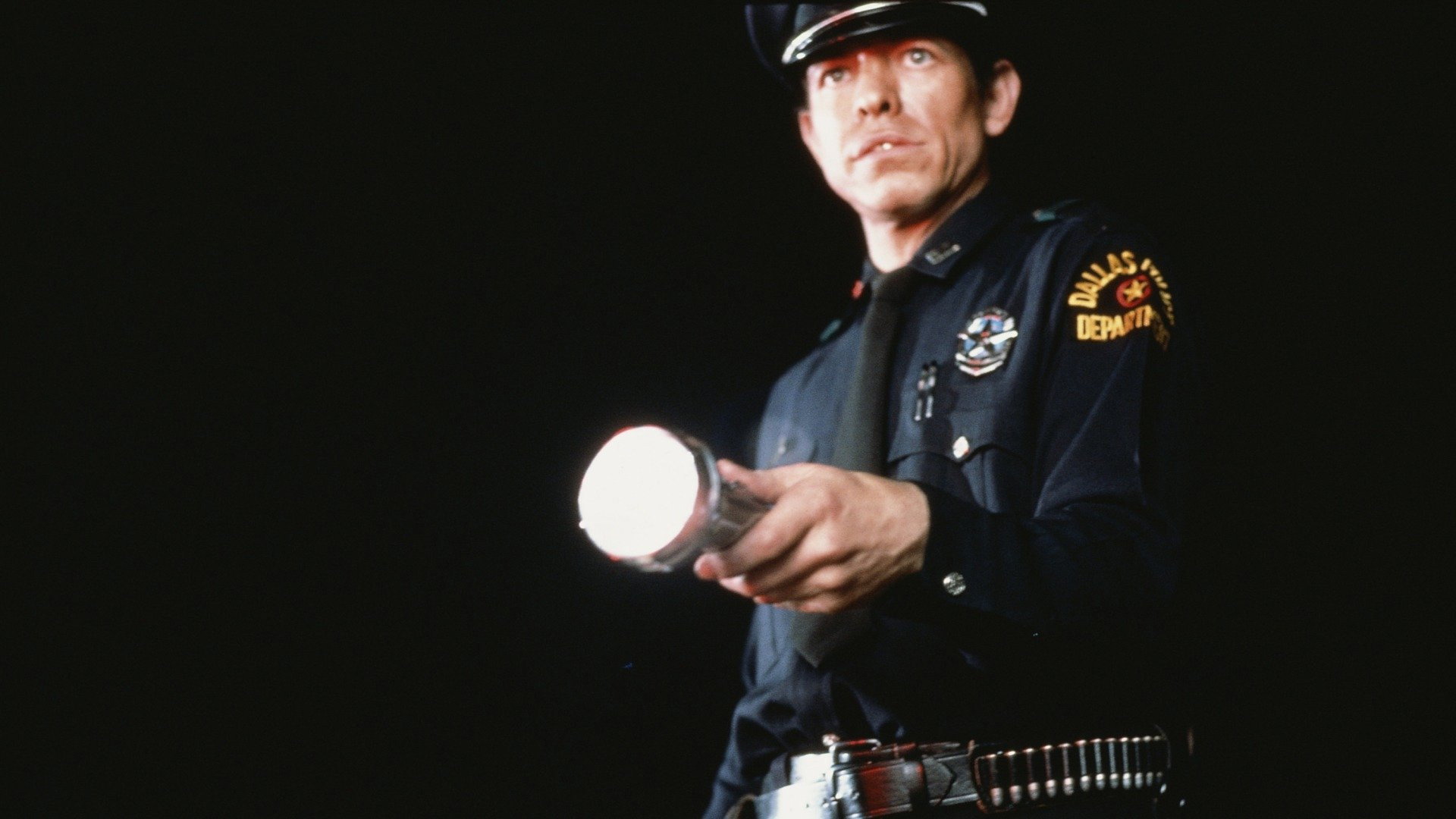
Dallas, Texas, late November 1976: a police officer, Robert Wood, is shot dead beside a car he has stopped on a dark road. Randall Adams is convicted of the killing and sentenced to death. David Harris, the teenager from Vidor who gave Adams a lift that morning and whose car it was, says Adams fired the shots; Adams says he was back at his motel. Errol Morris sits both men in front of the camera, along with Dallas detectives Gus Rose, Jackie Johnson and Marshall Touchton, Vidor detective Sam Kittrell and defence attorneys Edith James and Dennis White, and rebuilds the night from each account, with maps, newspaper clippings and re-enactments that change every time a story changes.

Plays from YouTube when you press play; nothing loads from them until then.

Fi1m review

Errol Morris’s film about a Dallas murder and the man convicted of it remains the model for true crime. Patient, cold on the surface and furious underneath, with re-enactments that argue rather than illustrate and a Philip Glass score that will not let you rest.

Late in November 1976 a Dallas police officer named Robert Wood stopped a car on a dark road and was shot dead beside it. Randall Adams, who had come from Ohio a few weeks earlier, was convicted of the killing and sentenced to death. David Harris, a teenager from Vidor in east Texas who had picked Adams up that morning when his car ran out of petrol, and who owned the car the officer stopped, said Adams fired the shots. Adams said he was back at his motel by then. Errol Morris went to Texas to make a film about something else, met Adams, and made this instead. It is the best film about a criminal case we know, and it has not aged a day.

Morris does not narrate and does not appear. He sits people in front of a plain backdrop and lets them talk: Adams in prison whites, Harris in orange, the Dallas homicide detectives Gus Rose, Jackie Johnson and Marshall Touchton in jackets and ties, Harris’s Vidor friends Hootie Nelson, Dennis Johnson and Floyd Jackson looking as if they have wandered in from a bar. Between the interviews he cuts re-enactments of the stop: headlights, a patrol car door, a hand on a holster, a milkshake tossed from a window and hitting the road in slow motion, staged again and again with the details altered as each speaker alters them. Robert Chappell and Stefan Czapsky shoot these in deep blue and hot red, on wet tarmac, with no faces, so they never pretend to show what happened. They show what somebody says happened.

We were horrified, and the horror comes on slowly, because nobody raises their voice. A detective explains how a statement was taken as if describing a good day’s fishing. Edith James and Dennis White, who defended Adams, describe a trial they could see they were going to lose. Sam Kittrell of the Vidor police talks about Harris as a boy the town had been dealing with for years. The film lets you work out for yourself that Harris was too young to be executed and Adams was not, and that Dallas wanted somebody it could execute. Paul Barnes cuts newspaper clippings, hand-drawn maps and clips from the drive-in double bill the two men sat through that night between the faces, so that every claim is set beside a document.

Philip Glass’s score is a set of arpeggios that circle and never resolve, and it turns the case into a loop the film cannot get out of, which is right. It also does something less useful. With the slow motion and Ted Bafaloukos’s spare, glossy staging, the killing becomes handsome, and there were moments when we felt the film admiring its own surface. The milkshake is the shot everyone remembers, and it comes round at least five times.

There is a harder complaint. Some of the witnesses, one of them a woman who tells us she has always fancied herself as a detective, are filmed so that the audience will laugh at them. We laughed, and then felt slightly ashamed, because a man was on death row on the strength of what these people said and a Texas accent is not a character flaw. Morris also never presses anyone on camera. The argument is entirely in the cutting, and a viewer who does not put it together will come away thinking they watched a set of amiable people disagree about a car.

Most critics have been unanimous, and we are with them. The one cooler notice found it taxing, and we can see why: at 103 minutes it asks you to hold six or seven versions of one night in your head at once. Every prestige true-crime series since has borrowed the plain backdrop, the re-enactment and the humming score. Almost none of them has borrowed the discipline of refusing to tell you what to think until the last possible minute.

That last minute we will not describe, except to say it is the plainest scene in the film and the one we have never managed to forget. Watch it alone, with the sound up. The 15 certificate is for a single act of violence you never see clearly, and that is the point.
Critical consensus AI synthesised

86
Positive
9
Mixed
0
Negative
0

The reviews are unanimous. Every critic finds Errol Morris’s investigation of a wrongful conviction gripping, and nearly all of them praise the same two things: the stylised re-enactments, staged from several contradictory points of view, and Philip Glass’s score, which more than one describes as ominous or nightmarish. Most critics also credit the film with something beyond itself, noting that it helped free the man at its centre and set the pattern for the serious true-crime documentary that followed.

The spread is narrow. The only real reservation comes from the Los Angeles Times, which calls the film taxing as well as fascinating and stops short of the enthusiasm found elsewhere, though it still admires the noir look and the case Morris builds against Texas justice. The later reviews, written decades on, are if anything warmer than the ones from 1988, treating the film as a landmark rather than an experiment.

Empire
1 January 2000 · Kim Newman
90*

The critic calls it an important film that exposes the dangers of shoddy investigations through talking-head interviews and stylised re-enactments. It is described as riveting and terrifying.

Read the full review →
Screen Daily
18 December 2015
90*

The film explored a wrongful conviction with forensic detail and contradictory testimony, defying documentary norms through dramatic reconstructions and noir sensibility while featuring a Philip Glass score. It changed the world by freeing an innocent man, redefined nonfiction filmmaking, and influenced the rise of theatrically successful, award-worthy documentaries.

Read the full review →
The New York Times
26 August 1988 · Janet Maslin
90*

The critic praises the film as a brilliant work of pulp fiction and a nightmarish meditation on truth versus fiction. She highlights its investigation of the murder and the distortions shaping the convicted man's destiny.

Read the full review →
Variety
1 January 1988
90*

The review describes the film as a mesmerizing reconstruction and investigation of a senseless murder that employs strikingly original formal devices. It notes the use of interviews, film clips, photo collages and recreations from multiple points of view.

Read the full review →
Slant Magazine
24 March 2015 · Clayton Dillard
85*

The critic praises the film's use of fragmented, repetitive reenactments to undermine conflicting testimonies and explore the troubles of representation in truth and justice. They single out the Criterion Blu-ray's improved image and sound for highlighting Morris's thoughtful staging and the film's enduring power as a self-flagellation of American cinema.

Read the full review →
Time Out
10 September 2012 · GA
85*

Morris's film successfully sets the record straight on a wrongful conviction while serving as a philosophical inquiry into truth and knowledge, employing stylized reconstructions and interviews with unreliable witnesses. It stands as a poignant, hilarious essay on oddball America with an immaculate structure, beautiful photography, and Philip Glass score.

Read the full review →

Cast

If you liked this, try…

Paradise Lost: The Child Murders at Robin Hood Hills poster

Paradise Lost: The Child Murders at Robin Hood Hills

1996 · Arkansas, three teenagers and a town that had already decided; the anger builds slowly

The Staircase poster

The Staircase

2004 · A French crew inside an American defence team, patient enough to let doubt do the work

Capturing the Friedmans poster

Capturing the Friedmans

2003 · Home video and conflicting memory; nobody in the family agrees and neither will you

The Act of Killing poster88

The Act of Killing

2012 · Indonesian death-squad veterans restage their crimes as musicals; re-enactment taken to its limit

In Cold Blood poster

In Cold Blood

1967 · Richard Brooks films Capote’s Kansas murders in black and white, plainly, without excuses