Errol Morris gives people time to explain themselves, and makes that listening gripping. We value his patience, while remaining wary of how readily an articulate subject can make an incomplete answer sound sufficient.
Fi1m perspective
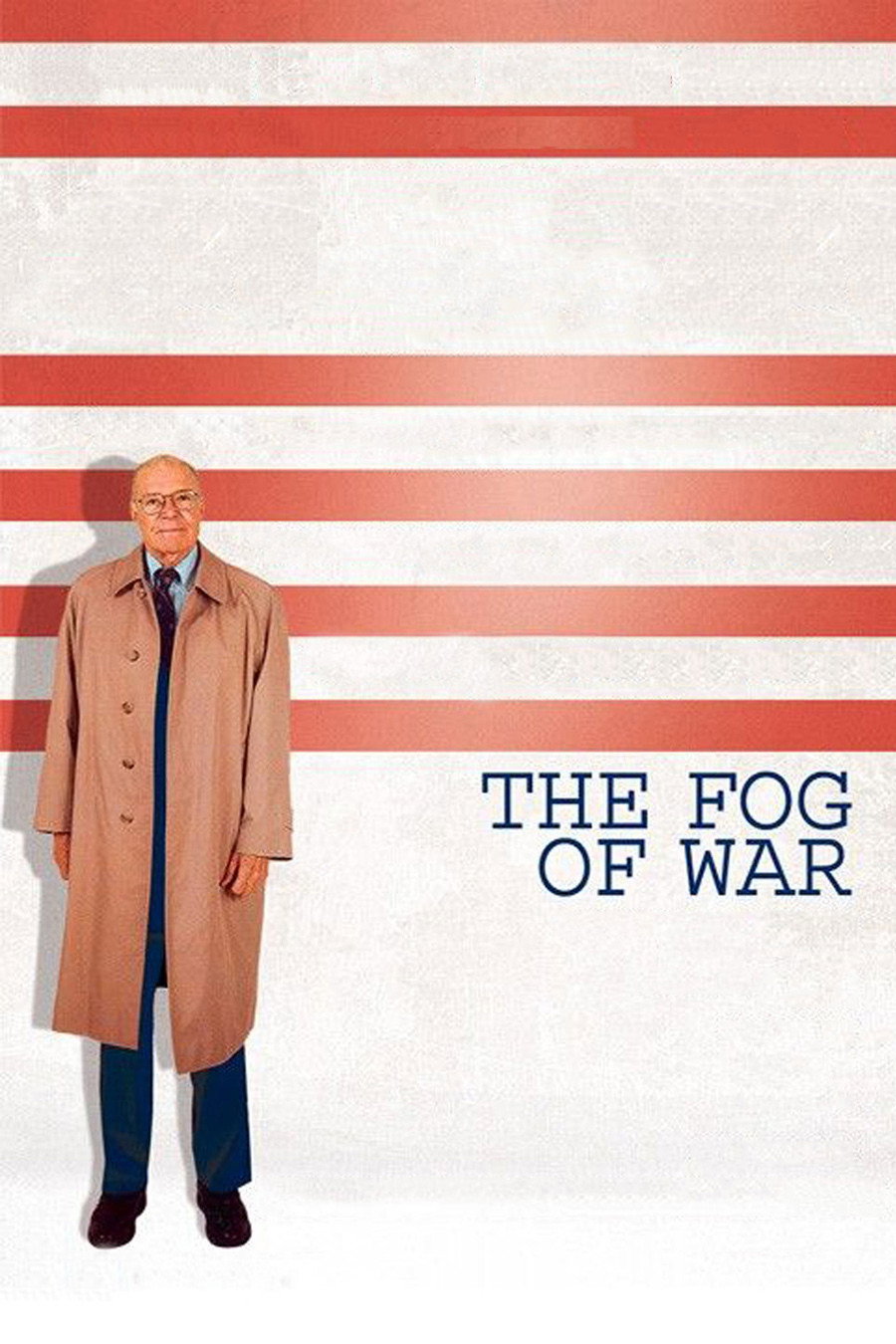
In The Fog of War (2003), Robert McNamara is allowed to think aloud at length. Morris keeps listening, and the longer the explanation runs, the more opportunity we have to hear where reasoning becomes evasion. We found ourselves respecting McNamara’s intelligence, then felt uneasy about how much that respect softened our response to his account. That is a good reason to watch Morris: he makes us notice our own willingness to be persuaded. The film sometimes needs to interrupt with a harder question.
His first feature, Gates of Heaven (1978), explored two pet cemeteries, establishing an interest in people whose concerns might otherwise be dismissed as eccentric. With The Thin Blue Line (1988), interviews and re-enactments became tools for examining a wrongful conviction. By Fast, Cheap & Out of Control (1997), he was cutting between four men’s lives, finding connections rather than treating each as a separate profile. The editing in the latter makes those connections, leaving the viewer to follow them.
His collaborators include composer Philip Glass, and he uses sound as well as constructed images to organise his documentaries. The Interrotron he invented is a teleprompter-based system that lets subjects look straight into the camera while speaking to him. That direct address makes the invitation to listen feel personal. His interviews are extended and deliberately non-adversarial, which can let a subject reveal more than an argument across a desk might.
The Fog of War remains our starting point, because it puts the value and the risk of that method in the same interview. Morris organises McNamara’s reflections into eleven lessons, a clear structure that sometimes makes enormous mistakes seem too neatly teachable. He does not always push hard enough when explanation threatens to stand in for responsibility, although allowing the answers to run gives us material to question them. His patience is largely justified here, and the film leaves us equipped to challenge the account we have heard. Watch it with someone prepared to disagree about when Morris should have asked the next question.
Biography
Errol Morris is an American film director. He was born on 5 February 1948 in Hewlett, New York. He graduated with a BA in history from the University of Wisconsin–Madison in 1969 and briefly attended graduate programmes at Princeton University and the University of California, Berkeley.
Morris began directing documentaries in the late 1970s. His films include Gates of Heaven (1978), The Thin Blue Line (1988), A Brief History of Time (1991) and The Fog of War (2003), which he also produced. The Fog of War won the Academy Award for Best Documentary Feature.