Andrew Jarecki’s film about a Long Island family charged with abusing the boys in its basement computer classes is patient, even-handed on the surface, and built from the family’s own tapes. It does not settle the case, and it does not have to.
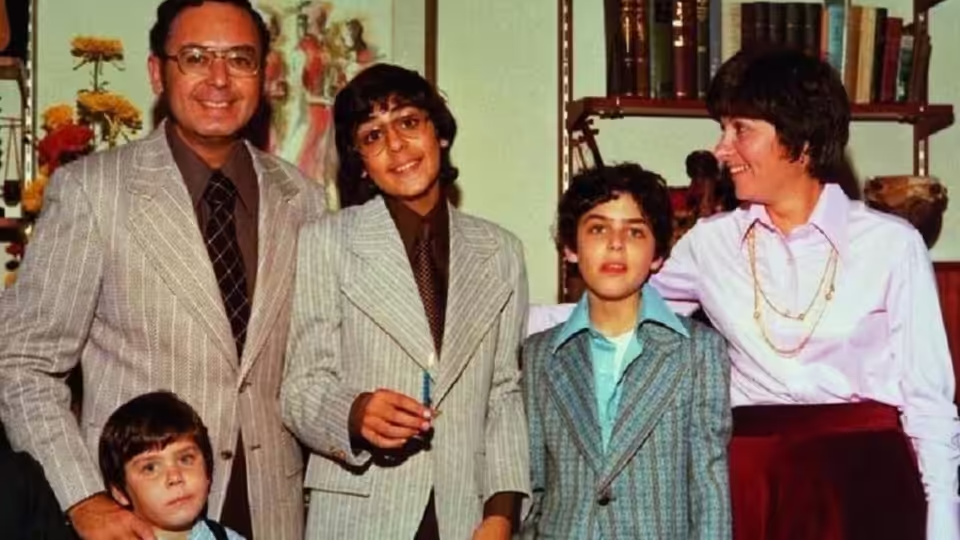
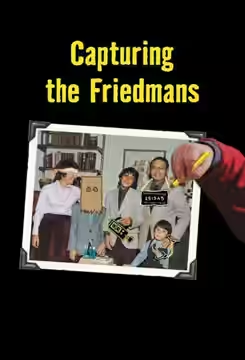
Andrew Jarecki began by making a film about children’s party clowns in New York, and one of the clowns turned out to be David Friedman. What he made instead is 107 minutes about the Friedmans of Great Neck, Long Island: Arnold, a schoolteacher who ran computer classes for boys in his basement; Elaine, his wife; and their sons David, Seth and Jesse. In 1987 a postal inspector intercepts a magazine of child pornography addressed to Arnold, the police raid the house, and Arnold and Jesse are charged with abusing the boys who came to the classes. It is one of the most unsettling documentaries we have seen, and its refusal to say what happened is mostly the right decision.
Jarecki has two archives. There are Arnold’s own home films, decades of birthdays and holidays and small boys in swimming trunks, which look like anyone’s until you know what came later. And there is the videotape David shot through the year of the case: his brothers at the dining table, his mother in the kitchen, himself in bed at night telling the camera what he cannot tell anyone else. Around these Jarecki sets his own interviews, shot by Adolfo Doring in plain rooms with soft light. Someone makes a claim, and then a tape, a photograph or another witness quietly disagrees.
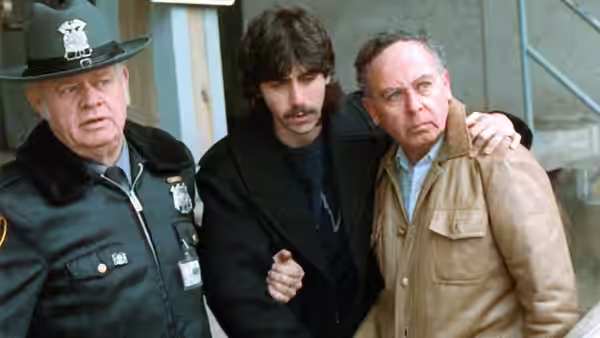
The police come off worst. Frances Galasso, who ran the Sex Crimes Unit, remembers stacks of pornography around the house in plain view; Richard Hankin then cuts to the police photographs, and there are none. Anthony Sgueglia, the detective, describes interviewing children over many sessions and says nothing was written down. Joseph Onorato, the assistant district attorney, is serene about all of it. Ron Georgalis, who took the classes, says he saw nothing. John McDermott, the postal inspector who intercepted the magazine, lays out his sting step by step, and that part of the case is never in doubt.
The family is harder to watch. Elaine Friedman is the film’s most difficult presence: she will not play the loyal wife, she tells the camera things about her marriage that nobody asked, and on the old tapes her sons treat her as the enemy for it. David is still angry and still certain. Jesse, eighteen when he was charged, speaks now with a care the boy on the tapes did not have. Seth declined to take part and appears only in the archive. Howard Friedman, Arnold’s brother, remembers him as a boy, and his loyalty is total.
One morning before a court appearance, David films himself and Jesse dancing around the kitchen. We felt ill watching it, and it took us a while to work out why: not because they were laughing, but because the boys from the computer class are almost nowhere on any tape, and the film has to keep reminding us they exist.
Hankin’s cutting is where the film thinks. He rarely lets an interview run long; he puts a memory next to a document and lets the gap do the work, and when he wants us to sit with something he holds on David’s face. Andrea Morricone’s score is the one place the film leans. It arrives when a Friedman is alone on screen and stays quieter around the police, and it tells us to grieve a little earlier than we had decided to.
That is the caveat. The tagline asks who we believe, and the film presents itself as not knowing, but the evidence Jarecki shows is the evidence that undermines the prosecution. The magazine was real, and the film says so. What happened in the basement it keeps open, by giving the doubters the better material. We do not think that is dishonest. We do think a viewer should know it going in.
Films that reopen a criminal case usually know what they think and want you to sign something. This one asks for attention. Watch it with someone, because you will want to argue afterwards, and not late at night, because you will not sleep. It carries a 15 and earns it without showing anything worse than a family at dinner.