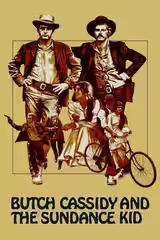
Most critics like it, and the ones writing decades after release like it best. The praise clusters on the Newman and Redford double act: the relaxed, straight-faced interplay between them is mentioned in nearly every review, and several call the film a buddy picture in western clothes rather than a western proper. William Goldman’s script is the next most praised element, described as witty, playful and quotable, with Conrad Hall’s photography and Burt Bacharach’s score picked out by more than one writer.
The spread is wide, and it runs along a line in time. The reviews from autumn 1969 are the coolest: The New York Times finds the genre-mixing slick but empty, Roger Ebert calls it slow and over-cute, and The New Yorker thinks the facetious tone rings false. Later writers concede some tweeness, a dated soundtrack and borrowings from The Wild Bunch, but treat those as small faults in something they find thoroughly likeable.