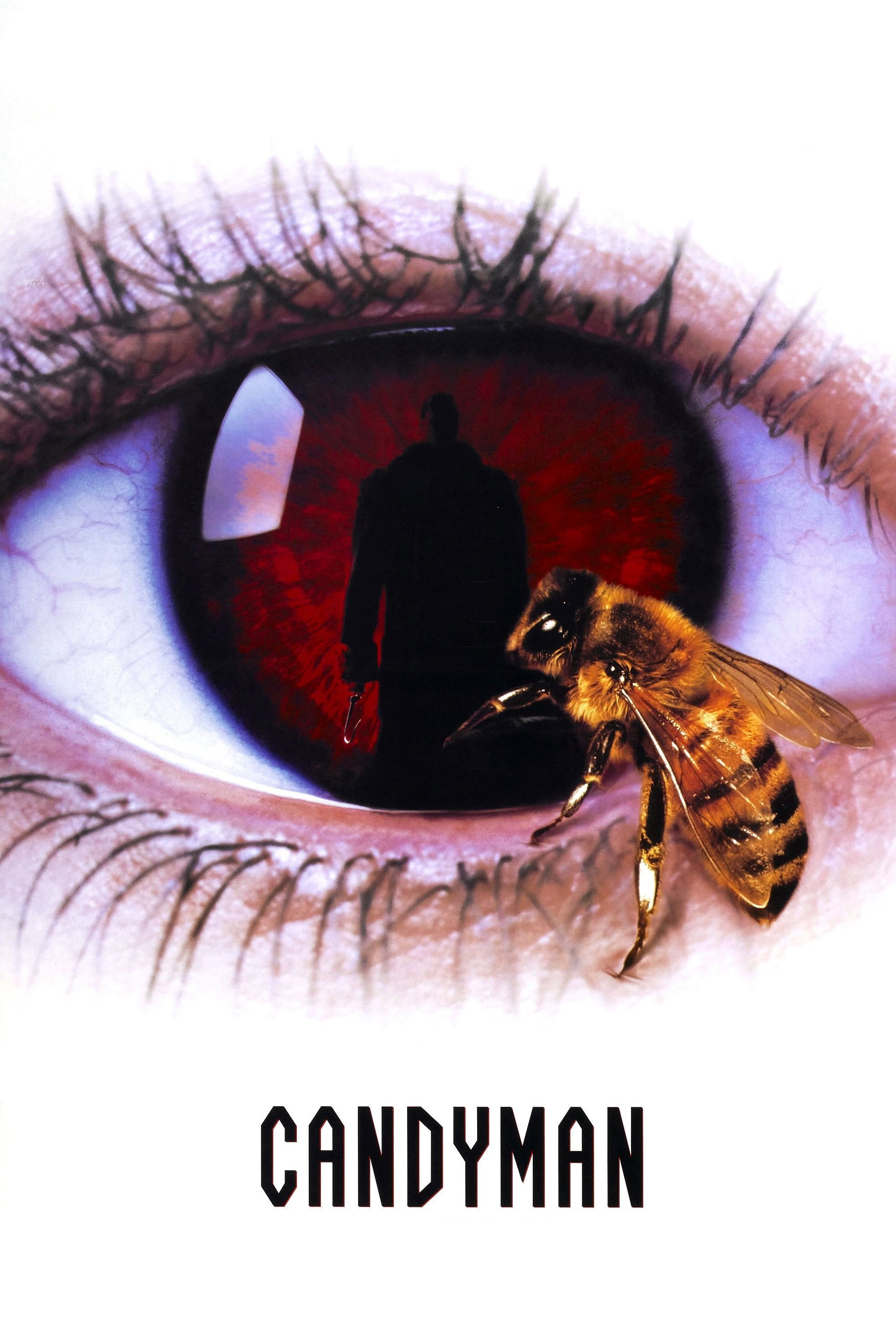
The critic describes the film as an intelligent, gripping and gimmick-free adult study in psychological fear and a breath of fresh scare. Virginia Madsen's performance and Bernard Rose's bold direction are singled out for praise.
The review highlights how the horror unfolds inside a housing project against a backdrop of racial injustice. It notes the spooky atmosphere from the cinematography and Philip Glass score while observing that the lead performance and direction exceed what the material demands.
The review calls the racial brinkmanship the film’s most original and effective gimmick, with the underlying notion about privileged whites and urban-black reality sharpening the satiric scenes. It concludes that despite slick savvy the film remains just a gory campfire tale best seen at midnight in a city.
The review finds the film pretentious and preposterous as it drowns in gore, with the writer-director focusing on violence rather than artistry or coherent ideas about racism and mythology. It praises the cast’s efforts but concludes they deserve better than this numbing result.
The critic calls Bernard Rose's film one of the most interesting and scary horror movies of the 1990s, played straight as intelligent and challenging horror. They single out the fantastic Philip Glass score and how bee stings have never seemed scarier.
The critic praises Bernard Rose's adaptation for its fluid boundaries between myth and reality and its exploration of sex, class and race in Chicago's projects. The film is highlighted for its unresolved narrative ambiguities and Philip Glass score that keep the Candyman legend alive.
The critic deems it a startlingly effective shocker that gains power on reflection, with baroque use of urban blight and subtle political undercurrents. They single out the juxtaposition of dizzy romanticism against dystopian elements and the systematic social degradation of the protagonist.
The critic calls it high-caliber horror in its purest, most primal form and a new bogeyman superior to previous slashers. They single out Tony Todd's powerful, frightening yet seductive performance as Candyman along with strong supporting turns and impressive effects and score.
The critic describes Candyman as a triumph of directorial poise that becomes less a frightener than an essay on fear under Rose's direction. They single out how it leaves viewers more fearful in the real world than in the cinema by not following the genre's bloody conventions.
The review calls the film a faithful, scary and visually imaginative adaptation that stages suspense and horror with skill and panache. It is deemed one of the best sustained horror movies for some years.
The critic praises the film's bold approach to racial themes and strong performances, especially Tony Todd and Virginia Madsen, along with Philip Glass' score and visual style, but notes issues with pacing, editing, and a clumsy ending. Overall, it's well worth watching despite flaws.
Ordered by the weight we give each publication, then by score. Scores are normalised to 100; * means inferred from an unrated review. Summaries are ours, not quotations; follow the links for the reviews themselves. How we rate