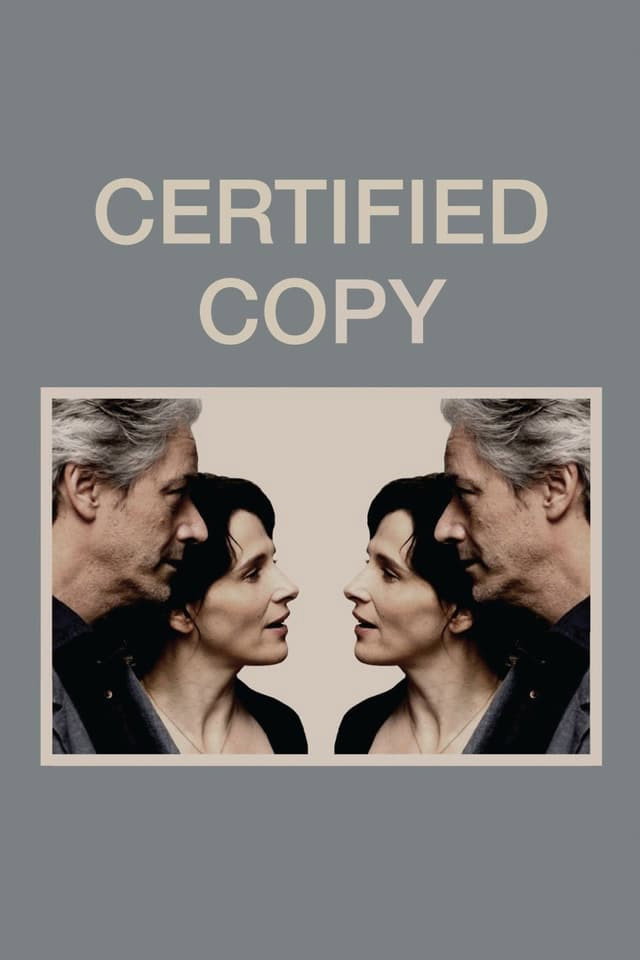
Most critics respond warmly to Certified Copy, finding Kiarostami’s conversations about art, authenticity and relationships both intellectually engaging and unexpectedly moving. Praise centres on Juliette Binoche, whose performance gives the film emotional weight even for some reviewers unconvinced by its central conceit. Many also admire Shimell’s contribution and the pair’s unsettled chemistry. The use of mirrors, reflections and Tuscan driving scenes draws attention for making the film’s questions about identity work on screen.
The spread is wide, however, and the chief disagreement concerns whether the ambiguity deepens the relationship or makes it difficult to care about. Even favourable reviews acknowledge a strained role-playing premise, lengthy conversations and unanswered questions. The Guardian finds the human relations contrived and the dialogue inert; Digital Spy praises the leads but finds little emotional warmth. Eye for Film is harsher on Shimell, judging his performance wooden while admiring Luca Bigazzi’s cinematography.
S
Slant Magazine
22 September 2010 · Ed Gonzalez
90*
The film is a resplendently heady yet nimble essay on art, life, landscape, and love whose emotional feeling proves it a certified copy of real life. It singles out Binoche’s profoundly emotional and philosophical consideration of mortality and loneliness in the scene watching an old couple.
Read the full review →N
The New York Times
10 March 2011 · NYT Critic’s Pick · Stephen Holden
90*
The critic praises the film as a delicious brain tickler and endless hall of mirrors, a metaphysical labyrinth about a middle-aged couple driving through Tuscany. He singles out the erudite debate on artistic authenticity and the way the story multiplies reflections on copies, originals, and identity.
Read the full review →The film is a thrilling exploration of fluid identities and relationships that becomes intensely real despite its artifice, with tactile emotion, shocking anger, tenderness, and devastating epiphanies. It singles out Binoche’s dissolving performance in long takes and the director’s skill at car scenes.
Read the full review →N
The New Yorker
10 March 2011 · Richard Brody
85*
The critic calls the film mysterious, paradoxical, and deeply ambitious, a lovely manifesto on freedom and the bonds of self and marriage. He singles out its portrayal of the eternal return and the aesthetic value of the copy, along with its sensual and conceptual delight in light, reflections, and shifting identities.
Read the full review →E
Empire
23 July 2010 · David Parkinson
80*
The film is a philosophically provocative and mischievously rom-comic pastiche of bickering couple pictures, using mirrors and shifts of perspective to keep the audience guessing about the central relationship. The leads respond splendidly to Kiarostami’s playful mockery of arthouse and mainstream clichés.
Read the full review →S
Screen Daily
18 May 2010 · festival review
80*
This is Kiarostami’s most commercial film to date, a captivating divertissement that marries post-modern reality games with mature romantic comedy in a breezy, thought-provoking package. It conforms on one level to Hollywood genre conventions while remaining smartly Euro-friendly and targeted beyond hardcore cineastes.
Read the full review →T
Time Out
31 August 2010 · ★★★★ · David Jenkins
80
Kiarostami delivers a challenging, ambiguous and moving film that requires intellectual engagement with its decontextualised relationship fragment. Binoche and Shimell deliver superb performances with off-kilter chemistry, though the central role-play premise rings slightly false.
Read the full review →H
The Hollywood Reporter
14 October 2010 · festival review · The Associated Press
70*
The film is an engaging return to narrative cinema, a delicate bittersweet comedy set in romantic Italy that slyly explores marriage and the ways men and women fail to think alike. It features strong performances from Binoche and Shimell but is too offbeat for wide audiences.
Read the full review →E
Evening Standard
10 April 2012
65*
The unresolved ambiguity around the couple’s relationship makes the film feel empty, though it represents a strange turn for the director. Juliette Binoche is fantastically engaging and gives the film its heart, while the rigorous camerawork and naturalistic soundtrack remain great pleasures.
Read the full review →L
Little White Lies
3 September 2010 · 3/3/3 · Adam Woodward
60
The film offers poetic and cinematic beauty but little emotional gratification or investment in its characters. It questions authenticity through its central couple's interactions in Tuscany but leaves audiences frustrated by its elusive approach.
Read the full review →G
The Guardian
2 September 2010 · Peter Bradshaw
40*
The critic describes the film as a baffling, contrived and bizarre deconstructed portrait of a marriage with unconvincing human relations and inert dialogue. He praises Kiarostami's ambition in aspiring to a cinema of ideas but finds the overall effect strange and unreal.
Read the full review →P
The Playlist
18 May 2010 · festival review · Kevin Jagernauth
90*
Kiarostami executes a simple premise with brilliant elegance in this character study of a couple whose shared past gradually reveals itself, resulting in a funny, moving, intellectually absorbing and emotionally rich film. The script’s raw realism and the lead performances, especially Binoche’s, are singled out.
Read the full review →P
Paste
11 March 2011 · Paste Staff
85*
The review finds the film hits on all levels, delivering a picture that is complex both formally and emotionally and showing why Kiarostami’s feature absences were sorely missed. It singles out Binoche’s performance for giving the film real emotional impact amid its intellectual games and narrative loop.
Read the full review →D
Den of Geek
5 September 2010 · ★★★★ · Michael Leader
80
The film is a subtle, experimental take on romance and authenticity, using ambiguous realism and lengthy conversations to explore meaning, observation and unreliable narration. Binoche and Shimell deliver strong performances, though the wordy two-hander may not satisfy mainstream viewers seeking clear answers.
Read the full review →H
HeyUGuys
31 August 2010 · Gary Phillips
70*
The reviewer found the film enjoyable as an accessible arthouse entry with strong direction and a clever central concept about authenticity, though it remains an acquired taste due to its slow pace and unanswered questions. Binoche’s performance and the use of mirrors/reflections in the Tuscan driving scenes stand out for praise.
Read the full review →D
Digital Spy
23 May 2010 · festival review · Simon Reynolds
40*
Kiarostami delivers a thoughtful but cinematically inert two-hander full of lengthy conversations about love, originality and relationships that feels more suited to theatre than screen. Binoche and Shimell are strong with convincing chemistry and ambiguity, but the film stimulates the mind without touching the heart, leaving it chilly and distant.
Read the full review →E
Eye for Film
27 August 2010 · Jennie Kermode
30*
The review calls the intriguing premise a disappointment that fails to become the gem it could have been, weighed down by leaden early dialogue, excessive slowness, and a wooden performance from Shimell. Luca Bigazzi’s cinematography of the Tuscan locations receives praise for its beauty and immediacy.
Read the full review →Ordered by the weight we give each publication, then by score. Scores are normalised to 100; * means inferred from an unrated review. Summaries are ours, not quotations; follow the links for the reviews themselves. How we rate