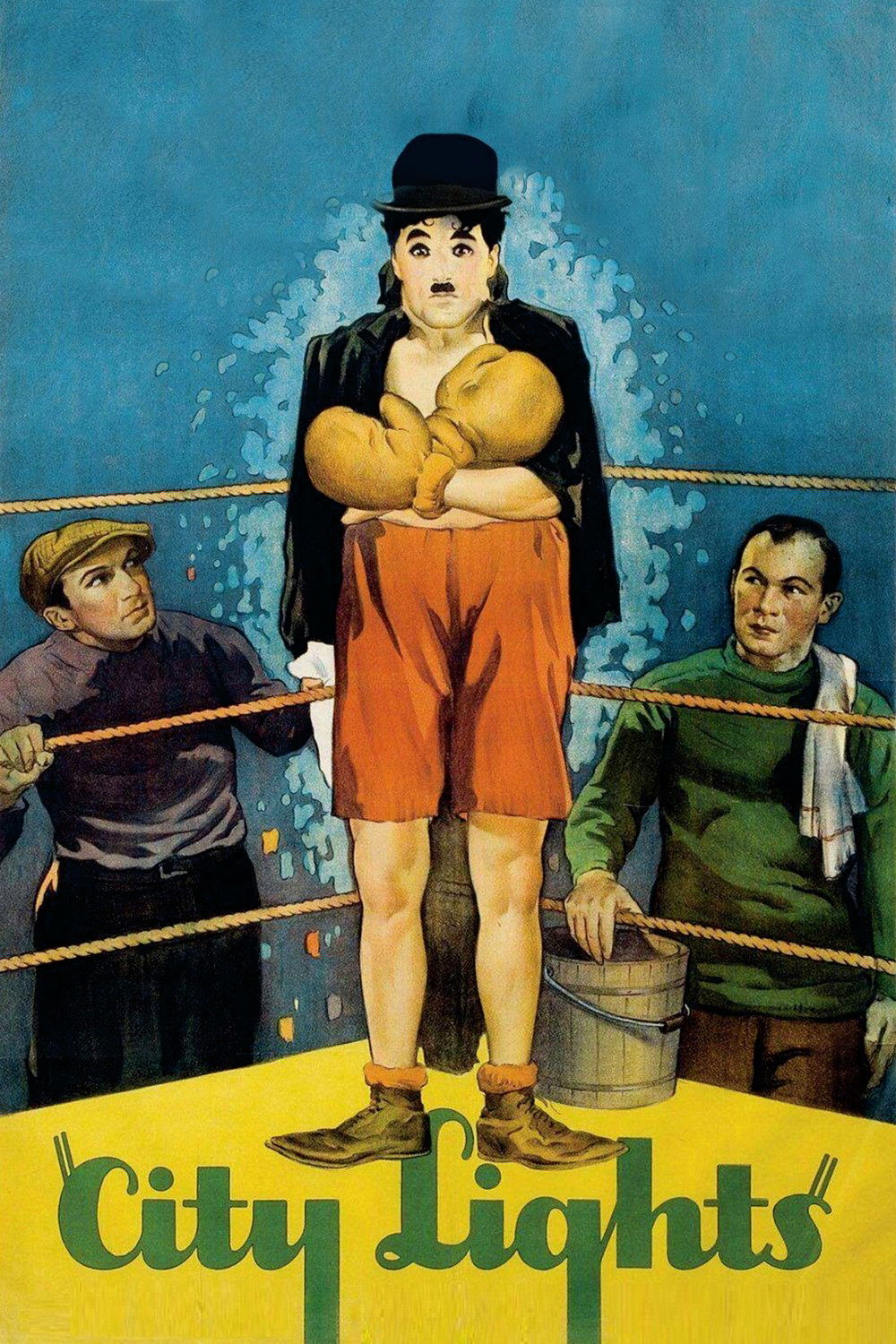
Chaplin's City Lights succeeds as timeless comedy rooted in basic human needs rather than topical events. The film masterfully blends sentiment with gags through the Tramp's pantomime and avoids dialogue to preserve its visual eloquence.
The critic calls the film a precision blend of slapstick and sentiment that was proclaimed Chaplin's masterpiece after he stuck with silent techniques. It highlights hilarious comedy sequences like the boxing match and elevator gag alongside its touching qualities.
The review calls City Lights a masterpiece and one of cinema's greatest endings, praising its ability to convey profound human desire for acceptance through silence and narrative alone. It singles out the final shot of the Tramp's naked self-exposure and vulnerability as the film's emotional and philosophical peak.
The review reprints and endorses the original 1931 verdict that the film is very funny with strong entertainment value despite not being a world-beater. It singles out the opening gag mocking talkies and the prize-fight sequence as standout comedic highlights, along with Chaplin's eloquent pantomime.
Chaplin proves the eloquence of silence in this non-dialogue film full of mirth and pathos. The production is worked out with admirable artistry, mixing laughter with sentiment in an eloquent silent picture.
The film comes close to excessive sentimentality in its story of the Tramp's love for a blind flower-seller but is saved by slapstick and Chaplin's delicate handling of emotion. Its structure is baggy, yet it contains many great moments and well-judged sound effects.
City Lights is another good Chaplin picture with strong box-office potential due to its novelty as a silent film and the star's popularity, though it may tire after the first week. It sacrifices speed for pathos and is not his best, but features hilarious sequences like the prize fight and superb pantomime.
The critic calls it a wonderful love story with the most romantic, life-affirming final shot in cinema. They highlight its intelligence, social conscience, and perfect blend of comedy, romance, and commentary on class and perception as close to cinematic perfection.
Ordered by the weight we give each publication, then by score. Scores are normalised to 100; * means inferred from an unrated review. Summaries are ours, not quotations; follow the links for the reviews themselves. How we rate