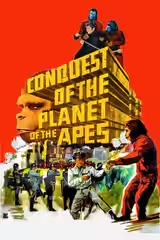
Most critics come down in favour, and the warmest reviews are the most recent ones. Several call this the angriest and boldest film in the series, a slavery-and-fascism allegory that builds resentment towards a riot-scale uprising. Praise clusters on J. Lee Thompson’s direction, credited with hiding a small budget behind claustrophobic sets, expressive lighting and clashes staged to look like real riots, and on Roddy McDowall’s Caesar, whose speech several reviews single out. Where the director’s cut and its harsher original ending are mentioned, they are preferred.
The reservations are about money and repetition. Empire finds the film going through the motions, ticking off series lore; RogerEbert.com is the lone negative, calling the production cheesy, the action repetitive and the story seemingly improvised. Film Stories notes the budget straining in the finale and Ricardo Montalban sitting oddly against the serious tone. The spread is wide, from the low thirties to ninety, with the 1970s notices settled in the middle.