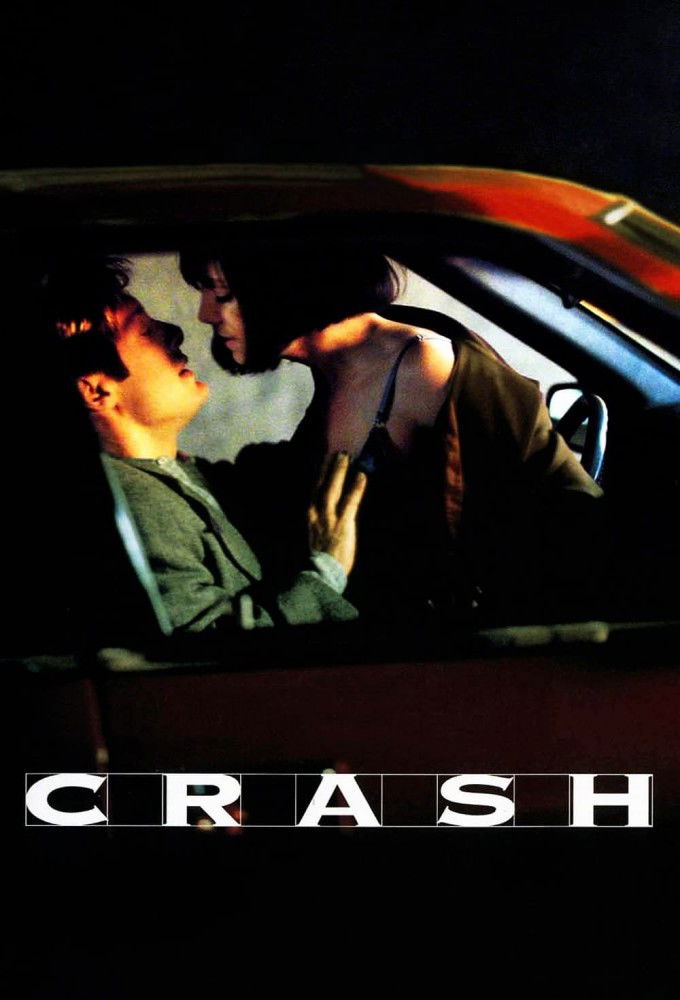
The film holds up well decades later and remains deeply strange, risky, creepy, menacing and hypnotic in its dedication to eroticism. It cannot fully capture the chill of Ballard's novel and feels less contemporary now that cars are less culturally charged.
The critic finds the film remarkably uninvolving despite its premise from Ballard’s novel, praising the cleverly designed titles and Howard Shore’s music but criticizing the lack of emotional engagement, the realistic style that clashes with implausible scenes, and Cronenberg’s handling of the material as a backward step from his earlier work.
The critic calls the film a controlled experiment that uses style to seal itself off from the mess of the world, with an eerie lack of background noise and characters treated as lab rats. He notes that while it gleams with metallic loveliness, its loftiness grows tiring and the desire to be a work of art threw it off the road.
The critic finds the film disturbing in its initial recklessness and ultimate timidity, noting that it lacks the true audacity its material demands despite being meticulously stylized. She acknowledges it as a striking oddity that deserves to be taken seriously as part of Cronenberg's idiosyncratic career.
Cronenberg's adaptation of Ballard's novel is imaginative and faithful, consisting chiefly of obsessive, claustrophobic, transgressive sex scenes. It is a dark, disturbing, languorous movie that is admirably assured and true to itself.
The critic describes the film as a forbiddingly frigid piece of esoteric erotica that remains an exceedingly intellectual work of cold sensuality with appeal only to specialized audiences. He praises the director's precise control and the film's technical craftsmanship but notes that its concerns are peculiar and off-putting to most viewers.
The review calls it vital, riveting filmmaking perfectly matched to its source material, an unmistakably Cronenberg take on eroticized technophilia and premillennial angst that is disquieting and full of perverse intelligence. It singles out strong performances, especially from Holly Hunter, Elias Koteas, and James Spader, and the film's enduring ideas about technology, sex, violence, and the psyche.
The critic finds it a slow-paced, deliberately remote intellectual art film that will leave many cold but rewards patient viewers with a powerful second half and unexpectedly moving conclusions. It singles out the film's precise construction and its ability to make audiences rethink the world through its themes of trauma, desire, and reinvention.
Ordered by the weight we give each publication, then by score. Scores are normalised to 100; * means inferred from an unrated review. Summaries are ours, not quotations; follow the links for the reviews themselves. How we rate