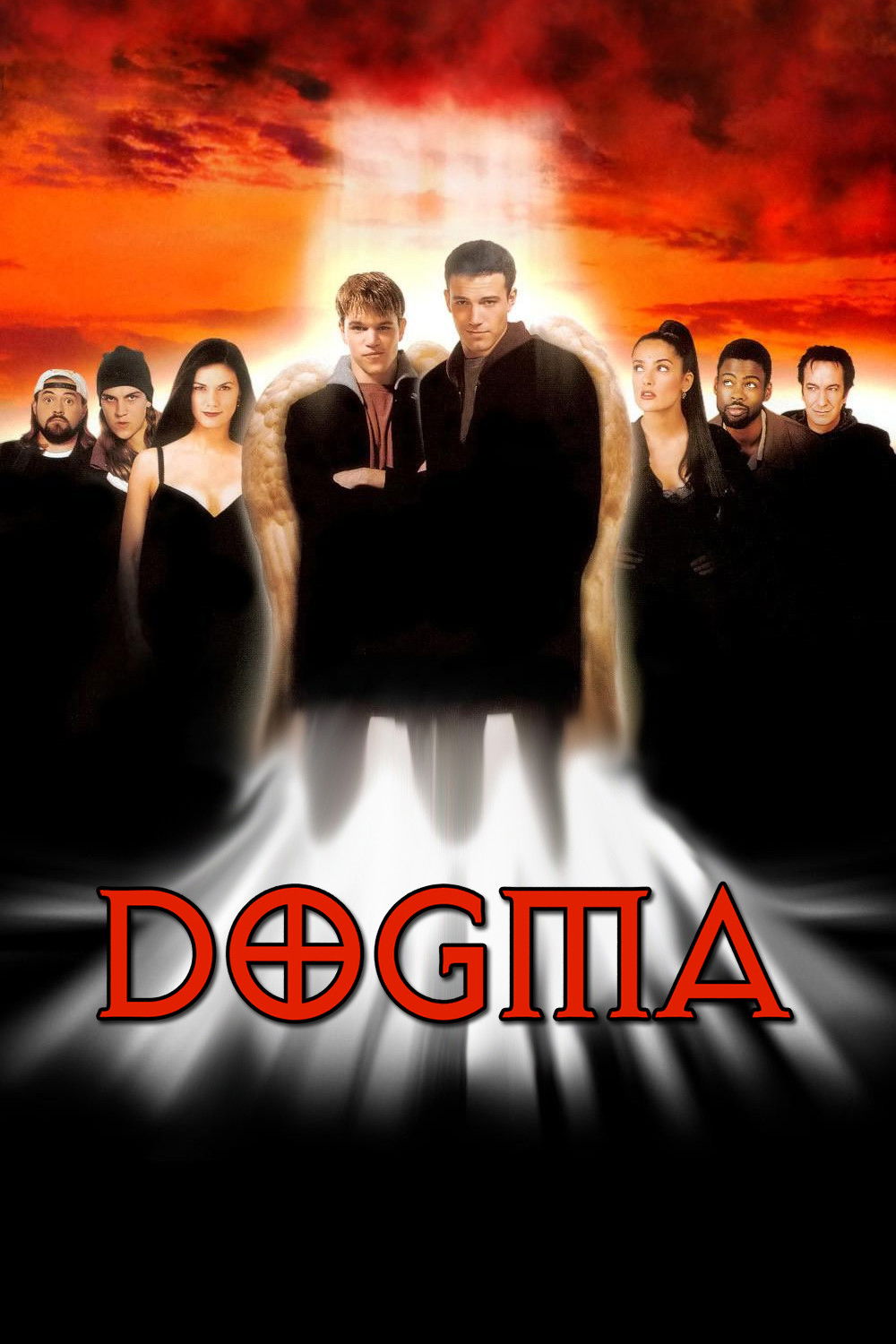
Most critics like Dogma, and the praise gathers around the same point: a film that takes swipes at organised religion while plainly believing in it. Several reviews find it more devout than blasphemous, with the gags sitting inside a sincere parable about faith. The theological arguments earn more credit than the filmmaking, and the pairing of Ben Affleck and Matt Damon as the fallen angels is the performance most often singled out. Later reassessments tend to call it Smith’s strongest film.
The reservations cluster around length and discipline. Admirers call it uneven and overstuffed, with too many characters and a plot unsure of its ending. The sharpest dissent comes from Sight and Sound, which argues that heavy-handed piety stands in for satire, and from Variety, which faults a lack of visual invention. Time Out finds it too talky and in-jokey to work as either comedy or provocation. The recent notices are warmer than those from its first release.
V
Vulture
6 June 2025 · Bilge Ebiri
90*
The critic hails Dogma as Kevin Smith’s best and most personal film, praising its irreverent yet earnest take on faith and the lo-fi sincerity of its storytelling.
Maslin calls the film audacious and exhilarating, praising how Smith places its outrages in the context of a devout parable and makes a gutsy leap into questions of faith while remaining cynicism-free.
Dogma is a demolition of organised religion told from the perspective of a true believer, filled with debates, jokes and gags that make it worth celebrating and discussing despite some faults. The low-key ending affirms the mystery of blind faith in a moving way that is both childish and profound.
Ebert finds the film funny and smart in its theological debates, more devout than blasphemous for those familiar with Catholic concepts, and praises its assumption that the teachings are literally true along with the redemption note at the end.
Turan describes it as a lively if uneven film of ideas combining breezy comic fantasy with crude humor and sincere religious questions, calling it a one-of-a-kind pro-faith effort despite its length.
Lane notes the film's irreverence and broad comedy but finds knockabout pleasure in its portrait of belief, comparing it favorably to Monty Python and highlighting its old-fashioned doctrinal quibbles and wish to believe without structures.
The critic finds the film exasperatingly smug and transparently sophomoric in its attacks on organised religion, but praises its funky, expertly made quality with an engagingly surreal line of fun and incomparably funny popular-culture asides.
The film is overlong and confused with too many characters and a complicated storyline that leaves it unsure of its ending. It earns credit for its move to the mainstream and has moments of genuine hilarity along with bold aspiration in tackling religion.
The critic calls Dogma a noble failure that substitutes heavy-handed piety for genuine religious satire. While the cast brings sporadic energy, the episodic road-movie structure and visual direction expose Smith's weaknesses.
McCarthy finds it an extraordinarily uneven and overly long vulgar pro-faith comedy that belabors its assault on institutions, praising the writing and humor but criticizing lack of discipline, technical skills, and visual invention.
Smith takes an ambitious step but falls flat on his face after a promising start. The film is too talky and in-jokey, not funny or subversive enough, and ultimately unsurprising given the director's Catholic faith.
Dogma is Kevin Smith's most sophisticated and intriguing film to date, finding him at his peak as a religious satire, sincere declaration of faith, and superhero-style adventure. The central duo of Bartleby and Loki, played by Ben Affleck and Matt Damon, is singled out for their charisma and chemistry that carries the film's stakes through dialogue rather than action.
The piece praises Dogma as Kevin Smith’s strongest film with his biggest and best narrative, while still capturing his trademark conversational energy. It singles out the philosophical conversations and chemistry between Damon and Affleck as the standout element.
The critic views the film positively as a richly imagined departure that feels like Smith’s most convincing play for a post-Jersey afterlife, respectful to Catholicism while irreverent. He singles out the way the Catholic elements open up Smith’s work and give it weary hopefulness beyond his usual bubble.
The critic finds the film an enjoyable, irreverent religious comedy with sharp dialogue that challenges political correctness and features a strong ensemble including new faces like Chris Rock and Salma Hayek alongside Smith's regulars. He singles out the complex plot and supernatural elements for praise, urging viewers to simply sit back and enjoy the ride.
Ordered by the weight we give each publication, then by score. Scores are normalised to 100; * means inferred from an unrated review. Summaries are ours, not quotations; follow the links for the reviews themselves. How we rate