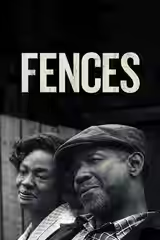
Most critics like it, and nearly all of them like it for the same reason: the acting. Denzel Washington’s ageing, embittered patriarch and Viola Davis’s proud, wounded wife are praised in almost every review, with Davis’s central monologue named more often than anything else in the film. August Wilson’s dialogue is the other constant. Reviewers with doubts about everything else still admire the writing, and several credit Washington’s direction for standing back and letting the actors carry it.
The reservations are about the same thing too. Almost every review, warm or cool, calls the film stage-bound; the disagreement is only over whether that matters. The generous camp says the words and performances are enough. The sceptics say a play filmed this faithfully is barely a film at all. The spread is wide. The Playlist finds it static and long-winded, Slant thinks Washington’s direction timid, and Vulture prefers Henderson to either lead. Nobody disputes the performances.
E
Empire
6 February 2017 · Terri White
90*
The critic lauds the film's faithful adaptation and the complex, powerful lead performances, especially Washington's and Davis's. She highlights its substantive dialogue and emotional depth as worth the effort despite its stage-bound style.
The film succeeds by focusing on the powerful writing and committed performances rather than opening up the play cinematically. Washington’s direction supports the actors, with Viola Davis delivering an especially devastating monologue.
Washington’s marvellous adaptation provides the actor-director with one of his finest roles and a powerhouse performance as an ageing patriarch undone by pride, stupidity and bitterness. With Davis equally magnificent, it is a deeply affecting treatise on marriage, poverty and the struggles of sons.
Washington’s direction stays very close to the stage original, resulting in a talky but powerful showcase for the two stars. Davis in particular gives a sensational, Oscar-worthy performance that anchors the drama.
Washington directs and stars in a powerful, respectful, occasionally shouty screen version of the play that is muscular, solid and sturdy. Davis is the star of the show as the hurt, proud and determined wife in this hothouse domestic drama.
The critic commends Washington and Davis for excelling in this well-crafted drama that brings August Wilson's words to a wider audience. She singles out the strong performances and celebration of spoken word while noting some pacing issues after the emotional peak.
The film is a faithful, stagy transfer of the August Wilson play that serves primarily as a showcase for its two lead performances. Washington and Davis deliver towering, committed work that builds to moments of real emotional force.
Washington and Davis deliver towering performances in this compelling but episodic adaptation that feels prestigious and weighty, with strong dialogue and acting offset by a sense of top-heavy importance.
The critic praises the powerhouse performances of Denzel Washington and Viola Davis as the highlight that overcomes any flaws. She criticizes the overly faithful, stagey direction and some convenient plot elements.
The film is stagebound and reverent to the play’s language, limiting its cinematic energy, but powerhouse acting and Wilson’s dialogue make the key moments essential and moving.
The critic praises the faithful adaptation and stellar performances by Washington and Davis but notes it remains too theatrical and lacks cinematic innovation.
The critic finds this a faithful but stage-bound adaptation where the richness and intensity of the play does not fully make the jump to screen. Viola Davis steals the show with a performance that monitors a change in temperament from dutiful wife to bruised avenger.
The critic commends the cast's powerful performances and the play's vitality but faults Washington's timid direction for not fully realizing its cinematic potential.
The review finds the film stuck between stage and screen, intelligent but not fully cinematic or theatrical, with strong performances especially from Henderson.
The review hails the film as a cinematic document of Wilson's masterpiece, highlighting Viola Davis's explosive, heartbreaking performance as the standout, along with strong work from the cast including Washington. They single out the dense, high-level dialogue and Washington's respectful direction that lets the actors shine without flashy techniques.
The critic praises Washington's surest directorial effort yet and the powerful performances by Washington and Viola Davis in adapting August Wilson's play about an African-American patriarch in 1950s Pittsburgh. They single out the richly evocative writing and the actors' ability to bring complex marital dynamics and family tensions to vivid life.
The film feels like a stage play throughout but the rich dialogue and exceptional performances make it compelling anyway. The cast, especially Viola Davis and Denzel Washington, deliver standout work in this portrait of family and societal tensions.
Praises the powerhouse performances of Washington and Davis as the film's highlight and Oscar-worthy, while noting Washington’s growth as director. Complains that the film feels overly long and stage-bound despite its relevance.
Calls it a masterwork for its acting showcase and powerful, relevant themes but a pedestrian cinematic achievement too devoted to its theatrical roots. Singles out the strong performances and dialogue as the main draws.
The film is a solid but stage-bound adaptation of August Wilson's play, elevated primarily by the powerhouse performances of Denzel Washington and Viola Davis. It struggles to transcend its theatrical origins, with dialogue that feels artificial on screen and a pace that becomes tedious over its long runtime.
Notes the play's power and vivid language with great performances but finds the adaptation feels like a filmed production without enough cinematic translation. Praises the cast and dialogue while complaining it remains too stage-bound.
The adaptation is overly faithful to the source play, resulting in a static, uncinematic filmed version that lacks inspiration despite the strong cast. Its high fidelity to the text makes it feel enclosed and longwinded.
Ordered by the weight we give each publication, then by score. Scores are normalised to 100; * means inferred from an unrated review. Summaries are ours, not quotations; follow the links for the reviews themselves. How we rate