Denzel Washington films August Wilson’s play with the camera at a respectful distance and the actors at full volume. Washington and Viola Davis are as good as the reviews say; the direction rarely does more than keep them in frame.
Denzel Washington has filmed August Wilson’s play about as faithfully as a play can be filmed. Troy Maxson hauls rubbish in Pittsburgh in the 1950s, comes home on a Friday with his pay and a bottle of gin, and holds court in his back yard for most of the film’s 139 minutes. Washington directs himself in the part, with Viola Davis as his wife Rose, and the screenplay is credited to Wilson alone. What you get is a fine record of a great play and not much of a film, and it is worth knowing that before you sit down.
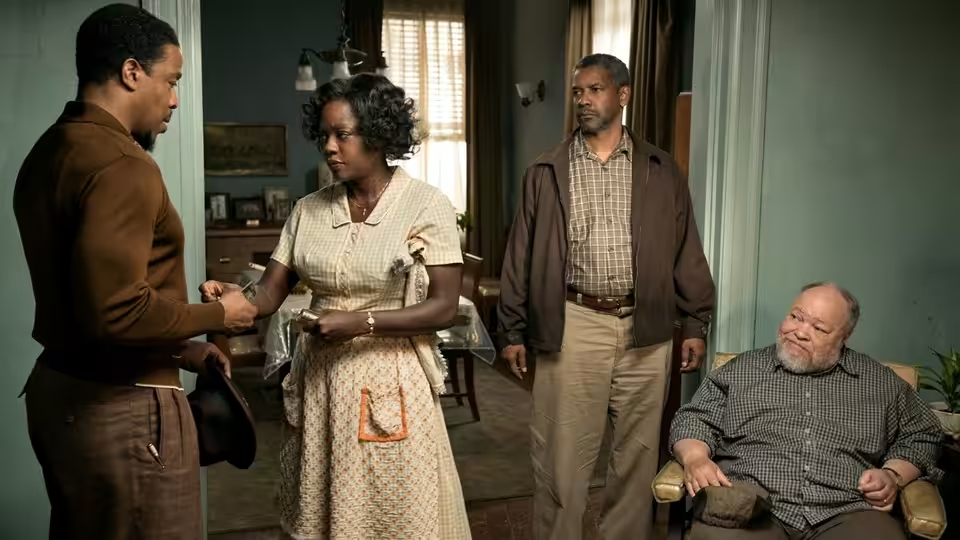
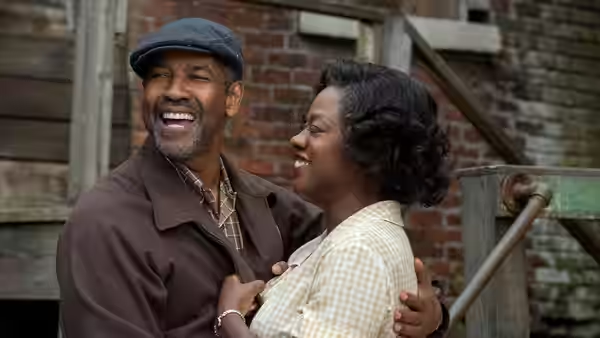
The play is the reason to come. Troy is a talker. He tells Bono and Rose how he wrestled Death for three days and won, how he hit home runs off pitchers better than any the white leagues had, and why the white leagues never had him. Washington plays him at full stretch, laughing at his own jokes and swinging a bat at a rag ball tied to the tree, and then, when his son Cory (Jovan Adepo) asks why his father has never liked him, going quiet and answering honestly. It is a big performance and it is meant to be. Troy fills the yard because there is nowhere else he is allowed to fill.
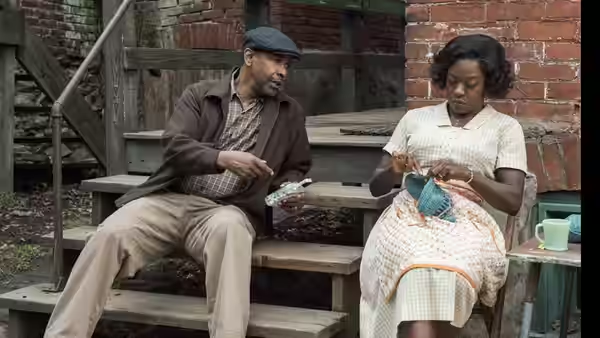
Davis has less to say for the first hour and uses every second of it. Rose stands in the kitchen doorway drying her hands, laughs at stories she has heard a hundred times and corrects the details. You can watch her keeping the house level while her husband talks. Stephen McKinley Henderson, as Bono, is the friend who knows how long to let Troy go on and when to change the subject, and his scenes are the quietest and among the best. Mykelti Williamson plays Troy’s brother Gabriel, damaged in the war and wandering the streets with a trumpet, and does not overplay him, which is harder than it sounds. Russell Hornsby’s Lyons turns up on Fridays for ten dollars and takes the lecture that comes with it.
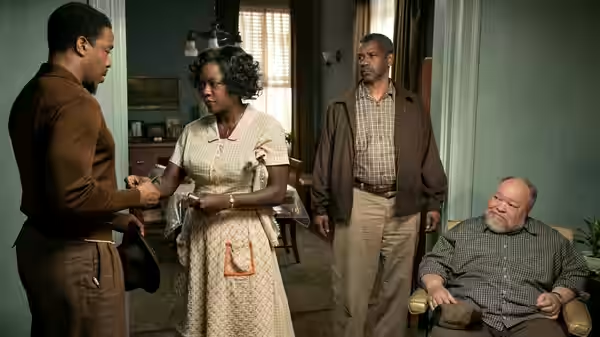
Charlotte Bruus Christensen shoots the yard in flat, unlovely daylight, the brick a dull red and the grass mostly dirt. David Gropman gives the Maxsons a narrow house hemmed in by the neighbours’ walls, a pile of timber Troy never quite gets round to and the tree with the rag ball. Sharen Davis puts Troy in work clothes he has not changed and Rose in house dresses and an apron. Marcelo Zarvos keeps his score to a few bars of piano between scenes and stays out of the arguments. Hughes Winborne cuts within the speeches sparingly and holds on whichever face is listening.
What Washington has not done is direct a film. He has put the camera roughly where a seat in the stalls would be and let it watch. The lines are spoken at a volume built for the back row, and with the camera two feet from Troy’s face they land harder than they should. There are excursions, to the street, the bar, the depot where Troy wants to be the man driving the truck rather than the one lifting the bins, and they feel like a director stepping outside for air and coming straight back. After the emotional peak of the second half there is half an hour still to go, and the film gets through it dutifully.
And yet. There is a scene in the yard, in the second half, that we will not describe, in which Rose finally answers her husband. Davis does it with her face wet and her voice not yet raised, and we noticed we had stopped breathing. Before that we had spent an hour being angry at Troy in the way you are angry at a relative, for the pride and the jokes and the son he cannot see straight, and the anger is what makes the scene land. The play knows this. The film, to its credit, gets out of the way.
Washington directed Antwone Fisher (2002) and The Great Debaters (2007) before this, and this is the steadiest of the three, because the material is stronger and he trusts it. It is also the one that most resembles a play with a camera in it. If you know Wilson, or want to, there is no better way to meet Troy Maxson short of a theatre. If you were hoping for cinema, you will spend some of those 139 minutes waiting for the camera to do something, and it will not.