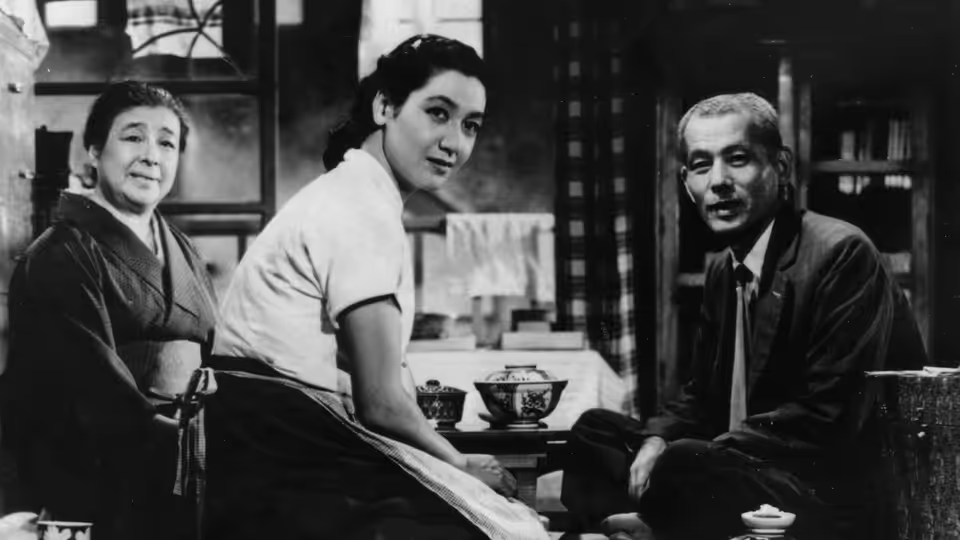
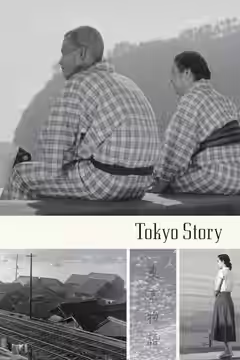
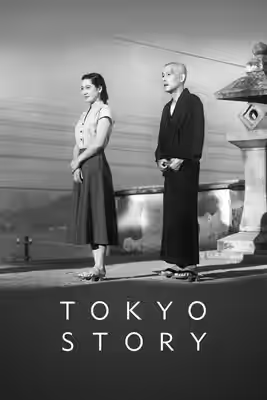
Yasujirō Ozu’s family drama makes ordinary neglect almost unbearable without turning anyone into a villain. Chishū Ryū and Setsuko Hara are finely judged, though the deliberate pace needs a little patience at first.
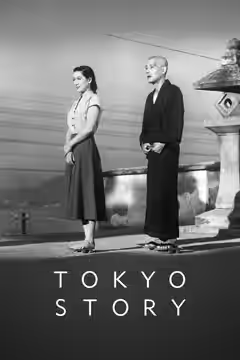
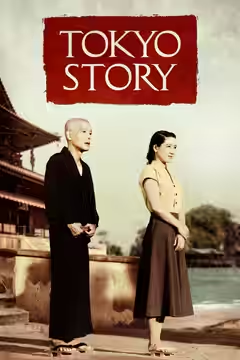
Tokyo Story is an exceptional family drama, and it deserves an evening without interruptions. Yasujirō Ozu takes an ageing couple’s visit to their adult children and lets ordinary discourtesy become painful enough to make us squirm. The premise promises little incident, and the film’s patience may initially seem excessive. Stay with it: the people become so recognisable that their smallest failures of care start to hurt.
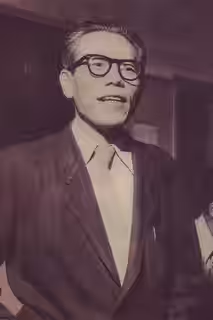
In a family drama, we often wait for the accusation that will make everybody say what they mean. Ozu and co-writer Kōgo Noda find plenty to trouble us in the ordinary business of parents and children spending time together. The younger generation’s ingratitude is mild enough to sound defensible, which makes it harder to dismiss. We recognise the convenience of treating an obligation as somebody else’s problem. The writing leaves room for that recognition without insisting that every lapse proves a rotten character.
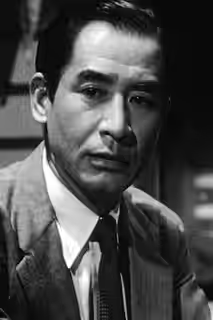
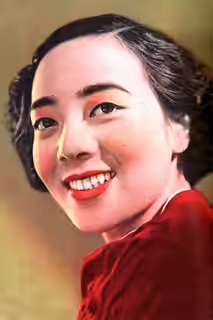
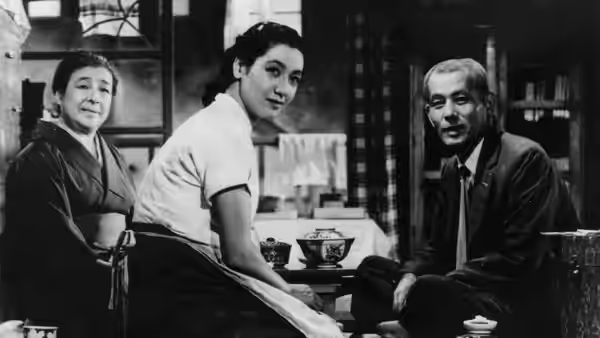
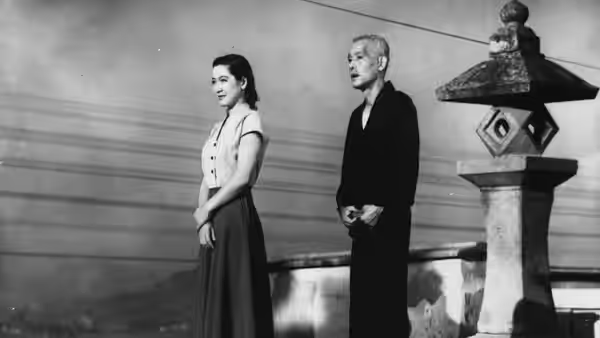
Chishū Ryū’s Shukichi Hirayama is especially moving because we can read disappointment without being invited to pity him. Ryū makes the father’s reserve feel like a habit acquired over a lifetime, and his affection remains persuasive even when we find the children difficult to forgive. Chieko Higashiyama is equally convincing as Tomi Hirayama, giving the couple’s visit emotional weight beyond its modest events. We believe that these two people have spent years accommodating others, including each other.
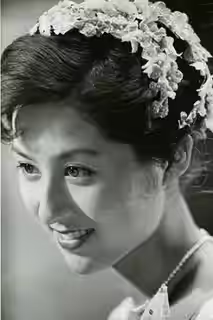
Setsuko Hara’s Noriko, the couple’s widowed daughter-in-law, offers the kindness that their own children struggle to give. We were moved by her attention to the visitors, because Hara makes caring for them seem such an ordinary thing to do. After the children’s mild ingratitude, we find ourselves grateful for behaviour that ought to be unremarkable, and slightly embarrassed by that gratitude. Hara gives Noriko enough individuality that we remain interested in her as a person, beyond what her generosity tells us about the family.
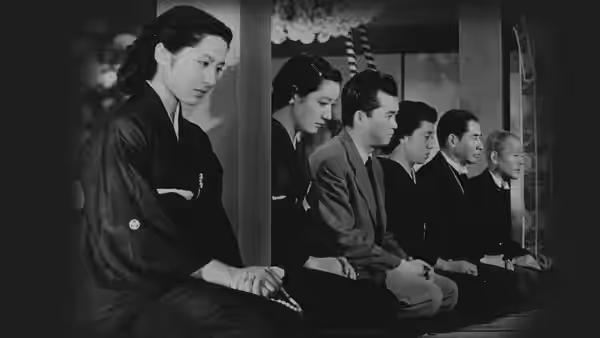
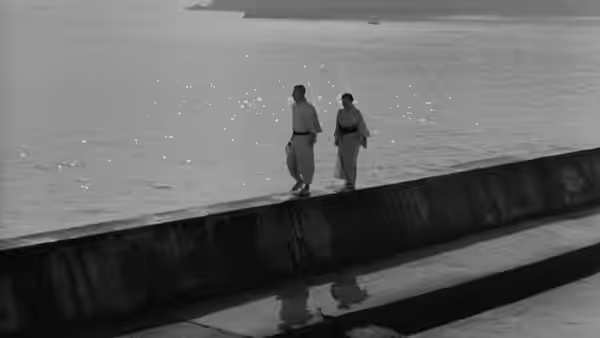
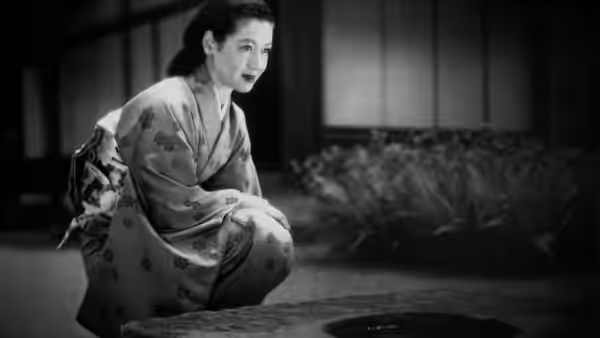
Cinematographer Yûharu Atsuta keeps the camera still, giving us time to attend to people whose feelings require some watching. Yoshiyasu Hamamura’s editing asks for similar attention to the small exchanges; we sometimes notice the slowness, but rarely stop caring. Tatsuo Hamada’s production design makes the domestic setting feel credible and inhabited, without asking us to admire it. We find Takanobu Saitō’s music less necessary when the performances already carry so much feeling. A little less encouragement from the score would have suited us.
At 137 minutes, the film gives impatience plenty of opportunity, and some ordinary exchanges can initially seem too slight to warrant such attention. We found ourselves waiting for the plot to announce itself before accepting that the visit was enough. That adjustment is worth making, though we would not pretend the pace disappears as an obstacle for everybody. Choose it when there is time to settle, rather than expecting it to compete with a distracted evening.