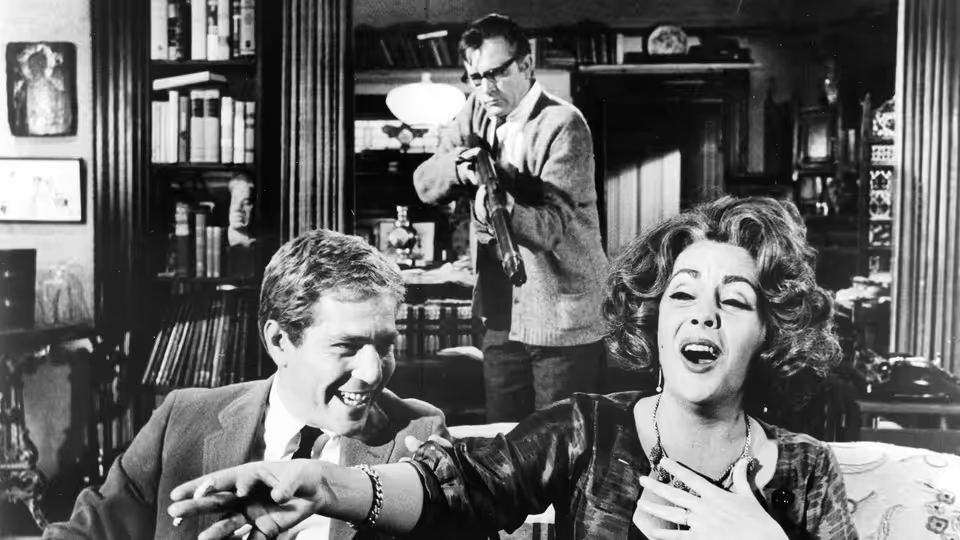
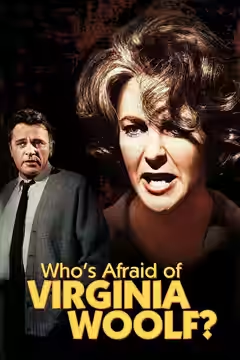
Mike Nichols’s first film keeps Edward Albee’s play almost whole and points Haskell Wexler’s camera at four faces for 131 minutes. It is exhausting on purpose, Elizabeth Taylor is remarkable, and it is still worth your evening, provided you have nowhere else to be.
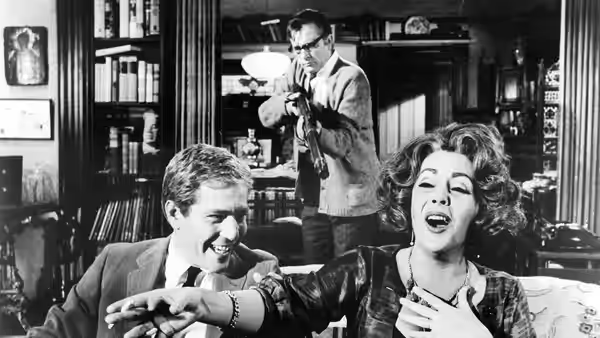
Who’s Afraid of Virginia Woolf? is a filmed play, and it does not pretend otherwise. Ernest Lehman’s screenplay keeps most of Edward Albee’s dialogue, the action stays in one house for the greater part of two hours, and the only real change of scene is a drive to a roadhouse in the small hours. Mike Nichols, directing his first film, has decided the words are the point and the faces are the pictures. That is the right decision, and it costs something, which we will come to.
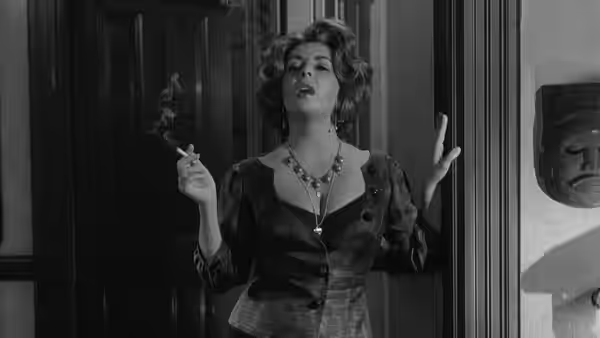
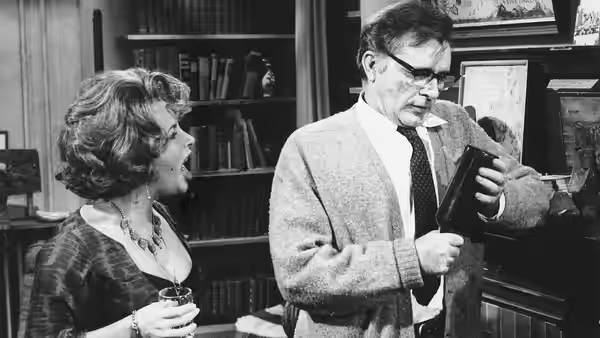
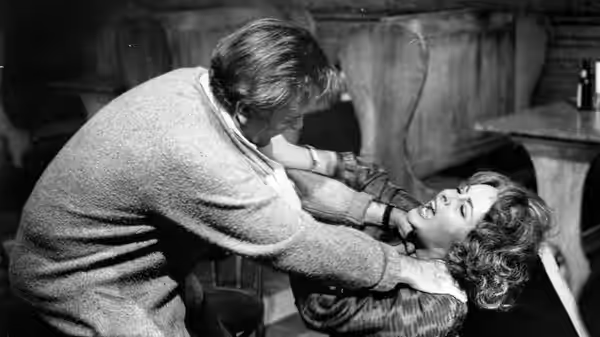
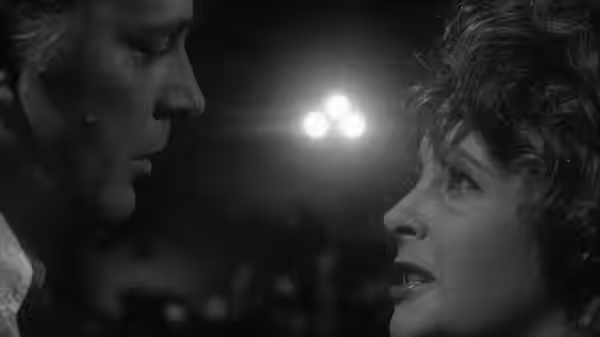
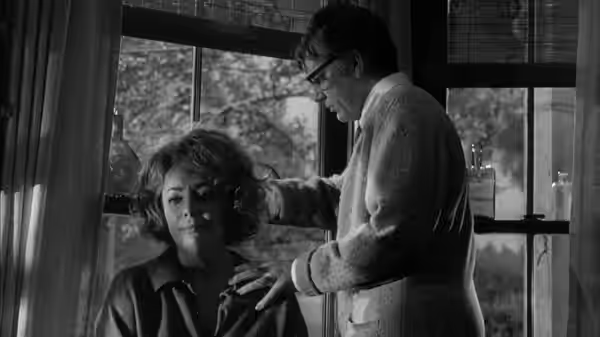
The house is where it starts working. Richard Sylbert has built a faculty home that nobody has tidied in years: books stacked on the floor, a drinks table that gets more use than the kitchen, lampshades slightly askew. Haskell Wexler shoots it in black and white with the light coming from those lamps, so that faces are lit from below and the corners of rooms go dark. When George and Martha argue, the camera is close enough to count pores. Wexler does not flatter anyone, and Irene Sharaff’s costumes help him: Martha comes home in a fur coat over a party dress and returns later in tight black trousers and a top she has chosen to make a point, and both outfits look like they belong to a different woman.
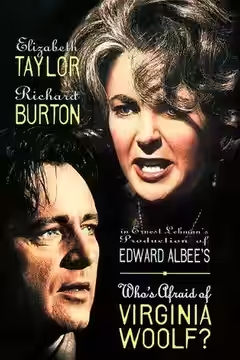
Elizabeth Taylor is the reason to see it. She plays Martha loud, coarse, braying with laughter at her own jokes, and then, in the middle of a sentence, lets the face go slack and frightened. The moment that got us is a small one: Martha alone in the kitchen, late on, talking to nobody about the one person in the house she is afraid of. We had spent an hour finding her monstrous and we were suddenly sorry for her, and it was the stillness that did it, after so much noise. Richard Burton plays George in the opposite direction, quiet and precise, taking every insult and filing it. He is funnier than Taylor, and colder, and when he finally raises his voice it lands because he has waited so long.
George Segal and Sandy Dennis have the harder job, because Nick and Honey are there to be used. Segal is good at the slow realisation that he is not the guest but the entertainment. Dennis plays Honey as a woman who has never had a strong drink or a strong opinion and is trying both tonight; she is pitched high, all giggles and sudden nausea, and we found her wearing in the first half and right in the second. The roadhouse scene, with Agnes Flanagan and Frank Flanagan as the waitress and the manager watching four drunks dance, is the film’s one breath of outside air.
The cost of Nichols’s approach is that there is no let-up. Albee wrote a play in acts, with intervals in which an audience could recover. Sam O’Steen cuts the film so that one round leads straight into the next, and by the ninety-minute mark we were tired, and not always in the way the film intended. There is a difference between a marriage that is exhausting and a film that is, and this one crosses the line more than once. Alex North’s score, a gentle guitar-and-strings theme that sounds like it belongs to a kinder film, is used sparingly, and the contrast is a good joke the first time and a slightly smug one later.
The film is also more literal than the play. On stage the son, and the whole history George and Martha keep rewriting, can hover between fact and story. On screen, with Wexler’s camera insisting on the real wallpaper and the real ice in the real glass, the games look less like invention and more like cruelty. That is a choice, and a defensible one, but it makes the last half hour heavier going than it need be. We will not say how the night ends.
Nichols made The Graduate the following year and became a very different sort of director, one who moved the camera and cut for rhythm. This is the film where he learned how much a close-up can carry, and how long you can hold on a face before the audience wants to look away. He holds too long, sometimes. But he had four actors who could take it.
It is a 12 certificate, and the language that shocked cinemas in 1967 will not shock anyone now. Watch it with someone you have been married to for a while. Do not watch it on the night of an argument.