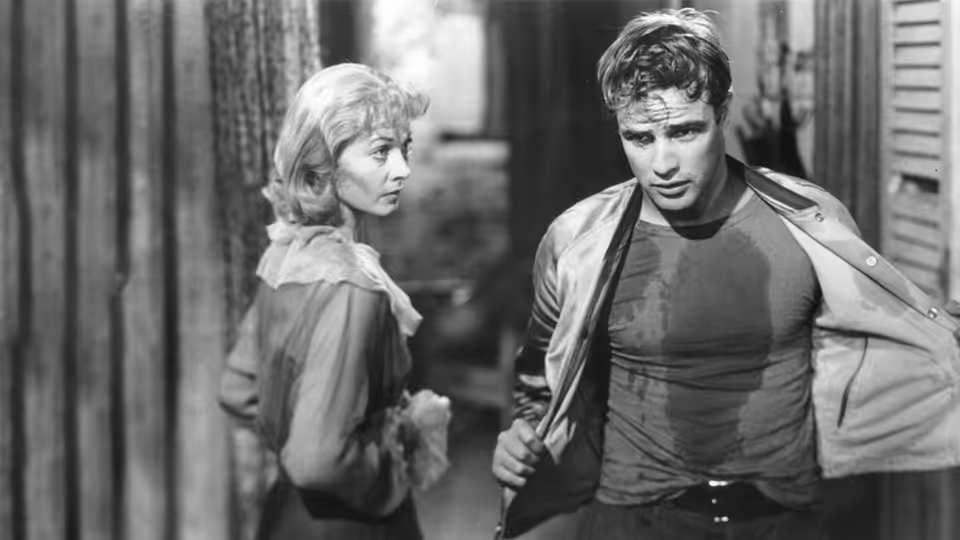
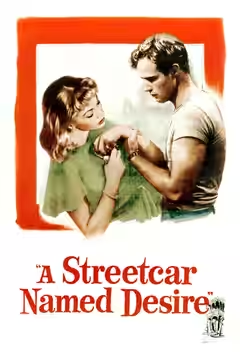
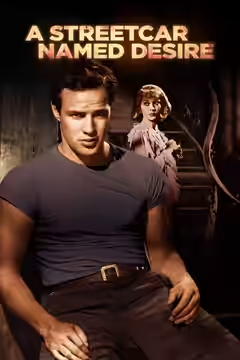
Kazan’s film of Tennessee Williams’s play is still a shock: Brando and Leigh in two rooms, one bare bulb, and Harry Stradling’s walls closing in. The censor’s softenings show, and Leigh starts higher than she needs to, but we came out shaken.
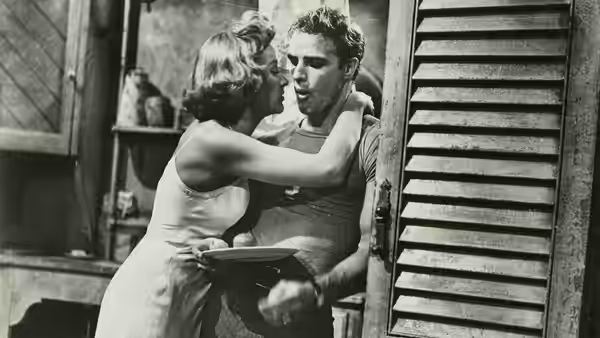
Elia Kazan directed Tennessee Williams’s play on Broadway in 1947 with Marlon Brando as Stanley Kowalski, and when he came to film it he kept Brando, kept the two rooms and the curtain between them, and replaced his stage Blanche with Vivien Leigh, who had played the part in London. Williams and Oscar Saul’s screenplay opens the story out for a few minutes, a railway station, a bowling alley, a wet street, and then shuts the door. Nearly everything after that happens in a flat you could cross in four strides.
It is a fine film and still a frightening one, and its faults are mostly the faults of 1951. Blanche DuBois arrives from Mississippi to stay with her sister Stella (Kim Hunter) and Stella’s husband, with the family plantation gone and a story about nerves and a leave of absence from her school. Stanley does not believe her. That is the plot, and it is enough, because the film is about two people who cannot be in a room together and a third who has to choose between them.
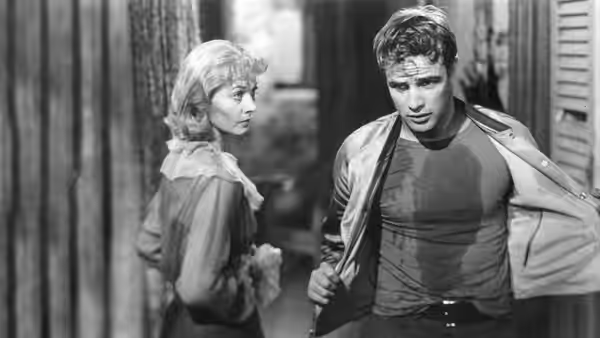
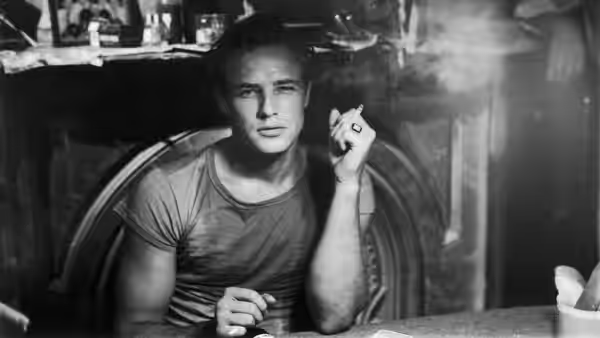
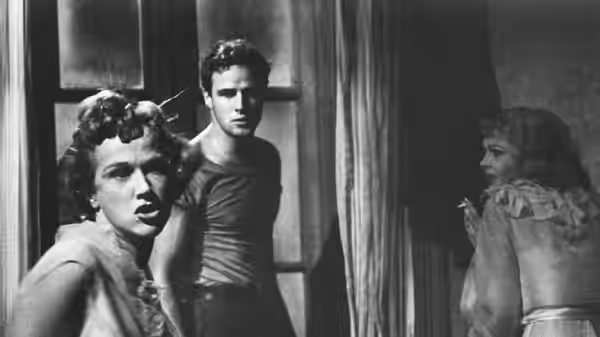
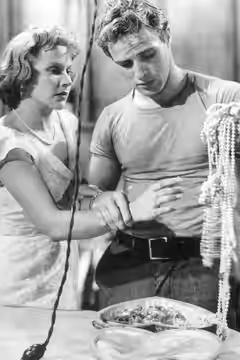
Brando has been imitated so often it is a surprise to see how careful he is. Stanley scratches, eats with his fingers, talks through a mouthful, and takes his shirt off because it is wet rather than because a camera is watching. He is funny, which the imitators forget. The poker night is where the film turns. Blanche has the radio on, Stanley has twice said to turn it off, and he gets up and puts it through the window. We flinched as if it had gone past our own heads. What frightened us was not the throw but the pause before it, Brando deciding, in front of his friends, that he can. Kim Hunter’s walk back down the iron staircase afterwards, slow, in a dressing gown, is the plainest thing in the film about why Stella stays.
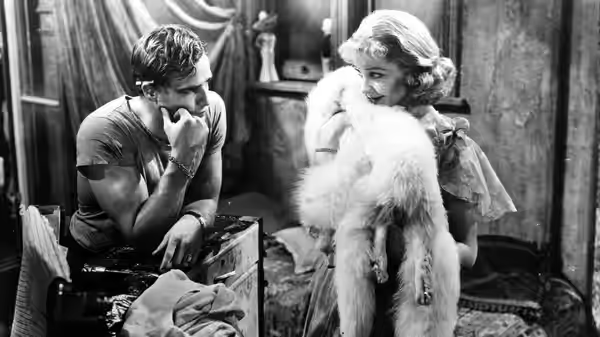
Leigh divides people, and we understand why. She starts at a pitch that leaves her nowhere to go: the hands never still, the little laugh, the eyes checking every corner. For half an hour we wanted her to sit down. Then she sits down, on the poker night, and asks Mitch to put a paper lantern over the bare bulb because she cannot stand a naked light, and the performance comes into focus. Blanche is acting, all the time, for everyone, and Leigh is showing us a woman whose act is wearing through. Once we saw that, the mannerisms were the point. We still think Kazan could have reined her in for the first two reels.
Harry Stradling shoots the flat in hard black and white, and he lights the two leads on opposite principles. Leigh is seen through lanterns, shutters and the folds of a scarf, half in shadow by her own arrangement; Brando gets flat glare, sweat and all. The set was built so the walls could be moved inward as the film went on, and by the last reel the rooms look smaller than they did at the start. David Weisbart holds on faces longer than editors of the period usually did, and we think he is right to, in a script where every line has a second one underneath it. Alex North’s score is a trumpet from the bar across the alley and a polka that only Blanche seems to hear, and the film is careful not to explain the polka until it has to.
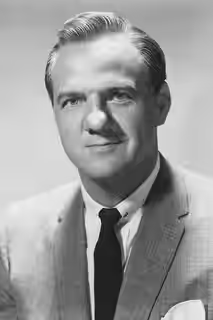
The compromises show. Several things the play says outright the film mutters or drops, some of Blanche’s past among them, and the ending has been altered from the stage in a way we will not describe. A few minutes cut before release were put back in 1993, and that is the version to see, but there are still moments where the camera looks away and you can feel a studio hand on Kazan’s shoulder. Karl Malden’s Mitch, the big shy man with a sick mother and a cigarette case he wants you to read, is played so gently that his later scenes hurt more than we expected.
At 122 minutes it is a play’s length and it moves like a play, one long scene giving way to the next, and it is none the worse for that. It is a 12 certificate. Watch it with the sound up. The blues from next door is telling you what this flat is for.