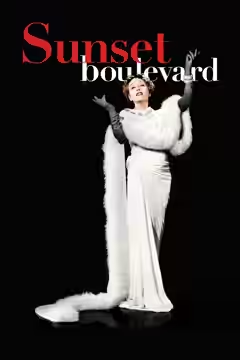
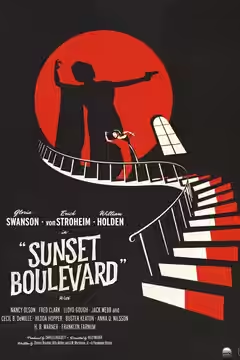
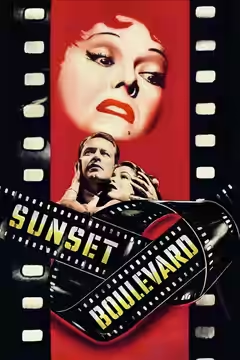
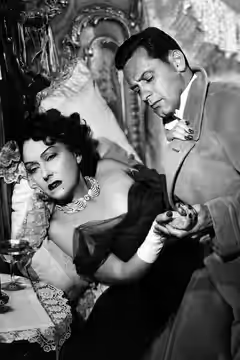
Billy Wilder’s Hollywood satire is viciously funny and unexpectedly moving, with Gloria Swanson making Norma Desmond impossible to dismiss. The writing sometimes insists on its own cleverness, but we would recommend it without hesitation.
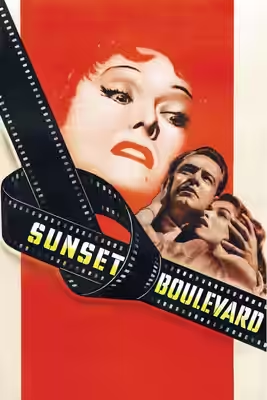
Sunset Boulevard is a cruel Hollywood comedy that earns its sadness, and we would recommend it to anyone willing to laugh at something uncomfortable. Billy Wilder sets a struggling screenwriter against a discarded silent-film star, then gives us reasons to distrust the writer’s good sense. Joe Gillis needs work, while Norma Desmond needs to believe that the industry has made a mistake about her. Their predicament gives the jokes an unpleasant edge: these people have something to lose.
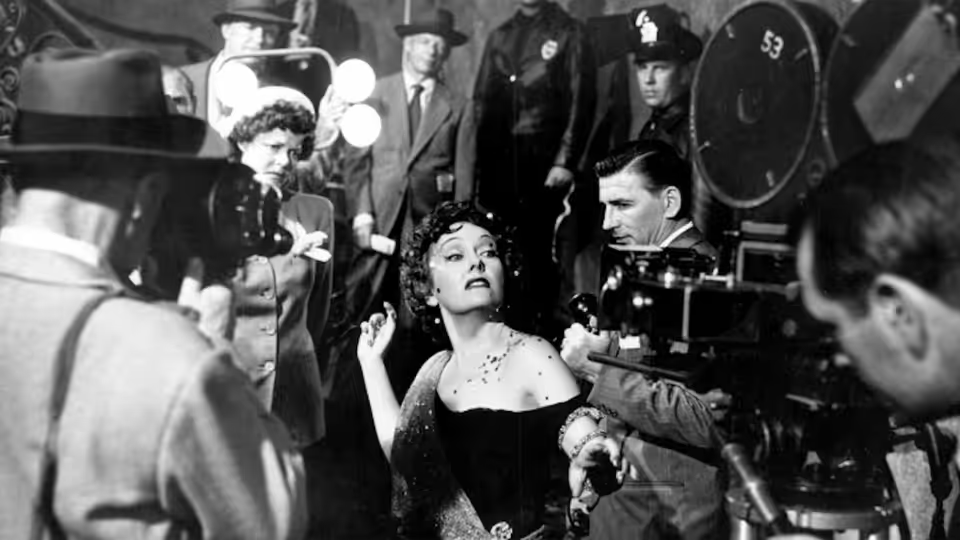
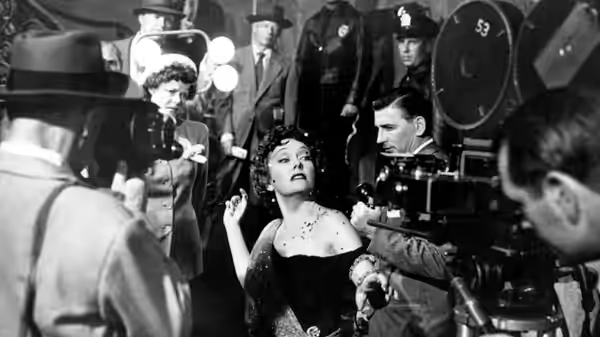
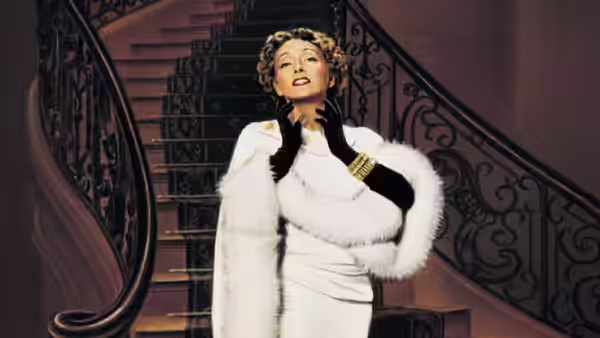
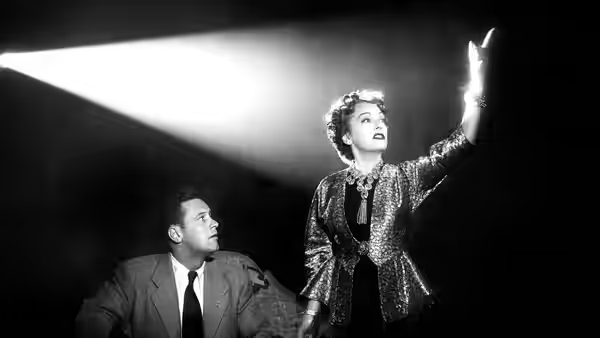
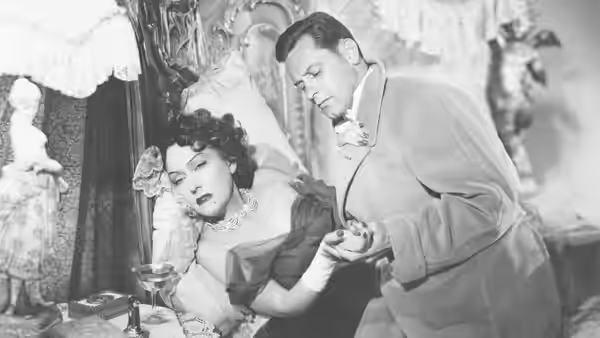
Gloria Swanson makes Norma’s self-importance funny without letting it explain her away. Her widened eyes and commanding gestures can look absurd, but the force with which she asserts her worth makes casual ridicule feel cheap. We felt sorry for her, and it unsettled us. The performance makes her dependence on being watched painfully clear, even when she is being intolerable. There is a risk in playing someone this emphatically; she takes it, and keeps the fear of being forgotten visible beneath the demands.
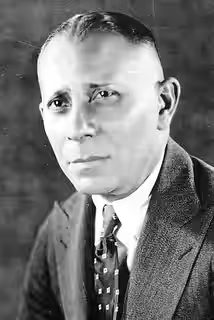
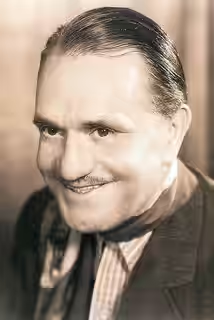
William Holden gives Joe a dry, practised manner that initially seems a reasonable response to all this. What makes the performance good is the suspicion that his cynicism is convenient, allowing him to sound clear-eyed while avoiding a harder judgement of himself. Erich von Stroheim, as Max von Mayerling, supplies a more restrained unease; his gravity stops the surrounding excess from becoming merely comic. The difference in scale between these performances gives the film much of its tension before anyone needs to explain anything.
The screenplay by Billy Wilder, Charles Brackett and D.M. Marshman Jr. is often mercilessly funny about an industry that treats people as replaceable. It also enjoys a polished line enough to give Joe more cleverness than he always needs. Occasionally we can hear the writers enjoying themselves, and the dialogue draws attention away from the people speaking it. That is a real limitation, though the bitterness is usually attached to someone’s immediate need for work or attention, which keeps it from becoming a lecture.
John F. Seitz’s cinematography makes the faces imposing and the space around them oppressive. The lighting gives Norma the grandeur she thinks she deserves, with enough menace to make us wary of enjoying it. Edith Head’s costumes belong to the same understanding of her: being looked at is a serious occupation, and dressing for it cannot be left to chance. At times the accumulated emphasis risks doing too much of our thinking for us, especially when the performances are already so forceful.
Arthur P. Schmidt’s editing is particularly good at accommodating those different acting styles without making the quieter passages feel like intervals between displays. The film can sustain a joke and still leave an uncomfortable expression time to register. Franz Waxman’s music is less discreet, pressing the unease insistently enough that we occasionally wanted it to step back. Yet the heightened sound suits the film’s closeness to gothic horror, where an ordinary conversation can feel as though it might become a threat.
As a satire about Hollywood, it is unusually willing to let its most ridiculous figure become its most painful. There is cruelty here, and the complaint that the film enjoys humiliating an ageing star cannot simply be waved away. We think the performances answer it: Norma remains a person whose distress matters, however much trouble she causes. Choose it for the jokes, but do not expect Norma to remain safely amusing.