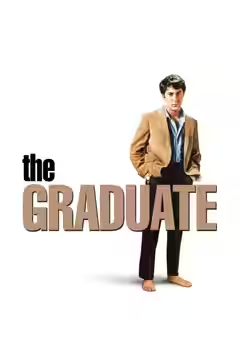
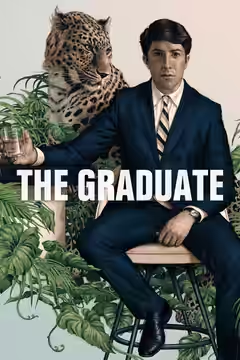
Mike Nichols’s comedy about a graduate who drifts into an affair with a family friend is still funny and still sharp, and Anne Bancroft is the best thing in it. It goes softer once it stops being about her, though not by enough to spoil it.
Ben Braddock (Dustin Hoffman) rides an airport walkway at the start of The Graduate with his face set, and for the next hour and three quarters he is carried along by other people in much the same way. Mike Nichols’s film, adapted by Calder Willingham and Buck Henry from Charles Webb’s novel, is a comedy about a young man who has done everything that was asked of him and finds there is nothing waiting at the end of it. The first hour is about as good as American comedy gets. The second is good, and we will come to the difference.
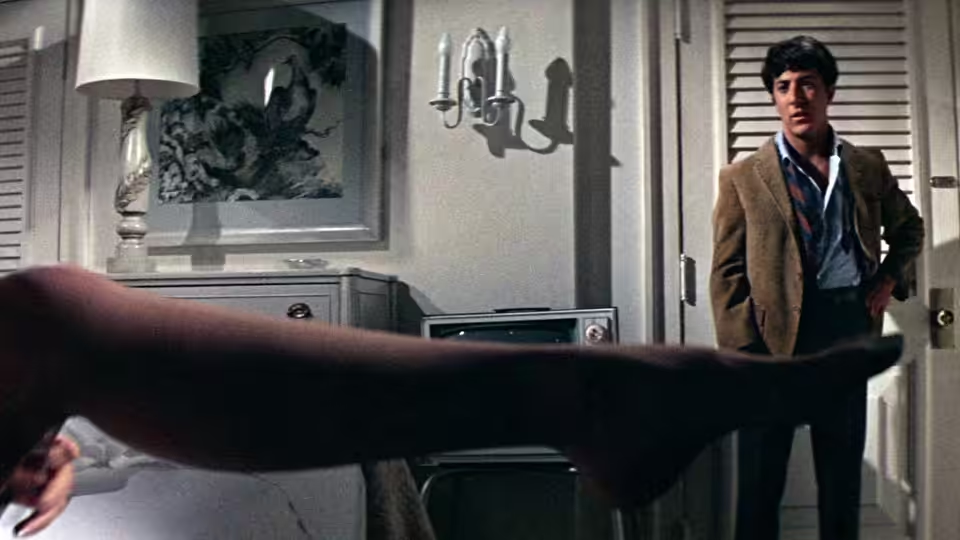
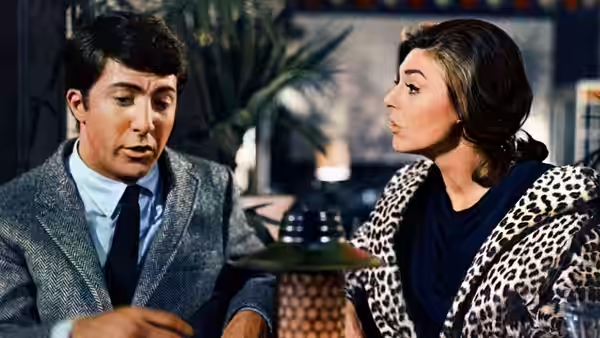
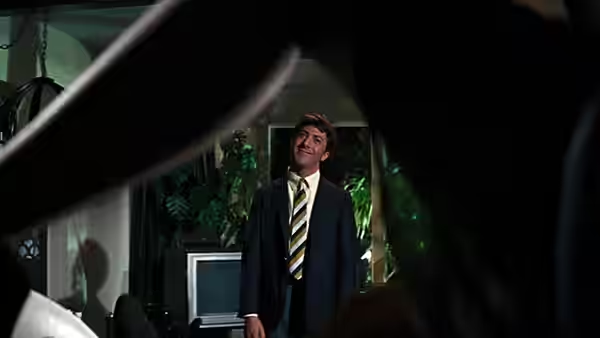
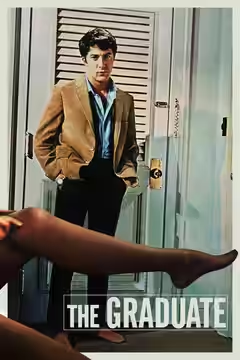
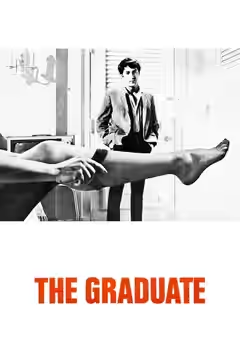
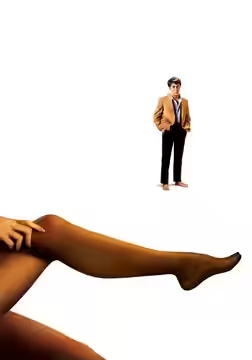
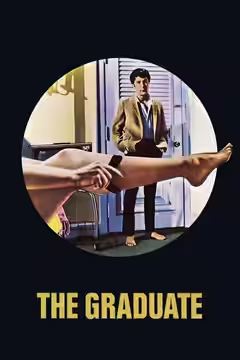
The party that opens the film is the sharpest thing in it. Ben’s parents (William Daniels and Elizabeth Wilson) have filled the house with their friends, and Nichols shoots them close and slightly too bright, so every face is a mask of goodwill with something else behind it. Walter Brooke’s Mr. McGuire takes Ben aside by the pool and gives him career advice with the gravity of a man passing on a family secret. Then Anne Bancroft’s Mrs. Robinson asks for a lift home. Patricia Zipprodt puts her in animal prints and Robert L. Surtees frames Ben through the arch of her raised leg, and yet Bancroft plays none of it as a hunt. She is bored. She has been bored for years. Ben is simply what came through the door.
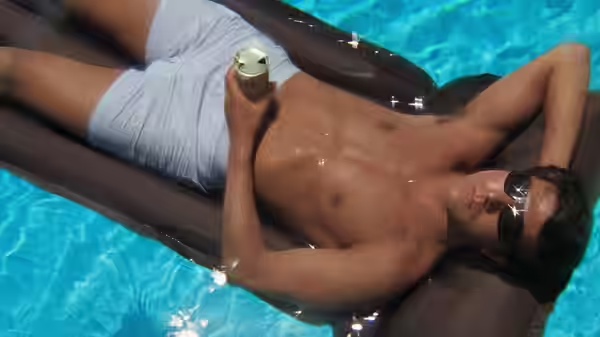
Hoffman was not the obvious casting for a Californian golden boy and that is the joke Nichols builds the film on. He stammers, he over-explains, he says “Mrs. Robinson” as if it were a form of address he has been practising. Buck Henry, playing a hotel clerk who watches Ben fail to book himself in, gets more out of a raised eyebrow than most actors get from a speech. And Sam O’Steen’s editing keeps making the point the dialogue is too polite to make, cutting between the family pool and the hotel until they feel like one place. His parents think he is resting. He is drowning in comfort.
We laughed hardest at the scene in which Ben, in diving gear, walks into the family pool in front of the neighbours. Then Surtees puts the camera inside the mask, the faces above mouthing at him through the water, and Ben sinks to the bottom and stays there. The laugh went out of us and did not come straight back. Richard Sylbert’s Braddock house, all glass, fish tank and pale carpet, is a place where a person could be watched at every moment and never once seen.
What moved us more than we expected was the night in the hotel when Ben insists, for once, that they talk, and asks about the life she had before she was married. Bancroft lets the question land and then lets the light go out of her face, and for a minute the film is about a woman who gave up a life she can barely remember wanting. Nichols holds on her and does not cut away for a gag. It is the best scene in the film and the one Bancroft should be remembered for.
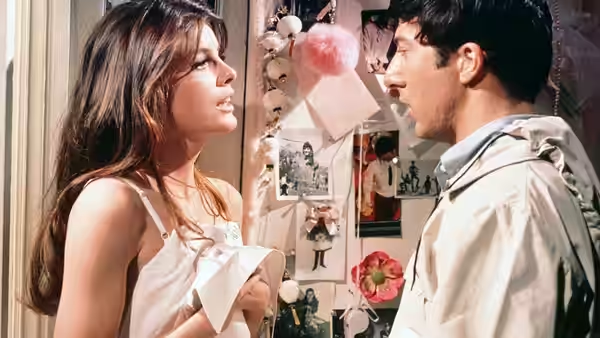
The second half belongs to Elaine, and we will say only that Ben decides what he wants and goes after it. The trouble is that the film’s interest in Mrs. Robinson drops away the moment she stops being useful to the plot, and she is turned from a person into an obstacle. Katharine Ross is bright and likeable and has very little to play; Elaine is mostly a face Ben looks at. Ben’s pursuit reads less like love than like the first idea he has ever had on his own. Paul Simon and Art Garfunkel’s songs, which sit so well over the hotel scenes early on, are asked to carry more than they should late.
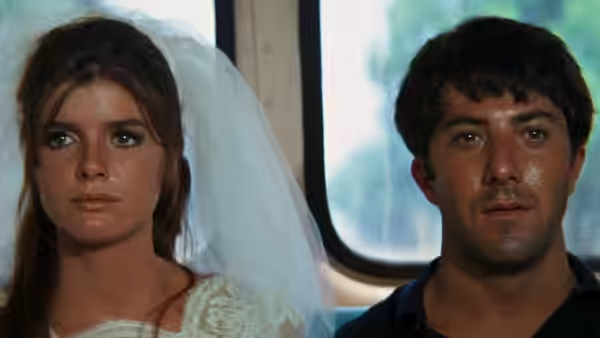
Nichols has a good ear for the actors’ timing and, occasionally, a fondness for the clever shot for its own sake. Against that, he ends the film on a held image that we will not describe, except to say that staying on it a few seconds longer than expected changes the meaning of everything before it. Most critics have loved this film for fifty years and we are, broadly, with them, though we would rate the hour with Bancroft a good deal above the hour without her.
It runs 107 minutes and is a 12A. Watch it with someone at the wrong age for it, either far younger than Ben or far older than Mrs. Robinson, and see which of the two they end up on the side of.