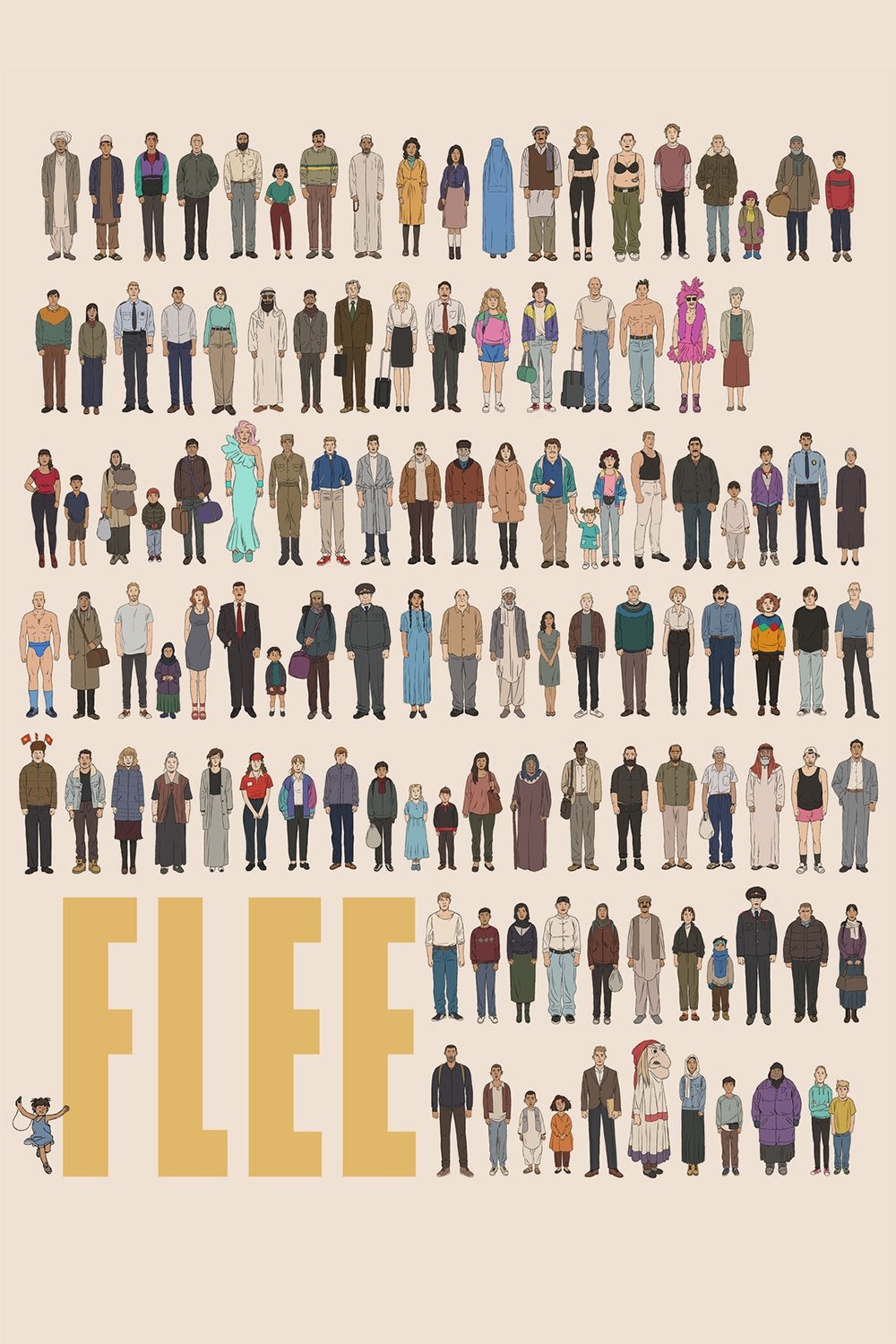
The reviews are almost unanimously warm. Twenty-five of twenty-six critics are positive, and the praise clusters on the same decision: telling a refugee’s story through hand-drawn animation. Most find that the technique does two jobs at once, protecting Amin’s anonymity while making memories he could never have filmed fully visible, and several single out the sea crossing in a freight container as the sequence that lands hardest. The friendship between Rasmussen and his subject is credited for the film’s candour about sexuality and shame as well as flight.
The spread is narrow, and the reservations are about the same device. Slant Magazine is the lone mixed voice, finding the muted animation keeps the viewer at arm’s length from the man himself and flattens the emotional detail. The AV Club notes that, as a real and untidy account, the story occasionally frustrates, and Eye for Film sees some stiffness in the realistic drawing style.
T
The Telegraph
10 February 2022 · ★★★★★ · Robbie Collin
100
The review calls Flee a thrillingly unique and achingly beautiful animated study of a gay Afghan refugee’s memories, noting that animation is the ideal medium for preserving anonymity while making the extraordinary yet commonplace story fully visible. It singles out the hand-drawn style blending impressionistic and precise recollections.
Documentary filmmaker Jonas Poher Rasmussen uses animation to tell the unique story of his friend's migration and personal secrets in a way that blends memory, therapy and subtle comedy. The film is a complex, stirring heartbreaker that lends lyricism to the migrant experience.
The review describes the film as a thrilling, masterful survival story told through a visually startling animated approach that brings one man's revelatory refugee experiences to life.
The critic calls it one of the most humane films of the year, an intimate portrait of displacement's lasting traumas that serves as both testimonial and catalyst for catharsis through the subject's reckoning with his past.
The critic praises the film's intimate, animated portrait of a refugee's trauma, resilience, and search for home and truth, calling it one of the year's best for its emotional depth and humane insight.
The critic praises the thoughtful animated hybrid for enhancing the moving first-person story of an Afghan refugee with impressionistic animations and newsreel context. It singles out the technique's ability to expand precise recollections into emotional areas and its exploration of additional anxieties around sexuality.
The critic calls the film an astonishing animated documentary that intimately explores a young gay Afghan refugee's journey from Kabul through Moscow to Denmark. It singles out the harrowing animated sequence of the family's sea crossing in a freight container for its emotional power and the film's critique of hostile refugee treatment.
The critic praises Rasmussen’s animated documentary as a masterly, emotionally engaging and stylistically adventurous account of an Afghan refugee confronting his traumatic past. It highlights the film’s vivid animation, impressionistic sequences of flight and trafficking, and its arc from secrecy to openness as a triumph-of-the-human-spirit coming-of-age story.
The critic calls it a powerful and poetic memoir of personal struggle and self-discovery that expands the definition of documentary through its mix of hand-drawn animation and archival footage. It highlights the film's examination of refugee trauma and its unconventional queer love story.
The critic hails the piercing animated documentary as a probing yet tactful psychological portrait of an Afghan refugee's journey, blending themes of displacement, secrecy, and coming out with trust born from the director's friendship with the subject.
The critic hails the film as the defining entry in the serious animated documentary genre, profoundly affecting in its true-life tale of a gay Afghan refugee’s harrowing journey and emotional endurance. It singles out the bittersweet climax that shatters all but the coldest hearts after a litany of violations and traumas.
The animated documentary tells the harrowing true story of a young Afghan refugee's journey from Kabul through Russia to Denmark in the 1980s. It is praised as one of the best films of the year for its rich, seamless storytelling and emotional impact.
This deeply humane animated documentary explores the memories of Amin, a gay Afghan refugee who fled Kabul as a child, as he prepares to marry and confronts his past. It is both horrifying and ultimately hopeful, unmissable for its handling of trauma, identity and belonging.
The critic finds the film intense and moving, praising how animation elevates the storytelling and vividly brings the subject's memories to life while protecting his anonymity. It notes the story feels special yet occasionally unsatisfying as a real, untidy personal account.
The critic finds the animated documentary formally bold and emotionally rich, delivering a moving portrait of a gay Afghan man's escape and search for home. It singles out the warm animation that captures complex feelings of trauma, joy, guilt and hope beyond mere statistics.
The critic calls the mostly animated documentary remarkable for boldly redefining the form through its mix of hand-drawn animation and archival footage. It singles out the emotional rewards of telling the story of a gay Afghan refugee's escape and ongoing trauma.
The critic describes the film as a deeply compassionate and strikingly original animated documentary that lays bare the migrant experience with a queer dimension. It singles out the hand-drawn animation recreating traumatic memories and the insight into the psychology of shame and healing.
The critic describes the film as an original artistic exploration of trauma's impact on self, using shifting unreliable narration to reflect the subject's hidden truths and intimate act of sharing at its Sundance premiere.
The review praises the wrenching details of Amin's refugee journey and his self-aware storytelling but criticizes the muted animation for keeping viewers too removed from the man himself and flattening emotional subtleties.
The critic finds the animated documentary a powerful, haunting, and essential story of an Afghan refugee's experiences, one that humanizes refugees and demands attention for its nuance and emotional depth. Animation is singled out as the ideal medium for conveying the story authentically.
The review praises the film as a special, harrowing animated documentary that reaffirms animation's power for serious storytelling, much like Waltz with Bashir. It singles out the bold, impressionistic visuals that render the refugee's desperate odyssey with emotional immediacy and resourcefulness.
The critic praises the film's use of simple, stream-of-consciousness animation to bring Amin's refugee experiences vividly to life in a way more evocative than conventional documentary methods. It highlights the animation's artistic power in rendering both nostalgic and traumatic memories with emotional intimacy and humanity.
The critic calls the film a stellar and powerful exploration of refugee trauma and displacement, made exceptionally poignant through its animated storytelling and focus on Amin's experiences as a closeted gay man. It commends the humane, contemporary resonance and the way animation elevates the personal and historical elements.
The review calls it a soul-stirring storytelling knockout and one of the best movies about the refugee crisis, lauding its empathetic animated approach. It singles out the life-affirming arc from sorrow to hope, achieved without cynicism or cheap sentimentality through expressive hand-drawn animation.
The critic finds it a tender, surprisingly sweet animated documentary on displacement and identity. They single out the animation's ability to express alienation alongside moments of tenderness and humor arising from the subject's trust in the filmmaker.
The critic finds that animating the entire film creates an immersive, cohesive portrait of Amin's trauma and reluctance to share his past as a gay Afghan refugee. It singles out the grounded, realistic animation style for effectively conveying emotional memories and human connections despite some stylistic stiffness.
Ordered by the weight we give each publication, then by score. Scores are normalised to 100; * means inferred from an unrated review. Summaries are ours, not quotations; follow the links for the reviews themselves. How we rate