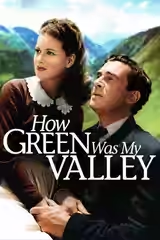
Most critics warm to it. Eight of the nine reviews are positive and none is negative, and the praise clusters on John Ford’s direction: his affection for the Welsh valley and its people, and his handling of working-class solidarity. The cast draws consistent notice, with Donald Crisp and the young Roddy McDowall named again and again. Several writers also single out the photography, from the low-angle compositions to the deep-focus interiors, and the more recent reviews read the film as a memory piece about childhood and a community that is disappearing as it is remembered.
The reservations are about authenticity. The Guardian notes the Hollywood-built village standing in for Wales, and Time Out finds the backlot and the accents hard to believe in, even while the story still moves. Slant calls it more melodramatic and nostalgic than The Grapes of Wrath, and Empire, the one mixed review, admires the photography and the child’s-eye framing but is cooler on the whole. The spread is narrow: nobody dislikes it.