Film review

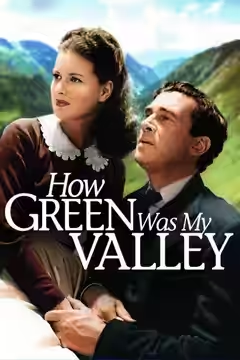
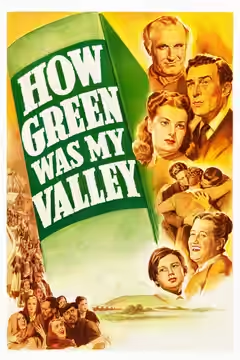
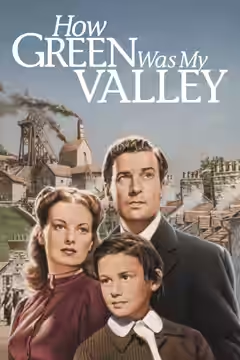
How Green Was My Valley

1941 · Directed by John Ford · 1h 58m · MPA NR

In a sentenceWales as remembered by a man who left it young, rebuilt on a Californian hillside, and it still gets you

Drama

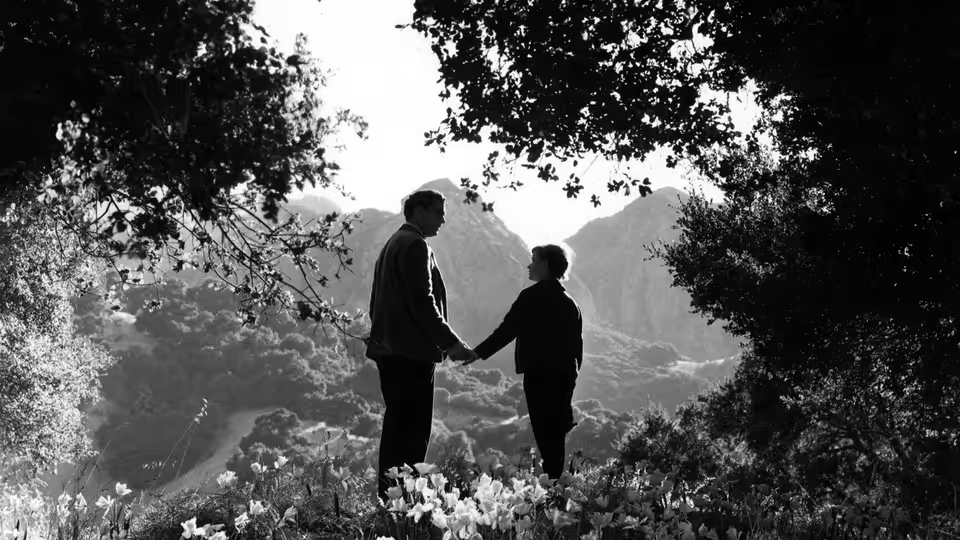
A grown man wraps his belongings in his mother’s shawl and leaves the Welsh mining valley of his childhood, and the film is his memory of it. Huw Morgan (Roddy McDowall) is the youngest son in a house on a hillside of terraced cottages beneath the colliery. His father Gwilym (Donald Crisp) and brothers walk down to the pit and back up singing, and the wages go into the apron of his mother Beth (Sara Allgood). His sister Angharad (Maureen O’Hara) catches the eye of the new preacher, Mr. Gruffydd (Walter Pidgeon); his brother Ivor (Patric Knowles) marries Bronwyn (Anna Lee), and Huw falls for her. Then the pit cuts wages, the sons want a union, their father does not, and the house divides. A strike follows.

Plays from YouTube when you press play; nothing loads from them until then.

Fi1m review

John Ford’s film of Richard Llewellyn’s novel remembers a Welsh mining valley from a lifetime away, and it moved us even where it is visibly working to. The village is a set in California and the accents wander, but the singing and the faces are real.

John Ford’s film of Richard Llewellyn’s novel opens with a man packing to leave the Welsh valley he grew up in, and everything after that is his memory. Philip Dunne’s screenplay keeps the frame honest: this is childhood recalled by someone who left, so the hill is greener and the hymns louder than they can have been. We think it is as good as the warm reviews say. Two things count against it, and both are visible inside ten minutes. The valley was built in California, and almost nobody in it sounds Welsh.

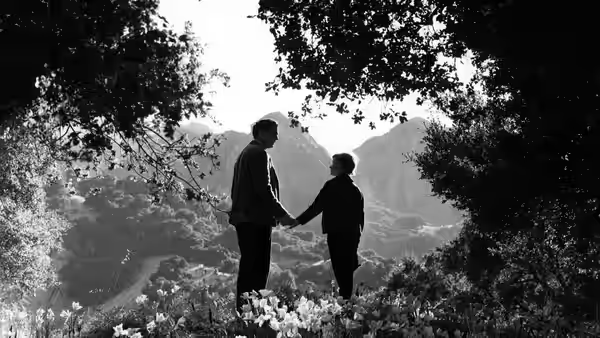
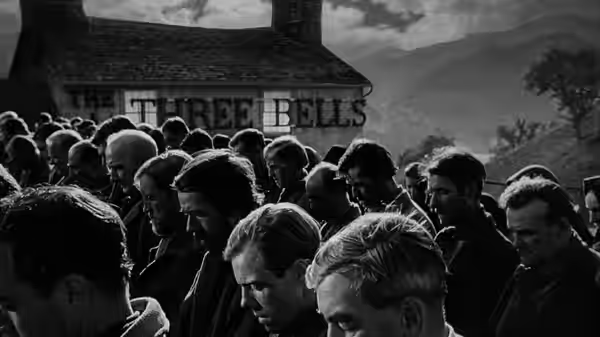
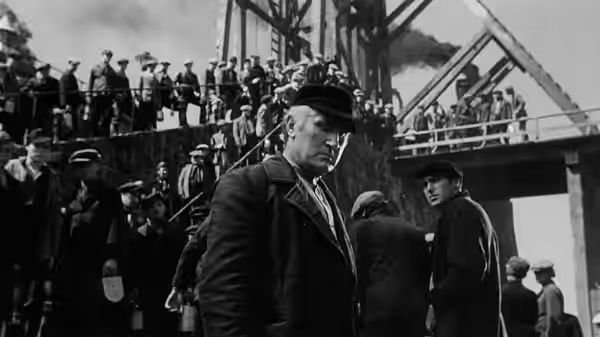
Start with what Ford and his cinematographer get right, because it is most of the film. Arthur Charles Miller shoots in black and white with everything in focus at once, so the street of cottages climbs to the pithead in a single shot and the men coming home are a line of small figures growing larger. They sing as they walk. Alfred Newman builds his score on that men’s chorus, and the film keeps to one rule: when the valley is well the men are singing, and when it is not they are silent. The first time the line came up the hill with the hymn, we were moved before anything had happened. It is a trick, and we did not mind.

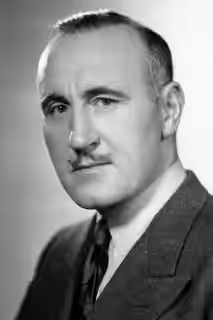
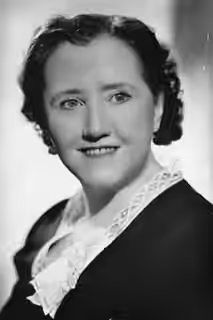
The house is the other thing Ford gets right. Gwilym Morgan (Donald Crisp) and his sons come in from the pit and drop their wages into the apron of Beth (Sara Allgood), who takes the coins without a word and hands back the spending money. Nobody speaks at table until the father does. Crisp plays Gwilym as a man who trusts God and the colliery owner in that order, and never makes him a fool for it. Allgood gets the best scene in the film, on a hillside at night, telling a meeting of strikers what she will do to any man who harms her husband. It is the one time the picture stops being gentle.

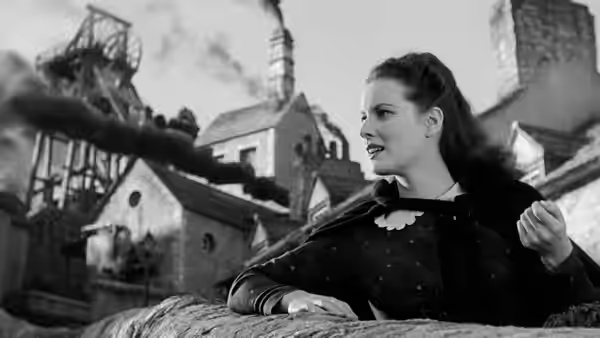
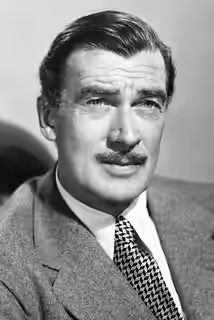
Roddy McDowall’s Huw watches all this from the corner of the frame, and the boy is good because he mostly watches. Maureen O’Hara’s Angharad is the person the camera keeps finding; Gwen Wakeling puts her in a pale dress among women in shawls and Sunday black, so you know where the film’s hopes are before anyone says so. Walter Pidgeon’s preacher, Gruffydd, is upright and kind and talks a good deal. The film loves him more than we did.

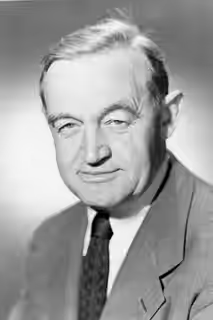
Now the village. It was built in California, and it looks like it: the slate is too clean, the hill is the wrong shape, and the sun is a Californian sun. Sara Allgood, Barry Fitzgerald and Arthur Shields are Irish and sound it, and the rest of the cast settle on a general Celtic that belongs nowhere. If you need to believe you are in Wales, you will spend the first half hour arguing with the film. We stopped arguing because the faces and the singing won. Ford is not trying to document Wales. He is staging a memory of it, and the tidiness is part of that.

The other charge is sentiment, and it sticks. Dunne’s script has the brothers ask for a union and the father refuse, and for twenty minutes the film is as sharp about labour as The Grapes of Wrath was the year before. Then the sorrows begin to arrive, and Ford stages each one the same way: a doorway, a hymn, a held look, and Newman’s choir underneath. James B. Clark cuts the years together by dissolve, and the second half moves through them fast. We will not say what happens. We will say that the film asks for tears about every quarter of an hour in its second half, that we resented the asking, and that we paid up each time.

It is a U certificate and runs 118 minutes. Watch it with someone who has left a place and not gone back. They will know why the man in the first scene wraps his things in his mother’s shawl so carefully, and they will not want to talk about it afterwards.
Critical consensus AI synthesised

80
Positive
8
Mixed
1
Negative
0

Most critics warm to it. Eight of the nine reviews are positive and none is negative, and the praise clusters on John Ford’s direction: his affection for the Welsh valley and its people, and his handling of working-class solidarity. The cast draws consistent notice, with Donald Crisp and the young Roddy McDowall named again and again. Several writers also single out the photography, from the low-angle compositions to the deep-focus interiors, and the more recent reviews read the film as a memory piece about childhood and a community that is disappearing as it is remembered.

The reservations are about authenticity. The Guardian notes the Hollywood-built village standing in for Wales, and Time Out finds the backlot and the accents hard to believe in, even while the story still moves. Slant calls it more melodramatic and nostalgic than The Grapes of Wrath, and Empire, the one mixed review, admires the photography and the child’s-eye framing but is cooler on the whole. The spread is narrow: nobody dislikes it.

Radio Times
★★★★★ · Tony Sloman
100

The critic praises this magnificent Oscar-winning family saga for its power to move and entertain, highlighting John Ford's loving direction of life in the Welsh valleys and the sincerity of the cast.

Read the full review →
The New York Times
29 October 1941 · Bosley Crowther
90*

The critic hails the film as a poetic and dignified achievement rich in visual beauty and human character, singling out its stunning pictorial mastery and superb performances, especially by young Roddy McDowall and Donald Crisp.

Read the full review →
RogerEbert.com
8 May 2023 · Scout Tafoya
85*

The critic praises Ford's rapturous, Proustian account of childhood memory and community in a Welsh mining valley, highlighting its blend of clarity and dreaminess alongside striking sequences of loss and labor solidarity.

Read the full review →
Variety
28 October 1941 · Abel Green
85*

The critic calls it one of the year's better films, a warm human story with impressive performances and expert craftsmanship that will appeal broadly, highlighting inspired casting including Donald Crisp, Sara Allgood, and young Roddy McDowall.

Read the full review →
The New Yorker
12 November 2015 · Richard Brody
80*

The critic notes the film's resemblance to Citizen Kane as a flashback saga of lost idyll and community eroded by industry, praising Ford's nuanced depiction of working-class solidarity through expressionistic tableaux and sound.

Read the full review →
Slant Magazine
12 February 2013 · Eric Henderson
75*

The critic notes the film's origins as a scaled-back production and its engagement with themes of proletarian rights, unionization, and human dignity amid family and community strife in a Welsh mining town. Ford's social conscience and low-angle camerawork are singled out for praise, though the film is seen as more overtly melodramatic and nostalgic than The Grapes of Wrath.

Read the full review →

Cast

Awards

Academy Awards, 1942

Nominated
Best Film Editing
Nominated
Best Original Dramatic Score
Nominated
Best Sound
Nominated
Best Supporting Actress
Nominated
Best Writing, Adapted Screenplay
Won
Best Art Direction, Black and White
Won
Best Cinematography, Black-and-White
Won
Best Director
Won
Best Picture
Won
Best Supporting Actor

If you liked this, try…

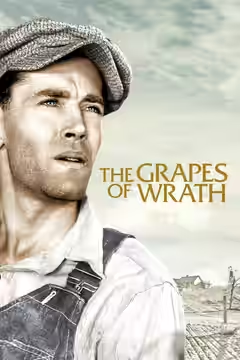
The Grapes of Wrath poster86

The Grapes of Wrath

1940 · Ford a year earlier, angrier, with the same eye for a family in a doorway.

The Proud Valley poster

The Proud Valley

1940 · Paul Robeson in a real Welsh mining village, with real singing and real accents.

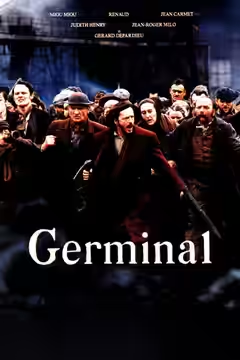
Germinal poster

Germinal

1993 · The French pit strike, told without hymns and with a great deal more mud.

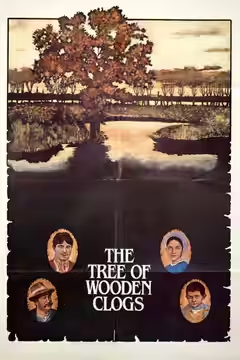
The Tree of Wooden Clogs poster

The Tree of Wooden Clogs

1978 · A year among Lombardy farm families, patient and plain, with nobody visibly acting.

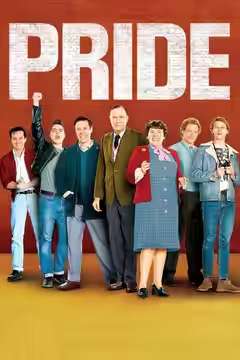
Pride poster82

Pride

2014 · A Welsh mining village again, in 1984, and this time the comedy is on purpose.