Film review

The Grapes of Wrath

1940 · Directed by John Ford · 2h 09m · MPA NR

In a sentenceA family drives two thousand miles towards a handbill, and the handbill was printed by the other side

Drama

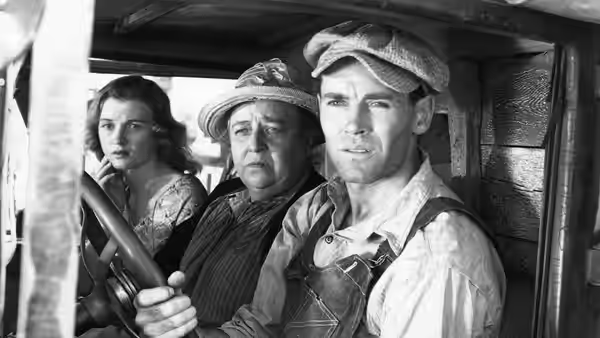
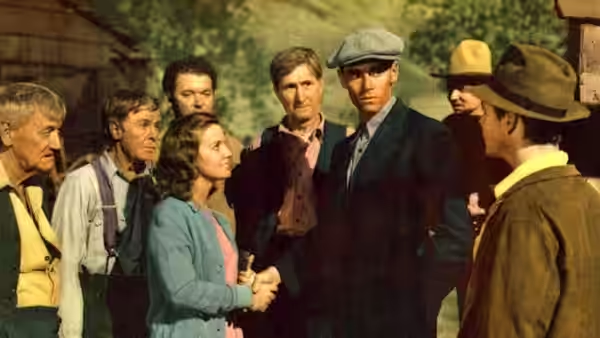
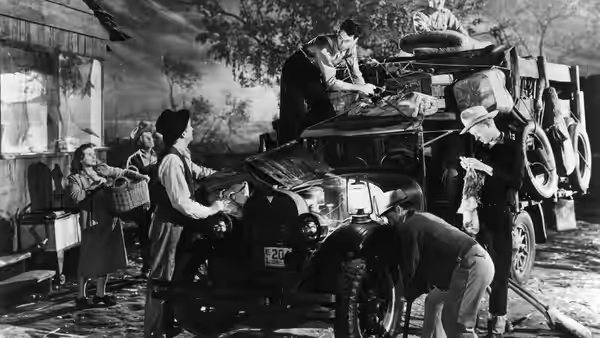
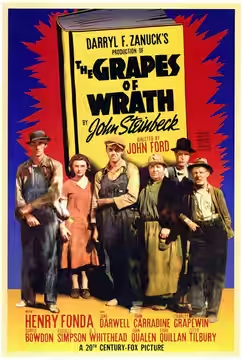
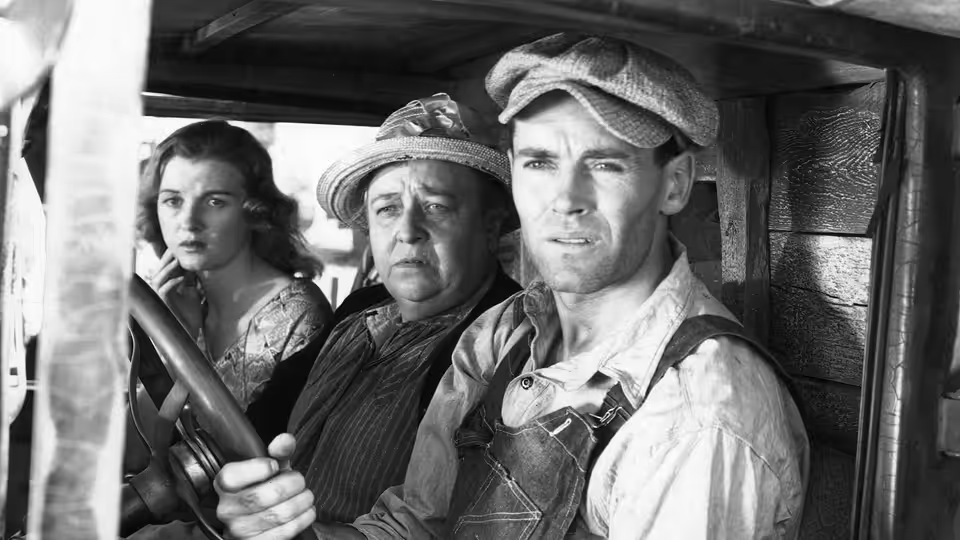
Oklahoma, in the dust-bowl years. Tom Joad (Henry Fonda), paroled from McAlester after four years for killing a man in a fight, walks home and finds the family farm empty and the fields tractored flat. Casy (John Carradine), the preacher who baptised him and has since lost the calling, walks with him. Muley Graves (John Qualen), hiding in the dark house, tells them the bank has cleared every tenant off the land. Tom finds his family at Uncle John’s (Frank Darien), loading everything they own onto an old truck. Ma (Jane Darwell) is burning the keepsakes she cannot carry. Grandpa (Charley Grapewin) refuses to go. A handbill promises work picking fruit in California, so the Joads and their preacher set off west along Highway 66.

Plays from YouTube when you press play; nothing loads from them until then.

Fi1m review

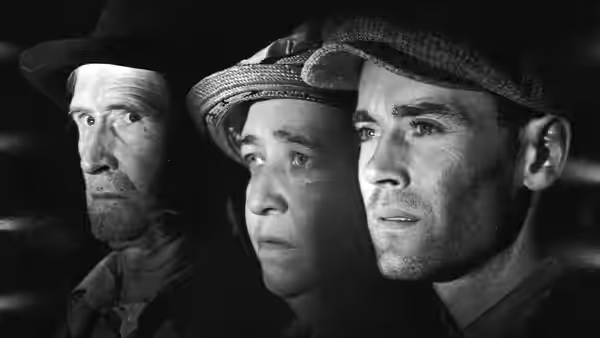
John Ford’s version of Steinbeck is gentler than the book and one of the hardest things Hollywood made in its studio years. Gregg Toland lights it by lamp and headlamp, Henry Fonda barely raises his voice, and Jane Darwell holds the rest together.

John Steinbeck’s novel came out in 1939 and John Ford’s film was in British cinemas by 4 April 1940, which is fast for a book that size and that angry. Darryl F. Zanuck produced it and Nunnally Johnson wrote the screenplay, and between them they kept the road, most of the people and a good deal of Steinbeck’s dialogue. They took some of the fury out. What is left is one of the hardest-edged films a Hollywood studio made in those years, and we recommend it without much hesitation.

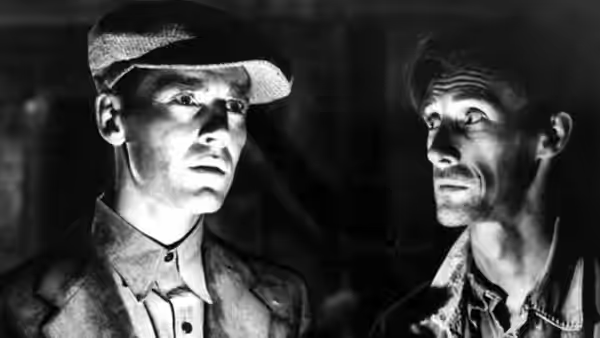
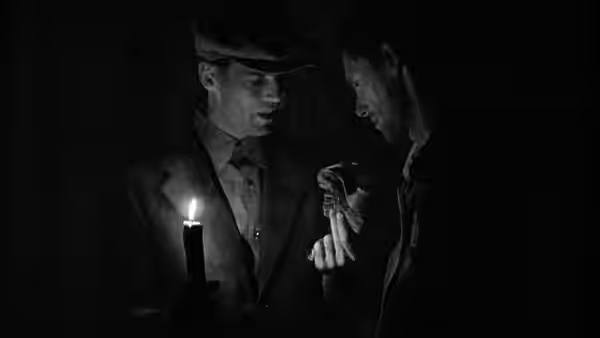
The Joads are tenant farmers in Oklahoma who have been cleared off their land by the bank, and the first half hour is about how that happened. Ford tells it through Muley Graves (John Qualen), found hiding in the emptied Joad house, and Gregg Toland lights the scene from one candle held under the men’s faces so that the room is black around them. Muley describes the day the tractor came, and Ford cuts to him kneeling in the dirt while a caterpillar knocks his house off its blocks. Nobody in the scene is a villain. The man driving the tractor is a neighbour’s boy who needs the three dollars a day.

Toland shoots the whole film this way, from a single source wherever he can: a lantern in a tent, a truck’s headlamps on a dirt road, a match. He went on to shoot Citizen Kane the following year and you can see him working out how much black a frame will stand. The picture we have not been able to put down is a quiet one. Before the family leaves, Ma Joad (Jane Darwell) sits alone by the stove with a box of keepsakes she cannot take, a postcard, a china dog, a pair of earrings, and holds the earrings up to her ears in front of a small mirror. It moved us more than we were ready for, and it did so because Ford holds the shot, Alfred Newman keeps the music out, and Darwell does not cry.

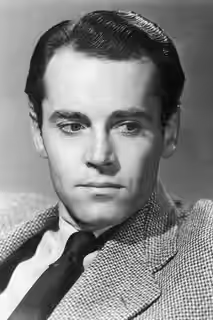
Henry Fonda plays Tom Joad as a man who learned in prison to keep his voice down and his hands still. He does almost nothing for long stretches, and then he moves, and the film moves with him. Darwell is the opposite, broad and unhurried, the person who decides when the truck leaves. John Carradine’s Casy, the preacher who has lost his calling and is talking himself towards a new one, is all elbows and long pauses, and his best scenes are the ones where he is listening. Charley Grapewin’s Grandpa, refusing to leave the land, gets the film’s one stretch of real comedy. Further down the cast, Dorris Bowdon’s Rosasharn and Eddie Quillan’s Connie are given less than they need.

The road itself is handled by editor Robert L. Simpson as a run of dissolves, road signs and the truck against the sky, and it is efficient and a little dutiful. The film moves less easily than Stagecoach, which Ford had made only the year before: scenes here tend to stop rather than end, as if the film were checking the book for what came next. Newman’s score is built almost entirely on one folk tune, Red River Valley, played on an accordion, and by the last reel it is doing feeling the images have already done. Gwen Wakeling’s costumes are right, though: Ma’s print dress washed to a grey, the men’s overalls worn through at the knee, nothing that looks as if it came from a wardrobe department.

The larger complaint, and it is the one most critics make, is that Johnson and Zanuck softened the politics. The book is angry at a system. The film is sorry for a family. The second half spends longer than it should in the one place along the road where the Joads are treated decently, and the argument about who owns the land and who owns the people who work it gets made in speeches rather than in what we see. We will not quote the famous one Fonda gives near the end. It is well delivered and it is still a speech.

None of that stopped us being got at, and we think it will not stop you. It is a PG, which is right; there is nothing here a child cannot see, only things a child will ask about. Watch it with the lights off. Toland lit it for the dark, and the faces need it.
Critical consensus AI synthesised

84
Positive
12
Mixed
0
Negative
0

Every one of the twelve reviews is positive, and the praise gathers in the same three places. Gregg Toland’s photography is mentioned by almost everyone, usually for the way it finds beauty in dust and lamplight without prettifying the poverty. Henry Fonda’s Tom Joad and Jane Darwell’s Ma Joad are singled out again and again, and John Ford’s direction is credited with keeping familiar material moving at pace. Empire goes as far as calling it his best film outside the Westerns, and the reviews written on release treat it as a classic on arrival.

The reservations are small and consistent. Several critics, Radio Times and Slant among them, feel the film softens Steinbeck’s politics, swapping the novel’s anger for religious symbolism and pity. Roger Ebert makes a similar point and is the coolest of the twelve. The Guardian finds the rhythm jerky in places and some of the dialogue stiff. Nobody, though, argues against seeing it.

Radio Times
★★★★★ · Adrian Turner
100

This is a magnificent adaptation of Steinbeck's novel, with heart-rending scenes and lasting power in the migrants' fate, though it substitutes corny religious symbolism for the novel's raw politics. It is beautifully photographed by Gregg Toland, with standout performances including Jane Darwell as Ma Joad.

Read the full review →
Empire
1 January 2000
90*

The critic calls it John Ford's best non-Western and possibly his best film overall. Praise goes to Henry Fonda's performance as Tom Joad and Gregg Toland's cinematography capturing the American landscape, alongside Ford's sympathetic take on workers' rights.

Read the full review →
The New Yorker
27 January 1940 · John C. Mosher
90*

The critic hails the film as an epic of starvation sustained with majesty that never falters, crediting John Ford’s swift pacing and fresh handling of familiar material. It singles out the script’s success, the landscape’s grandeur, and the ensemble performances for praise.

Read the full review →
The New York Times
25 January 1940
90*

The review deems the film a flawless screen edition of Steinbeck’s novel that follows the book closely yet intelligently, with uniformly excellent and suitable performances. It praises the direction, adaptation, and overall execution as adding the picture to the shelf of screen classics.

Read the full review →
Variety
30 January 1940 · John C. Flinn Sr.
90*

The review calls the picture an absorbing, tense melodrama that is starkly realistic and loaded with social and political fireworks, crediting Ford’s courage and skill. It praises the casting (especially Fonda, Darwell, and Carradine) and the convincing treatment of the American social problem.

Read the full review →
The Telegraph
11 August 2021 · Simon Heffer
80*

The piece examines how the 1940 John Ford film captured the essence of the Great Depression and shocked audiences with its portrayal of exploitation and hardship faced by the Joad family. It highlights the film's enduring relevance to themes of economic injustice and migration.

Read the full review →

Cast

Awards

Academy Awards, 1941

Nominated
Best Actor
Nominated
Best Film Editing
Nominated
Best Picture
Nominated
Best Sound
Nominated
Best Writing, Adapted Screenplay
Won
Best Director
Won
Best Supporting Actress

If you liked this, try…