Film review

Bicycle Thieves

1948 · Directed by Vittorio De Sica · 1h 29m · U

In a sentenceEighty-nine minutes of wanting to buy a stranger a bicycle

Drama

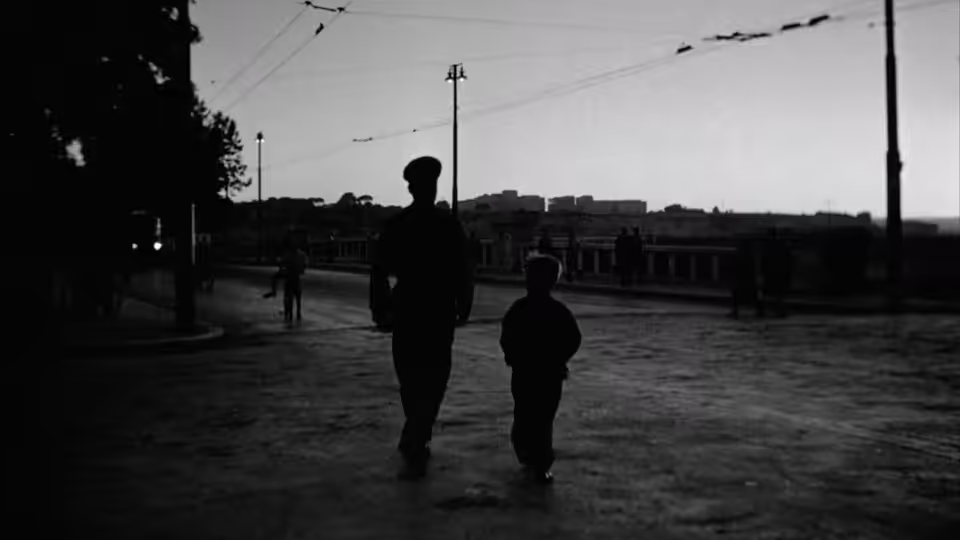
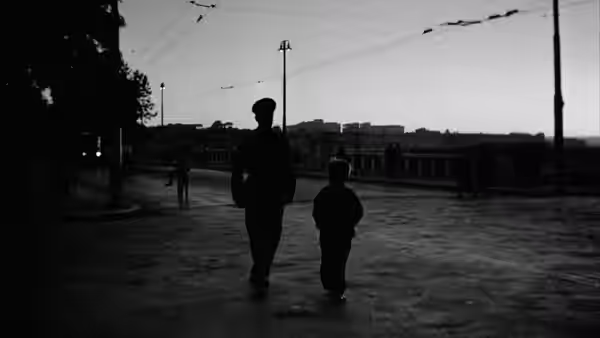
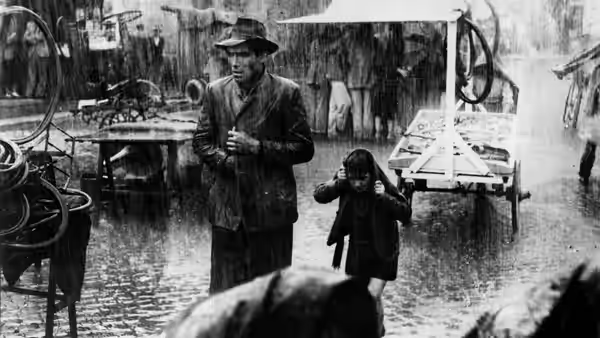
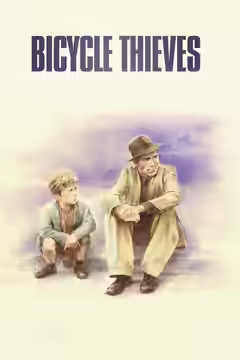
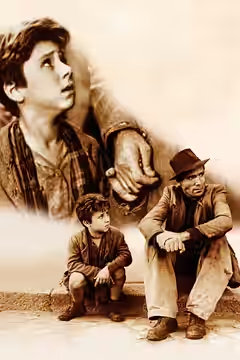
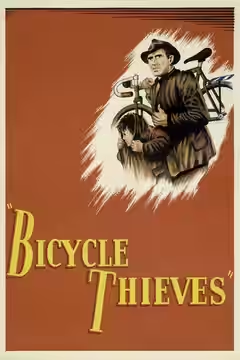
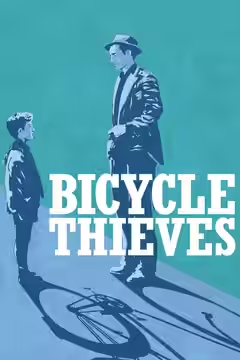
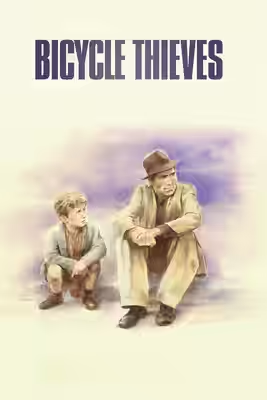
In postwar Rome, a workman, Antonio (Lamberto Maggiorani), searches for his stolen bicycle with his son Bruno (Enzo Staiola). As they move through the city, the search brings them into contact with poverty, bureaucracy and other people’s efforts to get by. Antonio’s desperation grows, and Bruno is there to see the humiliations his father faces. Vittorio De Sica directs a drama about a family’s poverty and a father and son’s relationship, following their efforts to recover the bicycle through the streets of Rome.

Fi1m review

Vittorio De Sica’s drama about a father and son searching for a stolen bicycle is painfully affecting. The music presses too hard, but the performances make its account of poverty difficult to shake.

Bicycle Thieves makes a stolen bicycle sufficient reason for a film, and Vittorio De Sica never needs to enlarge the crime to justify our attention. Antonio is a workman searching postwar Rome with his son, and his desperation tells us how little he can afford to lose. It is an absorbing, upsetting film, worth watching even for those who usually avoid dramas about hardship. De Sica makes us stay with a poor man whose trouble might otherwise be passed over.

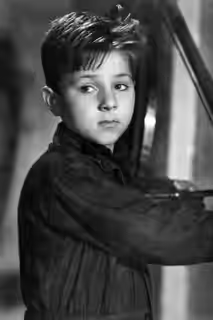
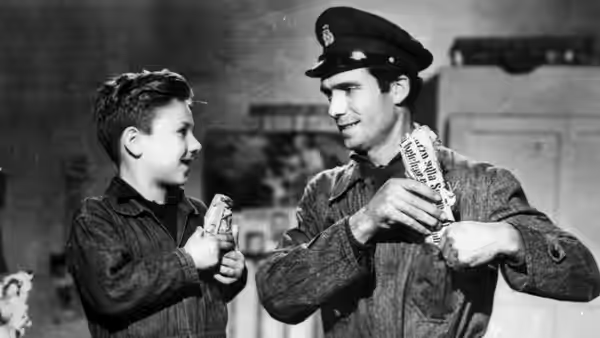
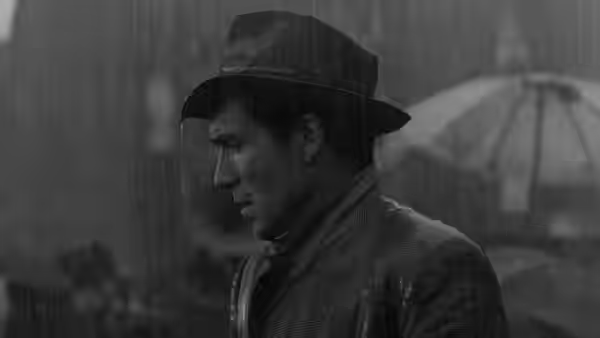
Lamberto Maggiorani gives Antonio enough awkwardness to prevent him becoming a neatly presented example of hardship. His performance makes it uncomfortable to look closely at a man who cannot keep his distress to himself. Enzo Staiola’s Bruno has to watch too, and the father-son relationship gives the search much of its force. We felt ashamed to be watching Antonio’s humiliation in front of his child. Bruno’s presence means that his father has to go on being a parent while visibly struggling to put things right.

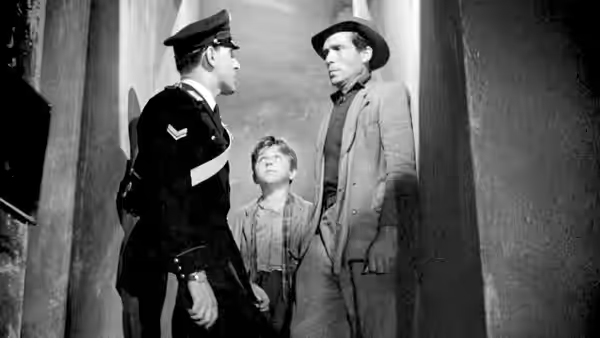
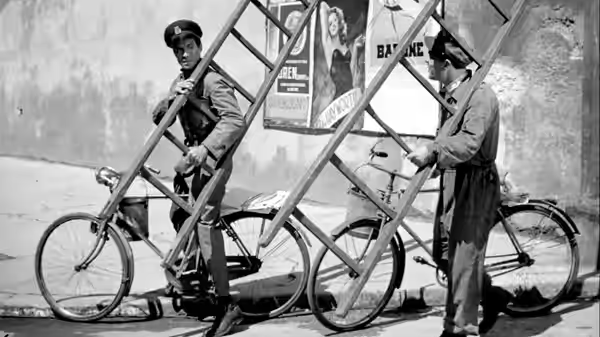
Carlo Montuori’s location photography gives the streets room around Antonio and Bruno. Rome carries on beyond their search, and the city’s indifference is more convincing for never seeming to pause while they suffer. Antonio Traverso’s production design works within that unshowy approach, keeping the surroundings convincing without turning poverty into something picturesque. The places they pass through suggest other lives as difficult as theirs, so Antonio never seems to have been singled out by bad luck simply because he is the leading character.

Eraldo Da Roma’s editing keeps the search legible while allowing its encounters to interrupt any easy forward movement. We feel the frustration of time spent trying and asking, without the film itself becoming aimless. De Sica draws poverty and bureaucracy into the search through the people Antonio meets, keeping a simple practical objective in view. The humour matters here, too: it allows for ordinary human foolishness in a story that could have become oppressively solemn. At 89 minutes, there is enough room to register other lives without forgetting the bicycle.

Alessandro Cicognini’s score is the part we would most readily turn down. Its sweetness sometimes insists on the sadness after Maggiorani and Staiola have already made it clear, and the extra prompting makes us briefly conscious of being handled. There is a related risk in placing a child beside so much adult distress: Bruno can seem appointed to make Antonio’s suffering harder for us to bear. Staiola’s persuasive presence largely saves that choice, but the music occasionally gives the sceptical viewer a fair complaint.

The film’s place in neorealism need not be the reason to watch it. The non-professional cast and location work matter because they make Antonio and Bruno credible company, even when their situation becomes hard to bear. De Sica lets us care about getting a bicycle back before asking us to consider why its loss is so disastrous. There is no need to approach this film from 1948 as an improving exercise. Watch it with someone prepared to talk about the father and the boy afterwards.

Critical consensus AI synthesised

86
Positive
6
Mixed
0
Negative
1

Most critics respond warmly to Bicycle Thieves, praising the way a simple search for a stolen bicycle makes poverty and the loss of dignity painfully concrete. Praise centres on De Sica’s direction, the location shooting and persuasive performances, with the father-son relationship giving the social observation its emotional force. The reviews repeatedly find that its depiction of postwar desperation remains affecting, while several also value the humour and everyday encounters that keep the story from becoming a lecture.

The disagreement concerns how that emotion is achieved. Time Out stands apart, finding the score syrupy and the child’s presence manipulative, though it still admires the stark locations and central performance. The spread is therefore wide but heavily weighted towards praise: what the dissenting review sees as sentimentality, most critics regard as a convincing account of people struggling under conditions that leave little space for compassion.

Radio Times
★★★★★ · David Parkinson
100

This urban parable is hailed as the masterwork of the neorealist movement for its flow-of-life structure and vignettes of emotional intensity following the search for the stolen bicycle.

Read the full review →
The AV Club
7 March 2007 · A · Scott Tobias
95

The critic calls the film a pure and bracing neo-realist classic that remains indelible in its portrayal of postwar desperation robbing a man of his dignity. De Sica's exceptional image-making is singled out, with specific shots functioning as powerful editorials on social conditions.

Read the full review →
The Guardian
19 December 2008 · Peter Bradshaw
90*

The critic calls it a brilliant, tactlessly real work of art and finds it as unbearable as any horror film. He singles out the authentic sting of poverty as a banal and horrible loss of dignity, with the father-son relationship underscoring the humiliation.

Read the full review →
Time Out
16 December 2008 · ★★ · David Jenkins
40

The review finds the reissued classic emotionally manipulative with a syrupy score and doe-eyed kid sidekick that undercuts its impact today, though it acknowledges the stark location shooting and strong central performance.

Read the full review →
Slant Magazine
30 March 2016 · Clayton Dillard

The critic describes the film as an endlessly complex, universal testament to the ills of valuing commerce over compassion and one of the greatest humanist films ever made. The plurality of the title and its exploration of systemic desperation and theft across all characters are singled out for praise.

Read the full review →
The New Yorker
3 December 1949 · John McCarten

The critic calls the film a masterpiece that establishes De Sica as the peer of any moviemaker, praising its blend of funny, appealing, exciting, and sad elements in the story of a workman's desperate search for his stolen bicycle in postwar Rome. He singles out the realistic direction, the nonprofessional cast's persuasive performances (especially the father-son dynamic), and touches of humor amid tension.

Read the full review →

Cast

Stills

Awards

Academy Awards, 1950

Nominated
Best Writing, Adapted Screenplay

BAFTA Film Awards, 1950

Nominated
Best Film

Golden Globes, 1949

Nominated
Best Non-English Language Film

If you liked this, try…

Pather Panchali poster

Pather Panchali

1955 · Family hardship observed patiently, with room for a child’s curiosity alongside the worry

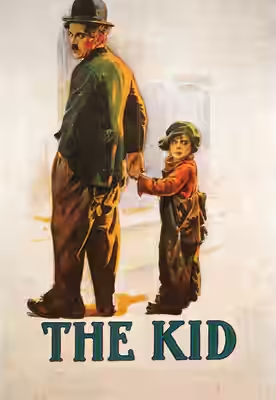
The Kid poster

The Kid

1921 · A makeshift family whose comic survival makes the hardship harder to dismiss

Where Is the Friend’s House? poster

Where Is the Friend’s House?

1987 · A child’s errand acquires urgency through close attention to seemingly minor obstacles

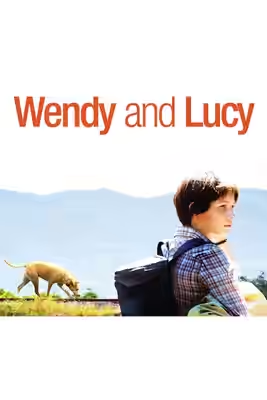
Wendy and Lucy poster

Wendy and Lucy

2008 · A missing dog exposes how quickly a precarious life can come apart

Rosetta poster

Rosetta

1999 · A young woman’s struggle for work, filmed close enough to make us anxious