Film review

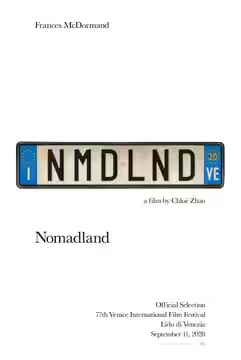
Nomadland

2021 · Directed by Chloé Zhao · 1h 48m · MPA R

In a sentenceRetirement, American style: a van, a bucket, a warehouse job and a sunset every night

Drama

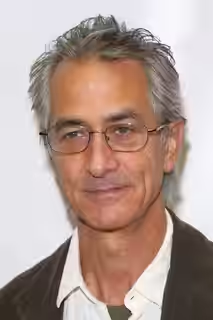
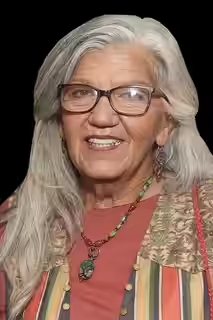
Empire, Nevada, 2011. The gypsum plant closes, the company town closes with it and its zip code is retired. Fern (Frances McDormand), recently widowed, packs what she can into a white van, puts the rest in a storage unit and drives off to work the Christmas rush at an Amazon warehouse. When the season ends she has nowhere to go. A co-worker, Linda (Linda May), tells her about a gathering of van-dwellers in the Arizona desert, where older people who cannot afford rent teach one another how to live on the road: which bucket to buy, how to change a tyre, where to park without being moved on. There Fern meets Swankie (Swankie), who has no time for beginners, and Dave (David Strathairn), who keeps turning up. Fern wants work, a van that runs, and to be left alone.

Plays from YouTube when you press play; nothing loads from them until then.

Fi1m review

Chloé Zhao puts Frances McDormand among real van-dwellers in the American West and mostly lets them talk, and the result is patient, plain and often moving. It is gentler on the warehouse than the people in it deserve.

The film opens with a card. Empire, Nevada, had a gypsum plant; in 2011 the plant closed, the company town emptied and the zip code was discontinued. Fern (Frances McDormand) lived there with her husband, and now he is dead and the town is gone. Chloé Zhao, who wrote, directed and edited, and produced with McDormand and Dan Janvey, adapts Jessica Bruder’s book about older Americans working seasonal jobs from their vans, and she puts one professional actor in among the people the book is about. We recommend it, and warmly, with one reservation that grew on the drive home.

The people are the point. Linda May and Swankie play women called Linda and Swankie, and they are not acting so much as being filmed, which Zhao has done before with the South Dakota cowboys of The Rider. Linda May, at a campfire, tells how she worked all her life, checked what she would have to retire on, and looked at the gas on the stove for a while before her dog looked back at her. Swankie sits on a rock and describes kayaking a river as hundreds of swallows lifted off a cliff and their eggshells drifted on the water beneath her. We did not expect to cry at a description of birds told by a woman we had never heard of, and we did, because Zhao holds on her face and does not cut to the river. She lets us imagine it, and imagining it is the whole of the scene.

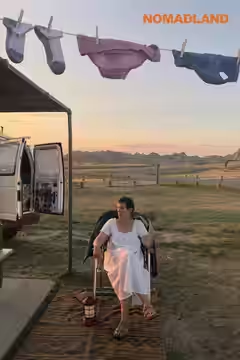
McDormand’s job is to listen, and she is good at it. Fern is not a saint. She is short with people, she walks off when conversations get warm, and she plainly prefers the van to any spare room offered to her. McDormand plays her small: a lot of the performance is the back of a head in a driving seat, or a woman squatting in the scrub with a bucket, and the film treats the bucket with the same seriousness as the sunsets.

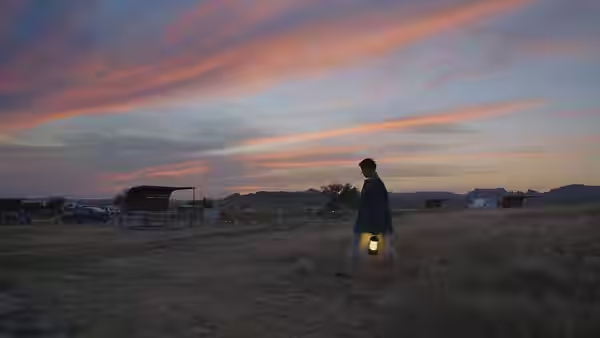
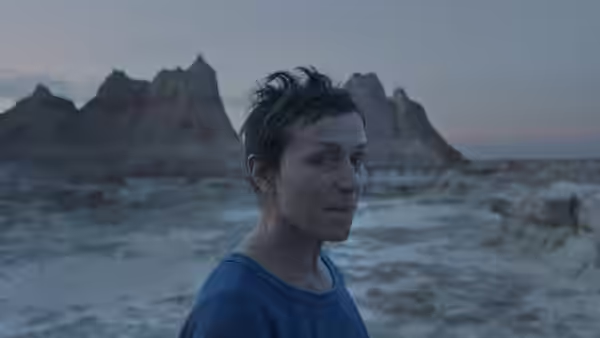
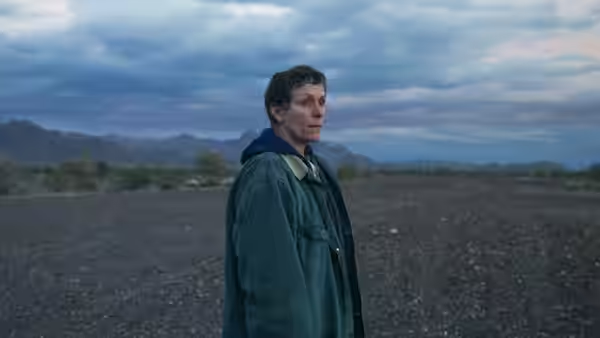
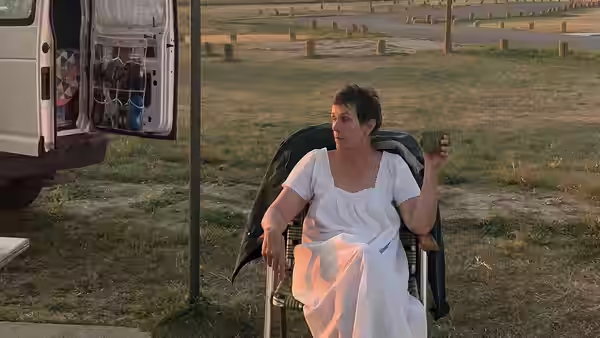
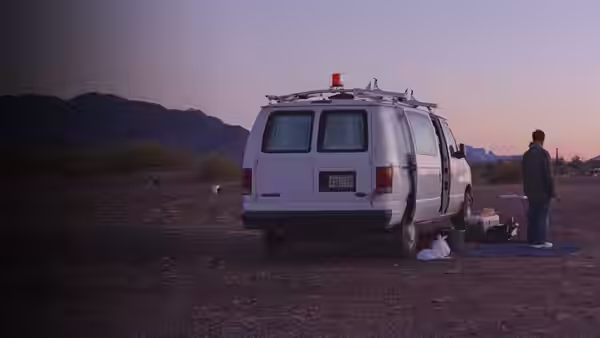
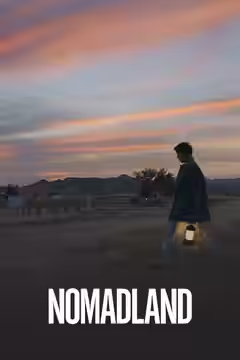
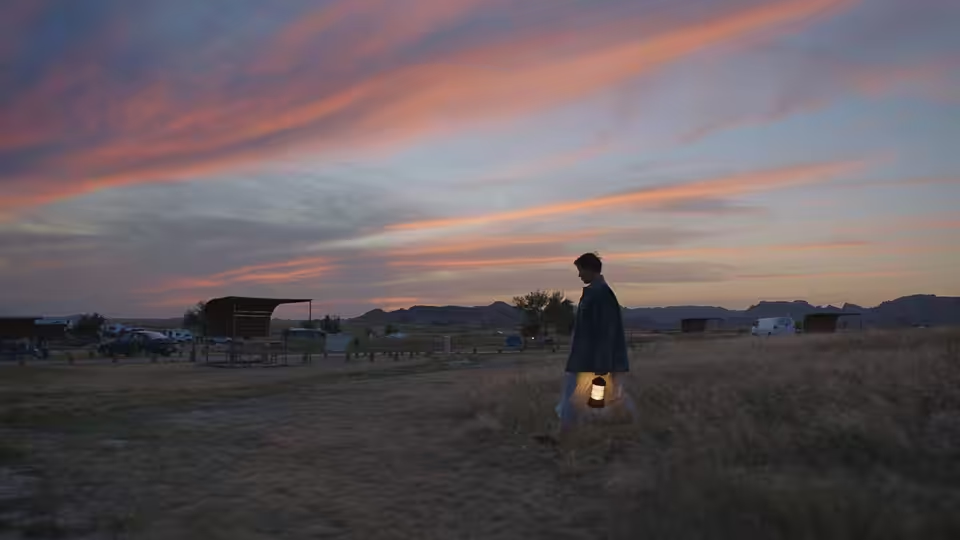
Joshua James Richards shoots almost everything at the edges of the day: low sun on rock, blue light through a windscreen, a small figure walking away from the camera across a flat. He is also credited with production design, and the van, with its shelf of patterned plates and its curtain and its single burner, is the most lived-in set we have seen in some time. Hannah Peterson keeps Fern in the same padded jacket and knitted hat for months of story, which is right; nobody here has a wardrobe. Zhao cuts her own footage and likes to leave a scene a beat early, on a look rather than a reply. Ludovico Einaudi’s piano comes in over the driving and, once or twice, over a face that was doing fine without it.

Now the reservation. Fern’s first job is the Christmas rush at an Amazon warehouse, and Richards shoots it clean and bright and orderly, yellow vests moving among tall shelves. Fern seems to like it. The book has things to say about who profits when a woman of retirement age sleeps in a car park to sort parcels, and the film declines to say them. It is not that Zhao should have made a lecture. It is that she has made a film about people who lost everything and been vague about why. One or two critics raised this; most did not. We think it costs the film more than they allow.

David Strathairn’s Dave is the other soft spot. Strathairn is as unshowy as ever, and Dave is a decent man, but his is the one strand you can feel was written: his scenes have beginnings and endings where everyone else’s just stop. Against The Rider, which had no star and hurt more, this is a smoother piece of work. It is also more generous, and it gets away with a good deal on the strength of two women talking by a fire.

It runs 108 minutes and carries a 12 certificate, and it will not frighten anyone. Watch it on the biggest screen you have and turn the lights off, because Richards’s dusk is half the film. Then look up what Bruder wrote about the warehouse. The film would rather you did not, and that is our only real complaint.
Critical consensus AI synthesised

87
Positive
26
Mixed
0
Negative
1

The reviews are close to unanimous. Most critics take Nomadland as a quiet road film about people pushed out of their homes by economic collapse, and praise it for treating them with dignity rather than pity. The praise settles on two things: Frances McDormand’s understated lead performance, which several critics rank among her best, and Chloé Zhao’s decision to put real van-dwellers on screen beside her, which most find gives the film an authenticity a script alone could not. The photography of the American West is mentioned in nearly every review.

The reservations are few and gather around politics. Sight and Sound and The Skinny both feel the film prefers small moments to any argument about labour and exploitation, and the Evening Standard thinks it romanticises a workforce ripe for exploiting. Deadline finds it cooler and more detached than most. The one outright dissent comes from Eye for Film, which finds McDormand miscast and the direction contrived. Otherwise the spread is narrow.

The Telegraph
★★★★★ · Robbie Collin
100

Chloé Zhao’s hauntingly beautiful Oscar winner follows a widow joining America’s drifters after economic hardship. The critic highlights Frances McDormand’s subtle, egoless performance as one of the finest of her career and the film’s authentic use of real van-dwellers.

Read the full review →
Time Out
4 March 2021 · ★★★★★ · Phil de Semlyen
100

Zhao transforms a story of economic catastrophe into a poignant, deeply felt road movie with raw emotional honesty and an almost spiritual connection to the landscape. McDormand is magnetic as a quietly fierce avatar for economic anxiety, and the film expertly stitches realism, transcendence and lightly-worn radicalism.

Read the full review →
Empire
27 April 2021 · Ian Freer
90*

The film is a miracle, a state-of-the-nation address about a forgotten underclass and a portrait of quiet resilience. Zhao elevates her art with a beautifully made, clear-eyed view of home, loss and the visibility of women, delivered with a huge emotional wallop.

Read the full review →
IndieWire
11 September 2020 · A- · Eric Kohn
90

The critic praises the magical combo of Frances McDormand and Chloé Zhao in a lyrical road movie that delivers a profound rumination on leaving society behind. Singles out the director's ability to work magic with McDormand’s face and the real world around it.

Read the full review →
Little White Lies
11 September 2020 · festival review · Hannah Strong
90*

Zhao chronicles a year in the life of one woman forced onto the road after her town closes, delivering an achingly tender look at resilience and community among modern nomads. McDormand gives an understated performance of utmost tenderness and care amid stunning images of the American wilderness.

Read the full review →
Los Angeles Times
2 December 2020 · Justin Chang
90*

Chang lauds McDormand's finest performance and Zhao's lyrical, graceful ode to wanderlust and resilience amid economic ruin, highlighting the spiritual grace and real nomads' stories.

Read the full review →

Cast

Awards

Academy Awards, 2021

Won
Best Actress
Won
Best Director
Won
Best Picture

Medal from the Circle of Cinematographic Writers for the best foreign film, 2021

Nominated
Medal from the Circle of Cinematographic Writers for the best foreign film

Dallas-Fort Worth Film Critics Association Award for Best Film, 2020

Won
Dallas-Fort Worth Film Critics Association Award for Best Film

Dorian Award for Film of the Year, 2020

Won
Dorian Award for Film of the Year

Venice Film Festival, 2020

Won
Golden Lion

If you liked this, try…

The Rider poster

The Rider

2017 · Zhao’s previous film, with real South Dakota cowboys and no star; rougher and it hurts more

Vagabond poster90

Vagabond

1985 · Agnès Varda follows a young woman drifting through winter France; colder, harder, no campfires

Wendy and Lucy poster

Wendy and Lucy

2008 · Michelle Williams, a dog and a broken-down car in Oregon; poverty measured in small change

Paris, Texas poster88

Paris, Texas

1984 · Wim Wenders walks a silent man out of the desert; the West shot as a lost country

The Straight Story poster88

The Straight Story

1999 · David Lynch’s gentlest film: an old man crosses Iowa on a lawnmower to see his brother