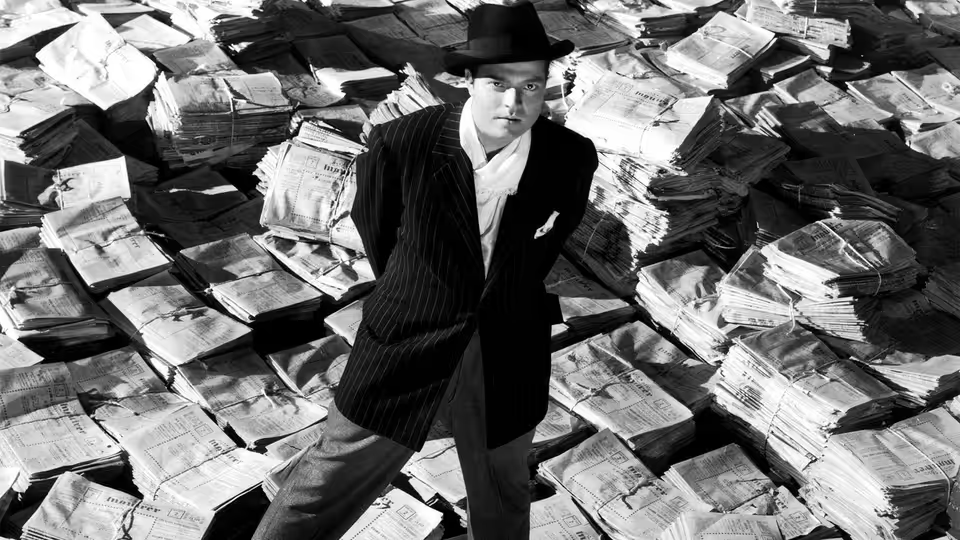
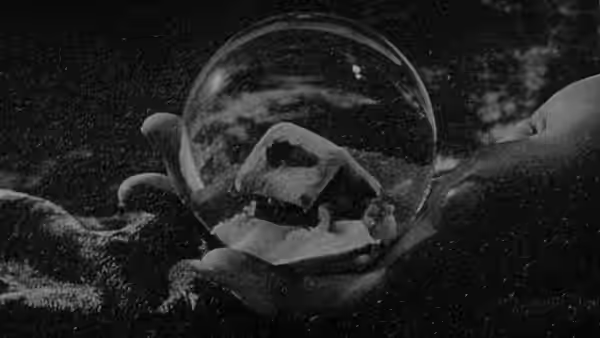
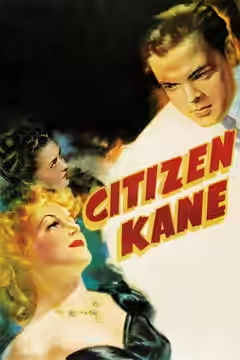
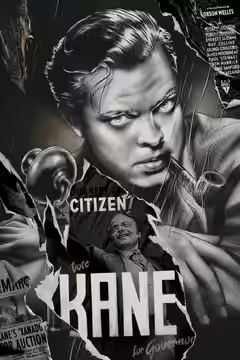
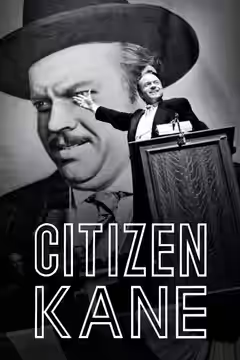
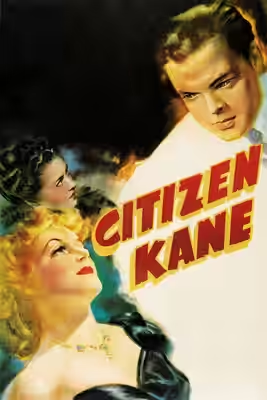
Citizen Kane deserves its reputation because it makes the business of understanding a powerful man so absorbing. Orson Welles gives the technical ingenuity a human centre, though the elaborate structure sometimes keeps us at a distance.
Citizen Kane is an absorbing, often funny study of a powerful man, and we recommend it without requiring any homework in film history. Orson Welles directs and plays Charles Foster Kane, a media magnate whose life reaches us through other people’s recollections. The screenplay, by Herman J. Mankiewicz and Welles, gives those accounts enough room to make the telling itself interesting. We keep listening because a new account can alter what we thought we knew.
The documentary-style presentation gives the film a brisk, public way of describing a life, while the flashbacks let individual memories complicate it. That movement could easily become a tiresome exercise in correcting the record. Robert Wise’s editing makes the shifts inviting: a change of period renews our curiosity about Kane rather than making us work out where we have landed. Following the film rarely feels like an examination.
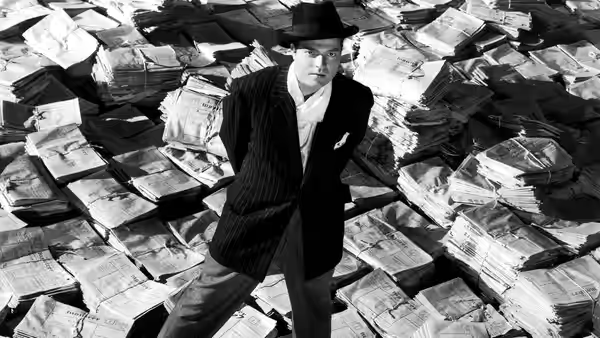
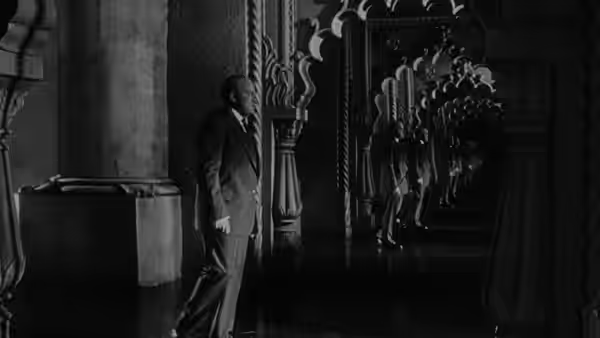
Gregg Toland’s deep-focus cinematography is the clearest example of how much work a picture can do. Keeping near and distant parts of the image sharp gives us more than one thing to attend to, and makes the people within it seem to have lives outside the immediate exchange. We can look past the speaker without losing the scene. The pleasure is in having that freedom while still feeling that Welles and Toland know where our attention will go.
The sound deserves equal attention. Overlapping dialogue allows voices to compete for our attention, with an energy that a tidy succession of speeches would lose. We hear a sadness in Bernard Herrmann’s score that suits this scrutiny of a powerful man’s life, though it is the speech we find ourselves listening to most closely.
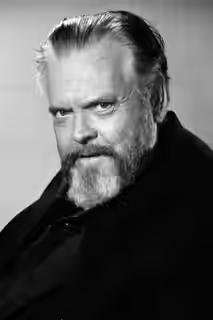
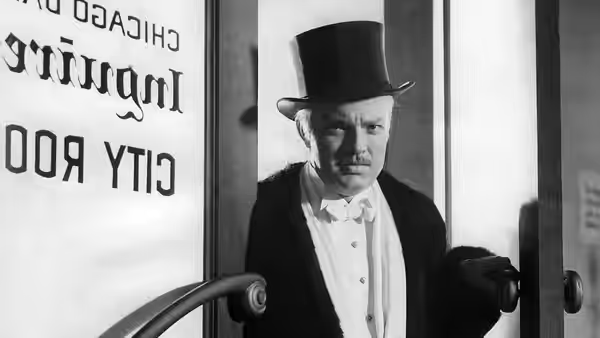
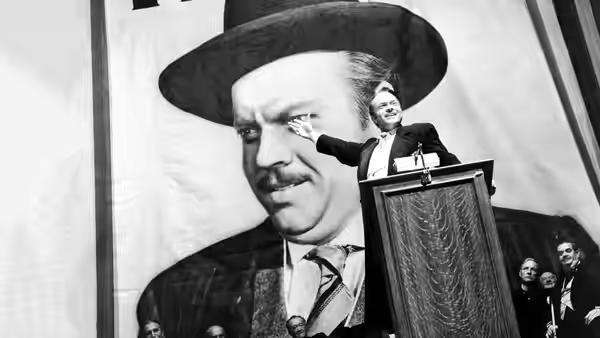
Welles is the reason all this ingenuity matters. Playing Kane at different ages, he makes it possible to remain interested in the man without excusing the uses he makes of power. We were saddened by the older Kane, because Welles plays him with enough sympathy to make the damage done by power feel personal. There is enough wit in the performance to stop the psychological scrutiny becoming a long, solemn diagnosis.
Our reservation is that the elaborate sequence of recollections sometimes lets us consider a feeling before we have had much chance to share it. A further shift in time can interrupt our interest in the person speaking. We wanted to stay with the people for longer, particularly when Welles makes the passing of years felt in his performance. This is a limitation worth naming, though it does not make the flashbacks feel unnecessary.
Welles makes unusually good use of the mystery form by asking us to judge the people telling the story as well as the man they describe. Allow its 119 minutes your full attention. Choose an evening when there is time to listen; the conversations deserve as much attention as the pictures.