Jane Schoenbrun’s horror film about a boy, a girl and a cancelled television show is quietly, seriously unsettling for an hour. Then it slows to a crawl and tells us what it means. Worth your evening, if you can sit still for it.
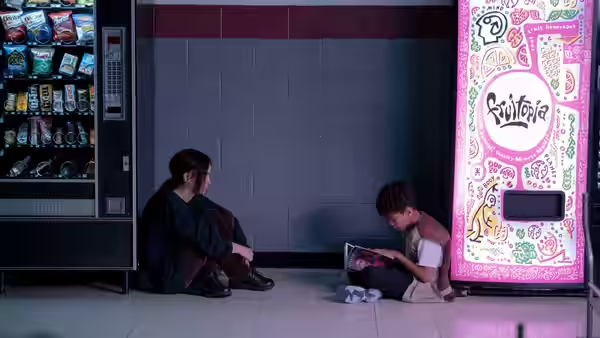
Jane Schoenbrun’s film is set in an American suburb in 1996 and, for its first half, it is about two lonely teenagers and a television programme. Owen is in seventh grade and in bed by ten. Maddy is in ninth, reads an episode guide alone in the school hall on election night, and does not seem to have anyone either. The Pink Opaque goes out at half past ten on Saturdays, so Maddy tapes it for him and labels the cassettes by hand. That is the plot for a long time, and it is enough.
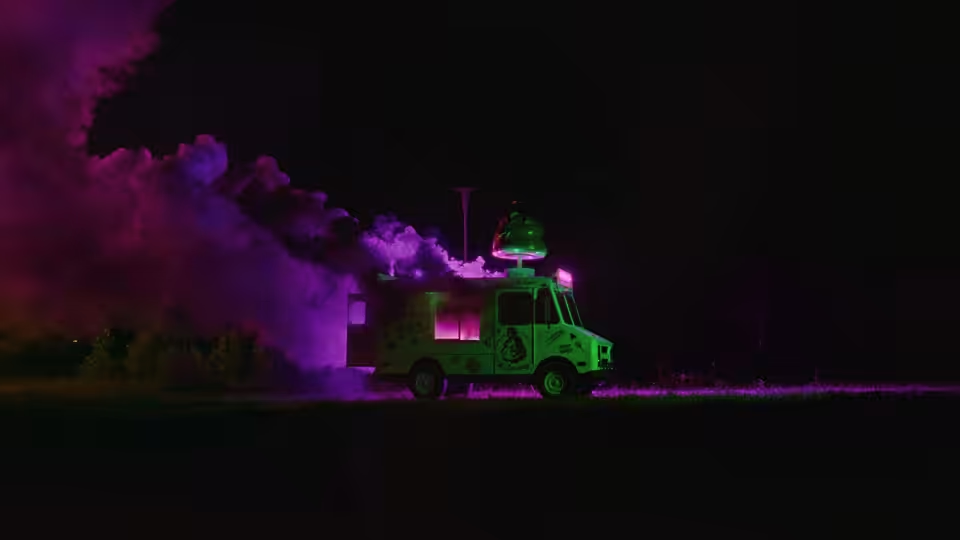
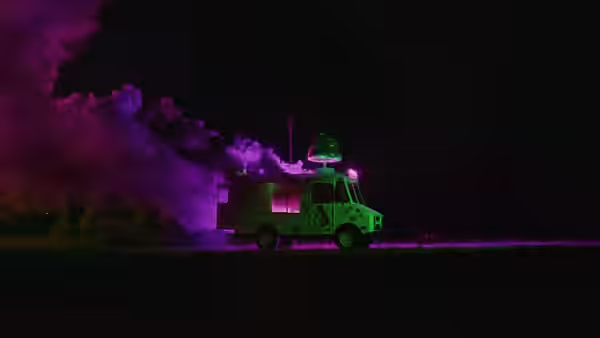
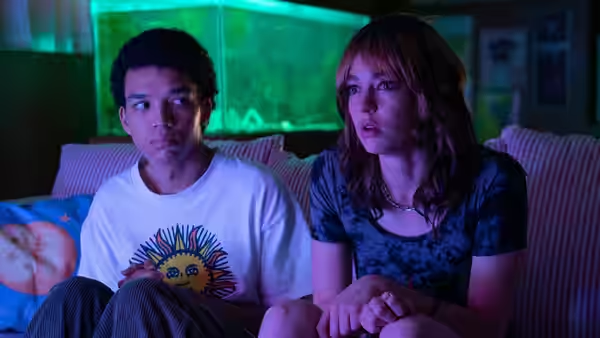
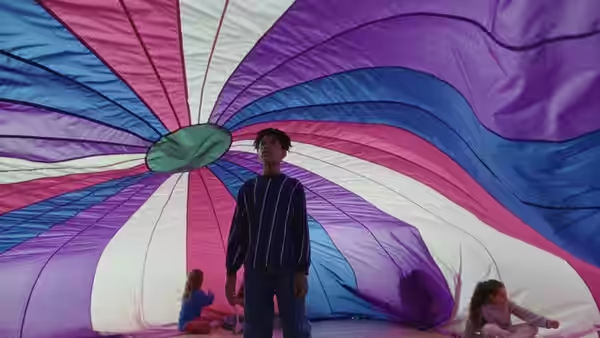
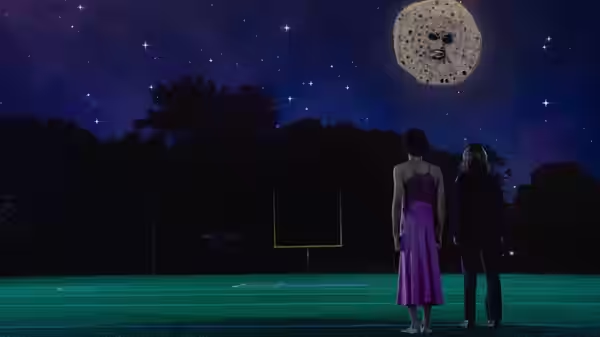
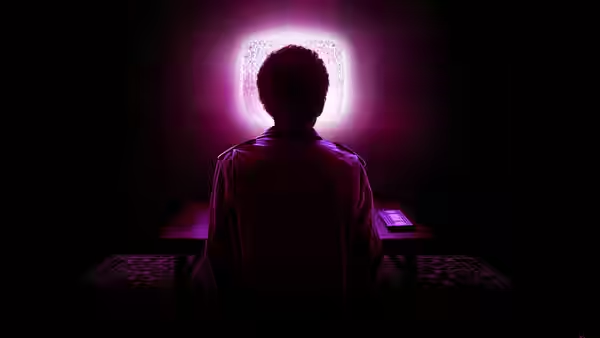
Eric K. Yue lights the town as if every streetlamp had been swapped for a neon tube. Front rooms are pink and violet, school corridors are green, and the television throws a soft white square across children’s faces that is the nearest thing in the film to warmth. Brandon Tonner-Connolly’s production design gets the junk right: a rainbow parachute in a gym, an ice-cream van, the words THERE IS STILL TIME chalked in pink down the middle of a road. The show inside the film is fog, blue gel and Emma Portner’s Mr Melancholy, a moon with a man’s face, and it is as frightening as anything is when you are eleven.
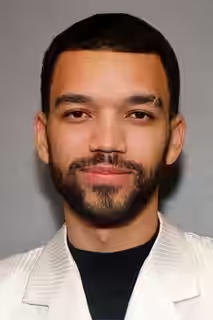
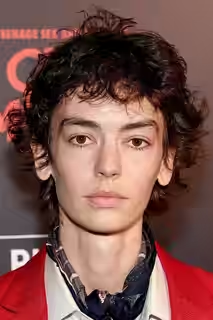
Justice Smith plays Owen from his late teens onwards as someone who has stopped expecting anything. His shoulders sit up round his ears, his voice comes out in a half-whisper, and when he tells us, straight to camera, that he has known since he was small that something was wrong inside him, he says it the way you would read out a phone number. That was the line that got at us. We had been waiting for the horror to come out of the television, and it came instead from a young man being polite about his own disappearance. Jack Haven’s Maddy is the opposite, all edges and long stares, and Haven gets the film’s big speech, on the bleachers of a football field in something close to a single take. We will not say what it is about. It is the best-written scene in the film and the one that most tests your patience.
Schoenbrun is plainly writing about being trans, about years spent knowing and not acting, and the film’s strengths and problems both come from that. Danielle Deadwyler and Fred Durst, as Owen’s parents, are used sparingly and well; Durst, asking whether The Pink Opaque is not a show for girls, makes a sofa and a can of beer menacing. Rachel Dainer-Best keeps Owen in the same slack jumpers across two decades, which tells you most of what you need to know. Alex G’s score hums under all of it and rarely rises above a hum. The songs are another matter.
Twice the film stops for a band to play a full song in a bar called the Double Lunch, and the second time we were doing sums with the runtime. Sofi Marshall cuts the school years quickly and with feeling, then lets the adult years sit, and we understand that the slowness is the subject. Owen’s life is a waiting room. But there is a difference between showing us a man who does nothing and making a film in which nothing happens, and for perhaps twenty minutes in the middle Schoenbrun lands on the wrong side of it. Later the film says aloud what its pictures had already told us, and then says it again.
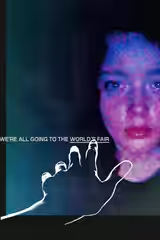
Schoenbrun’s previous feature, We’re All Going to the World’s Fair, was about a girl and a webcam, and this is the same idea with more people in it. It has better light and two real performances, and it has lost some of that film’s plainness; here every second image is a symbol and you can feel the camera pointing at it. Most critics have been warmer than we are, and we understand why. The people who found it shattering saw themselves in it, and we would not argue with them. We saw an hour that had us completely and forty minutes that had already made their point.
It is a 15 certificate and earns it with dread rather than blood. See it in a cinema if you can, with the sound up, because the glow is the whole point and a laptop will make it look like somebody’s night light. Then go and find the programme you loved at twelve, and see whether you dare watch it again.