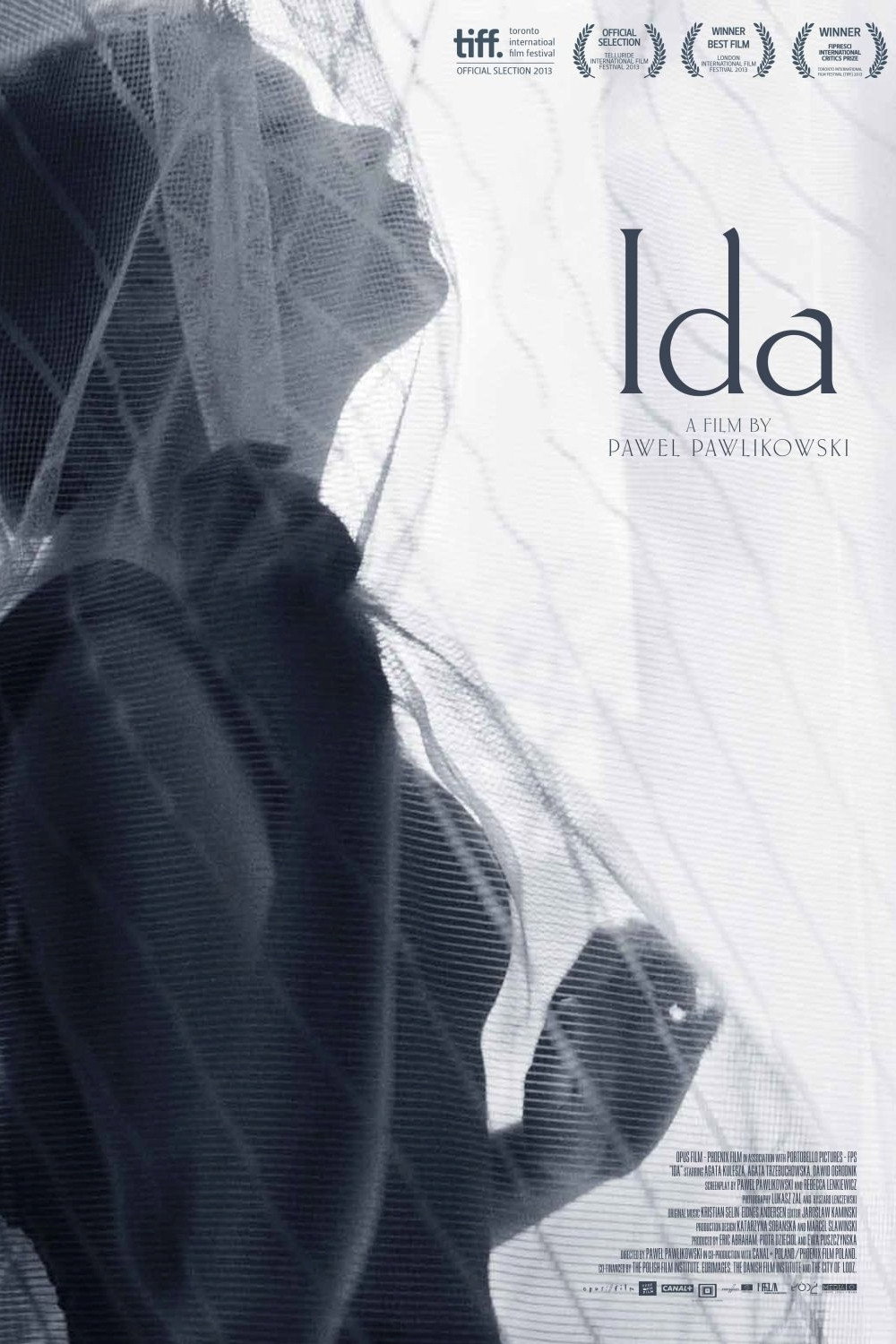
The consensus on Ida is firmly positive: all twenty reviews favour the film, with praise clustering around its black-and-white photography, precise framing and two lead performances. Most critics find that Pawlikowski’s spare storytelling gives the exploration of faith, identity and Polish history considerable emotional force. Agata Kulesza’s Wanda draws particular praise for her complexity, while the relationship between the two women makes the historical suffering personal rather than remote. The silence and restraint are widely seen as sources of feeling, not obstacles to it.
The differences concern how much that restraint allows through, with enthusiasm ranging from warm approval to emphatic praise. Vulture finds the short running time leaves the story lacking in fullness; The Playlist notes an emotional distance, and Paste suggests the subdued approach limits its resonance. These are reservations within favourable assessments rather than outright dissent: the critics largely agree on the craft, but differ over how deeply it moves them.
L
Los Angeles Times
1 May 2014 · Kenneth Turan
90*
The critic calls the film spare, haunting, and uncompromising, an exceptional work of artistry with potent emotions and indelibly beautiful images. He praises its pared-down exploration of identity, trauma, and Polish history through a young woman’s search.
Pawlikowski returns to his roots with an exquisitely photographed and precisely told story about a young nun's journey of personal and national reckoning in 1960s Poland. It reaffirms his status as an important world auteur through compelling characters and austere black-and-white imagery.
Pawlikowski condenses European and cinematic history into a spare, haunting minimalism that functions as an ineffably potent road movie of the soul. The film is elevated by two extraordinary lead performances, particularly Agata Kulesza as the complex, self-destructive Wanda.
14 September 2013 · festival review · Todd McCarthy
90*
The critic praises Pawlikowski's delicate, quiet handling of heavy historical themes through a young woman's perspective in 1960s Poland. He singles out the stunning black-and-white cinematography and Agata Kulesza's vivid performance as the aunt for particular acclaim.
The critic hails the film as a compact masterpiece defined by silence, portraiture, and fervent austerity that evokes anger and mourning. He singles out its charged return to Polish history and themes of acknowledgment over revenge.
The critic praises the film as a concise, folk-tale-like drama about an orphan novice uncovering family secrets in postwar Poland. He highlights its alert handling of historical absurdities and horrors alongside its simple narrative strength.
Pawlikowski’s stark black-and-white road drama carries the weight of 20th-century Polish history through the story of a novice nun uncovering her family’s wartime fate. The film is singled out for its Bressonian austerity and visual beauty achieved through Academy ratio framing and spartan mise-en-scène.
Pawlikowski returns to form with a deeply personal tale set in 1960s Poland, centering on an orphaned nun exploring her background with her aunt. The director paints the world with delicate brushstrokes in evocative monochrome.
Pawlikowski returns to Poland for a story of a young woman discovering her parents' fate during the Nazi occupation. The film features deep emotions beneath a bleak surface and benefits from a captivating central performance and striking monochrome compositions.
Pawlikowski has crafted a uniquely spartan film that charts the ripple effect of history on the everyday person. Faith and sin reside in the same striking, stark frame, and the film powerfully lingers thanks to its treatment of trauma, reconciliation and iron will.
The critic describes the film as an eerily beautiful black-and-white drama that feels like a restored classic. It is praised as compelling, with superb performances and a miraculous sense of location and period.
Tragedy hangs like smoke over this spectral, startling return to form, built of sparse, painterly snapshots in an off-kilter frame. It is bleak and unforgiving but also richly sympathetic and deeply moving.
The review describes the film as an eerie, out-of-time coming-of-age story with a stark, arresting visual style reminiscent of classic European cinema. It commends the potent portrait of repression and buried pasts while noting the short runtime leaves it somewhat lacking in fullness.
Pawlikowski is commended for his empathetic exploration of illusions as emotional anchors amid brutality and loss. The review highlights the film's classical black-and-white aesthetic and its insightful contrast between the two women's responses to traumatic revelations.
The critic describes the severe drama as an ultra-restrained homecoming that delves into Poland’s troubled history through a convent-bound orphan discovering her Jewish roots. It connects anti-Semitism and faith questions in a festival setting.
The critic calls it a riveting, challenging, rewarding meditation on faith, identity, and history in 1960s Poland, praising the authentic performances of the two leads and the director's confident, timeless black-and-white style reminiscent of classic cinema.
The review calls Ida a poignant and understated gem that succeeds as an intense character study despite its short runtime. It singles out the meticulous framing and the way the film raises profound questions for the audience.
The critic finds the film stylistically arresting with remarkable assurance and a striking central performance, noting its personal authenticity as a homecoming project. They single out the evocative cinematography and subtle handling of heavy themes but note some restraint that holds the viewer at a distance.
The critic praises the film's still, painterly black-and-white visuals that capture quiet contemplation. She highlights the strong performances and how the story explores Poland's hidden past through the bond between the two women.
The critic finds it a touching, low-key story of personal transformation with wry humor and sadness, praising the lead performance and gorgeous black-and-white cinematography in a square frame, but notes the subdued approach may make it less resonant.
Ordered by the weight we give each publication, then by score. Scores are normalised to 100; * means inferred from an unrated review. Summaries are ours, not quotations; follow the links for the reviews themselves. How we rate