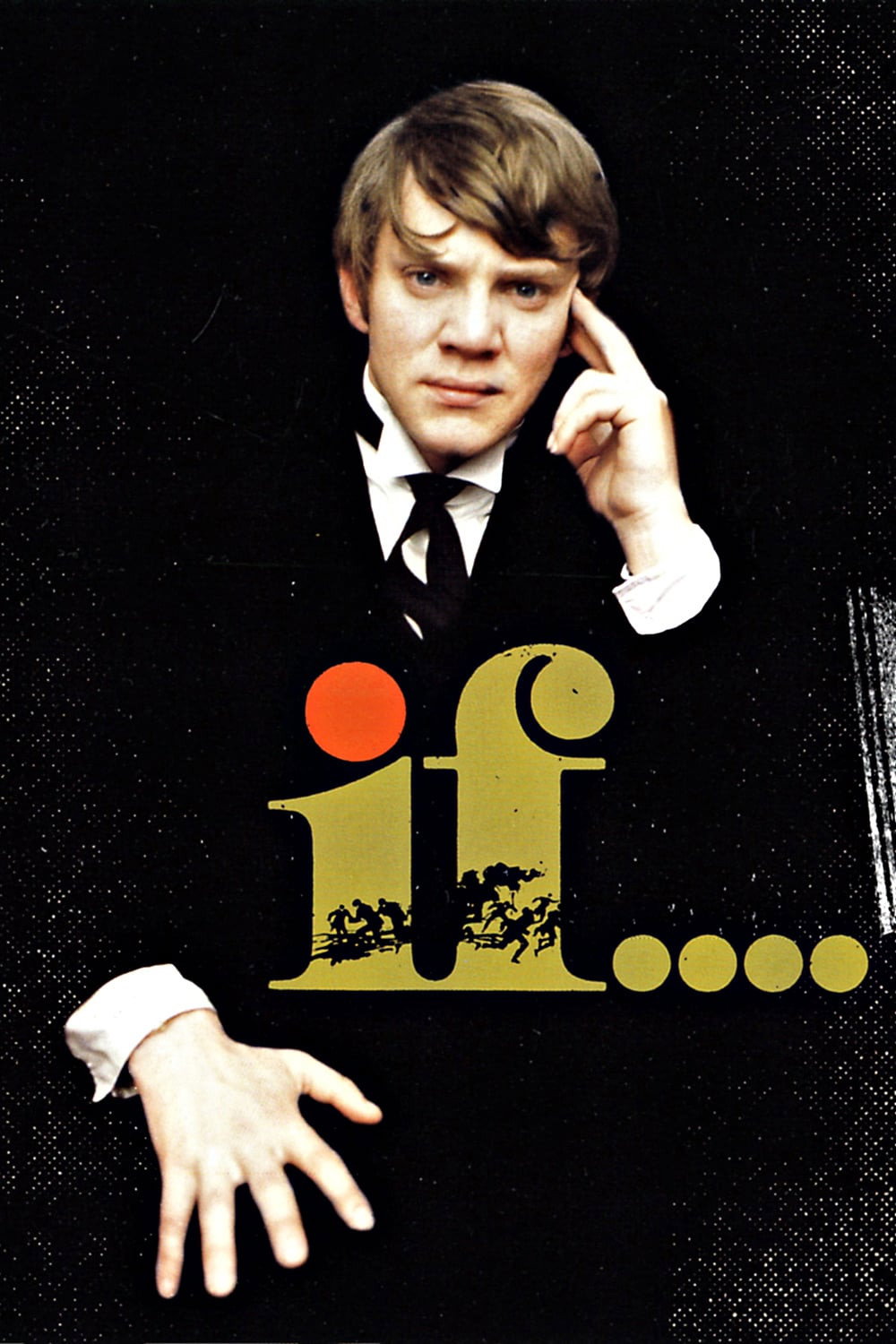
Critics’ reviews

if.... (1968)

7 reviews from 7 publications. Critics’ score 75: 6 positive, 1 mixed, 0 negative.

Back to our review of if....

75
Positive
6
Mixed
1
Negative
0

Most critics respond warmly to if…., praising its attack on public-school repression and the class assumptions behind it. The reviews repeatedly credit its close observation of school rituals, bullying and institutional cruelty with giving the satire force beyond its setting. Malcolm McDowell’s performance is a recurring strength: Radio Times praises its ferocity, while The New York Times singles him out within a strong ensemble. Empire particularly values the film’s subversive wit and mischievous anarchy.

The reservations centre on how successfully that observed reality accommodates surrealism. The Guardian finds the ending loose, while Time Out considers its logic sound. Eye for Film also finds some surreal elements unconvincing, despite admiring the handling of institutional sadism. The spread is mostly favourable, with one substantial dissent: The New Yorker finds a bleak solemnity and lingering attention to schoolboy cruelty that limit the appeal of its vision of revolt.

Empire
1 January 2011 · Adam Smith
85*

The critic praises the film's enduring mischievous anarchy and subversive wit as a gleeful attack on public-school repression and English society. They highlight its unique structure blending surrealism with reality and its superior passion and craft compared to other youth-revolt films.

Read the full review →
Radio Times
★★★★ · David Parkinson
80

The film succeeds in capturing the atmosphere and absurdities of public school life while investing its satire of class-ridden British society with plenty of venom. Malcolm McDowell gives a blistering performance.

Read the full review →
The Guardian
1 March 2002
80*

The film is a High European classic that is also quintessentially English. It rivetingly evokes the nastiness of the public school establishment with brilliant touches and terrific brio, though the surrealist ending feels flabby.

Read the full review →
The New York Times
10 March 1969 · Vincent Canby
80*

The critic finds the film good and strong despite some mistakes, describing it as a very human, very British social comedy that aspires to the cool, anarchic grandeur of Godard films while pushing clear-eyed reality to its outer reaches. It singles out the strong ensemble acting, particularly Malcolm McDowell's debut performance as Mick.

Read the full review →
Time Out
10 September 2012 · SG
80*

Anderson minutely captures both the particular ethos of a public school and the general flavour of any structured community, achieving clear allegorical force. The conclusion's logic is impeccable despite drawing from an earlier film.

Read the full review →
The New Yorker
8 March 1969 · Pauline Kael
50*

The critic questions whether the film is a masterpiece despite advance raves, viewing it as a schoolboys' revolt modeled on Jean Vigo’s “Zero for Conduct” that provides a psychological rationale for revolution but has a bleak, pseudo-documentary solemnity unlikely to reach a broad audience. It singles out the lingering attention to juvenile sadism, flogging, and homoeroticism in the boarding-school setting.

Read the full review →
Eye for Film
20 July 2007 · Angus Wolfe Murray
70*

The critic describes the film as a satire on English public schools that captures institutional sadism and bullying effectively, praising Malcolm McDowell's anarchic performance and the director's handling of the caning sequence, but notes some false notes and surreal elements that don't quite work, concluding it almost changes the world but not quite.

Read the full review →

Ordered by the weight we give each publication, then by score. Scores are normalised to 100; * means inferred from an unrated review. Summaries are ours, not quotations; follow the links for the reviews themselves. How we rate