Critics’ reviews

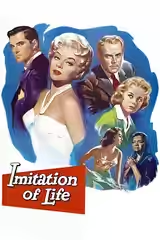
Imitation of Life (1959)

8 reviews from 8 publications. Critics’ score 78: 7 positive, 0 mixed, 1 negative.

Back to our review of Imitation of Life

78
Positive
7
Mixed
0
Negative
1

Most critics take Imitation of Life for a melodrama that knows exactly what it is doing. The praise clusters on Sirk’s direction: the Technicolor surfaces, the open manipulation, and the way the weepie machinery is turned against the racism and commercialism it appears to serve. Juanita Moore and Susan Kohner, as the mother and the light-skinned daughter who rejects her, draw the warmest notices, and their subplot is repeatedly named the strongest thing in the film. Nearly everyone mentions the funeral.

The spread is narrow at the top and then drops sharply. Seven of eight reviews are positive; the one dissenter is The New York Times, writing on release, which finds a shameless tear-jerker with banal dialogue and overacting. Later critics tend to read that excess as deliberate, and Collider notes the film was dismissed as soap before being recognised for its boldness on race, class and gender. Variety, also at the time, is warmer but measured: a solid remake, with Lana Turner outstanding.

Empire
1 February 2007 · ★★★★★ · Ian Freer
100

The critic calls it a consummate display of populist weepie-making that edges out the 1934 version thanks to Sirk's ersatz style and masterful manipulation. Standout praise goes to the performances of Moore and Kohner, especially their hell-for-leather confrontation scene.

Read the full review →
Slant Magazine
3 July 2003 · Ed Gonzalez
90*

Sirk's film is a sardonic melodrama that exposes the deranged surfaces and racial realities of American society through its story of ambition, passing, and maternal sacrifice. The critic praises its rigorous mise-en-scène, Brechtian distancing, and sensitive handling of the light-skinned daughter's rejection of her mother as a subversive critique of white America's relationship to people of color.

Read the full review →
The New Yorker
26 March 2015 · Richard Brody
90*

Sirk unleashes a melodramatic torrent of rage at the corrupt core of American life including racism, commercialism, and puritanism. The grand finale funeral is a trumpet blast against social façades.

Read the full review →
Time Out
31 March 2015 · GA
85*

Sirk's final Hollywood film is a coldly brilliant weepie that undercuts romantic sentimentality with racial tension and the breakdown of family bonds. The critic highlights a key moment where emotional payoff is undercut by the daughter's rejection of her mother and the unforgettable funeral scene that reveals underlying hopelessness.

Read the full review →
Little White Lies
4 December 2016 · Sophie Monks Kaufman
80*

Sirk's 1959 melodrama is a perfect vehicle for encoding awareness of racial injustice in America through emotional arcs and Technicolor surfaces. The piece singles out Juanita Moore's performance as Annie for embodying the tragedy of a Black woman navigating subservience and limited aspirations in a racist society.

Read the full review →
Variety
31 December 1958 · Variety Staff
70*

The film is a solid remake with Lana Turner outstanding as the ambitious actress. The subplot of the light-skinned daughter passing as white, played memorably by Susan Kohner and Juanita Moore, emerges as the strongest element.

Read the full review →
The New York Times
19 April 1959 · Bosley Crowther
30*

The remake is another shameless tear-jerker in the soapy vein of the 1934 version, with hackneyed encounters, banal dialogue, and excessive acting. A funeral scene provides the final emotional pull but the whole is marked by bathos and banality.

Read the full review →
Collider
18 August 2024 · Liam Gaughan
80*

The critic views Imitation of Life as a controversial yet progressive masterpiece that was initially dismissed for its melodrama but later recognized for tackling race, class, and gender more boldly than most Old Hollywood films. They single out its complex portrayal of biracial identity and Sarah Jane's struggles as a key element that influenced later directors like Todd Haynes.

Read the full review →

Ordered by the weight we give each publication, then by score. Scores are normalised to 100; * means inferred from an unrated review. Summaries are ours, not quotations; follow the links for the reviews themselves. How we rate