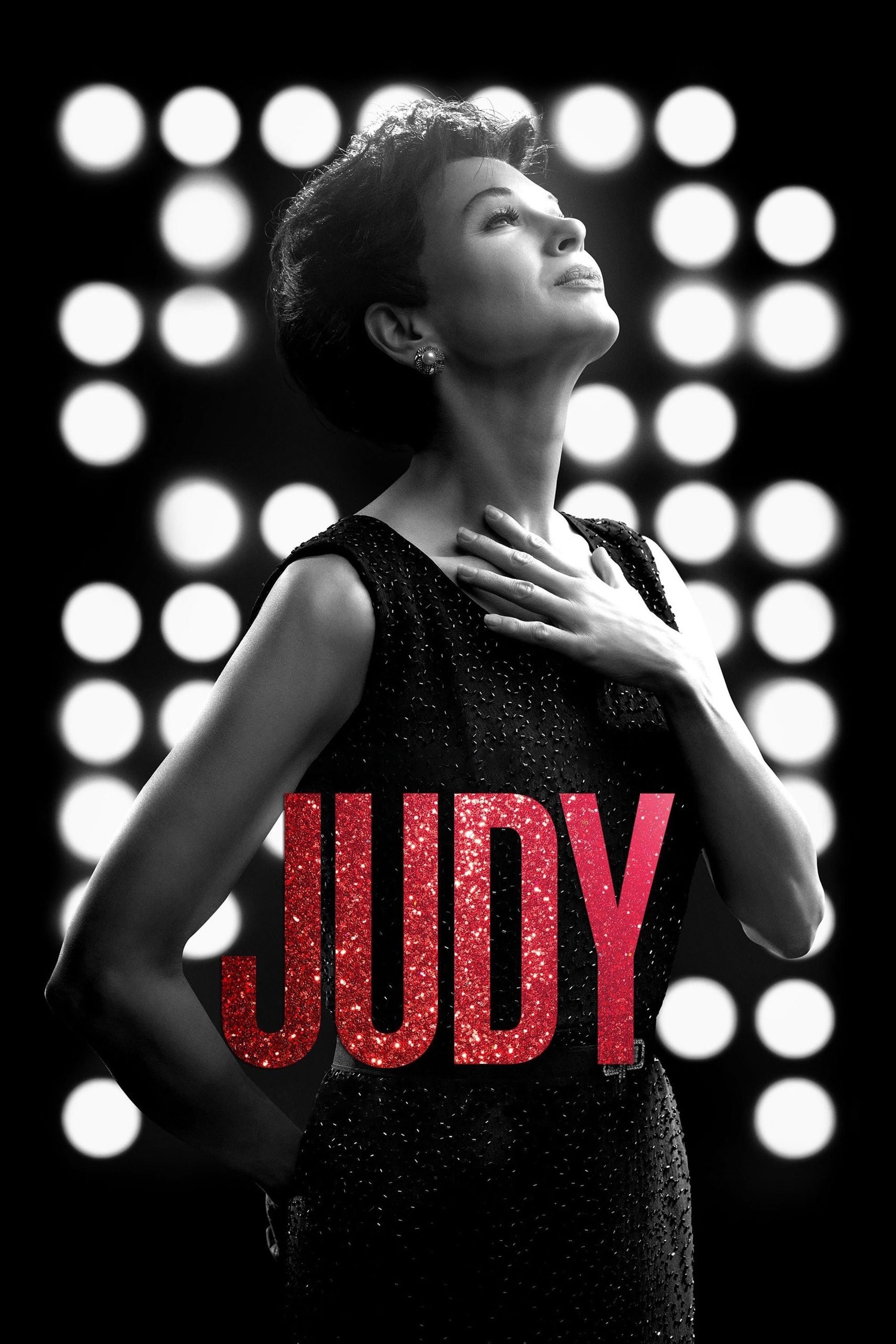
Most critics like Judy, and nearly all like it for the same reason. Renée Zellweger’s performance as Judy Garland in her final London season is the centre of almost every review, praised for raw feeling over mimicry and for her own singing. The stage sequences draw the warmest notices, with one critic singling out a single-take opening-night number as the film’s high point. Several reviews credit Rupert Goold with finding a darker, sadder note than the usual star biopic.
The reservations cluster around everything else. The flashbacks to Garland’s MGM childhood are widely found heavy-handed, the supporting cast thin, and the uplifting finale out of key with the sadness of the story. A few go further: The New York Times and Vulture think the film flattens Garland into a martyr, and RogerEbert.com, one of only two outright negative reviews, calls the performance itself an overdone impression. The spread is wide, from unqualified raves to those dismissals, but the middle is large and fond.
L
Little White Lies
28 September 2019 · 3/5/5 · David Jenkins
100
Zellweger delivers a performance of awe-striking confidence and emotion in a music biopic that transcends its subject. It is an old-school tragedy deserving of the name.
The critic finds the biopic a moving, fullhearted tribute to Judy Garland that probes sentimentality and self-obsession. Zellweger's jaw-dropping performance fills the film with nuance, warmth and narrative purpose.
The review praises Renée Zellweger's performance as overwhelming and magnetic, capturing Judy Garland's trauma, hunger, and resilience in a way that overshadows the film's conventional biopic structure. It singles out Zellweger for turning the film into something more ambitious than a simple tribute by embodying broader themes of industry sacrifice and societal pressure on women.
Zellweger delivers the most fiercely committed performance of her career in this brilliant biopic. She devours the role of late-era Garland, making it one of the great film-star biopics.
Zellweger gives her all in a gutsy, can't-look-away portrait of Garland's final year that prioritizes raw feeling over technical mimicry, with Goold and the star illuminating something of each other in a star vehicle that holds up its end. The shambolic London residency is affectingly rendered as one star working through her own story via another's.
Zellweger delivers an empathic, soulful performance that earns its Oscar buzz, matched by a screenplay and direction that find human depth in Garland's final London season. The critic singles out the way the film peers into the heart of darkness while honouring the icon through Zellweger's singing and acting.
Zellweger is tremendous, throwing everything at her portrayal of Garland. She looks, sounds and even sings like her at best, though the film sentimentalises the ailing performer’s cabaret run and supporting cast is mostly lifeless.
Zellweger gives one of her best performances ever as Garland, bringing nuance, depth, and effective live renditions of classics that extend her range and ensure the film resonates despite being fairly standard biopic fare. The work reminds viewers of Zellweger's impressive presence and portrays the Garland we have read about with heart.
Rupert Goold's film is an awards-friendly biopic that strikes a darker, maudlin note, with Zellweger giving the performance of her career as a wrecked Judy Garland. It is solid and competent but never transcends its one-woman show structure.
Zellweger is phenomenally good in this captivating account of Garland’s final London concert run. The film is Zellweger’s throughout, with strong performance moments on stage but some heavy-handed flashbacks and peripheral supporting characters.
Zellweger delivers a transcendent, incarnation-like performance as Garland that fuses impersonation with deep emotional sympathy, especially in a bravura single-take opening-night number, though the rest of the film relies on dramatic clichés and conventional direction. The script, based on Peter Quilter's play, effectively conveys the abusive studio system and Garland's longing for ordinary family life.
The critic calls the drama strenuous but soapy, with Zellweger as its trump card in a jittery, wounded performance that shows startling transformation. Director Goold subverts expectations in an Oscar-reel-friendly showcase.
The film is an enjoyable, sincere backstage drama bolstered by Zellweger's strong performance but never exposes the dark heart of Garland’s last years or achieves real complexity. It singles out the simplistic flashbacks and feel-good climax that diminish a sad, tragic story, though stage sequences and some character moments are praised.
Zellweger rises to the occasion in a dreamlike portrait of Garland on the rocks. The script zooms in on the car-crash years with tabloidy zeal that feels faintly unseemly, though the bond between Judy and her audience comes through.
Renée Zellweger plays variations on a late-career Judy Garland as a worried mother, needy lover, disaster, and legend in a gentler, squarer mash note that is part maternal melodrama and part martyr story. The film is based on the play End of the Rainbow and focuses on her London comeback attempts but avoids the rawer, scarier aspects of the real Garland.
The film is more interested in Garland's tragedies, addictions, and breakdowns than her full humanity, flattening her into a martyr figure despite Zellweger's committed and electric performance in key scenes.
26 September 2019 · festival review · Monica Castillo
30*
The film revisits the final months of Judy Garland's life, highlighting her struggles with finances, custody, and performance pressures alongside flashbacks to her abusive childhood at MGM. Zellweger's performance is seen as an overdone impression that distracts, with poor direction of musical numbers, though the contextualization of Garland's early trauma is a humanistic strength.
Zellweger delivers a bravura performance as the aging Garland, especially in the musical numbers, but the film is undermined by unnecessary flashbacks and an uneven script that fails to trust its present-day story.
Zellweger gives a stunning, transformative performance that centers the story on the person rather than the celebrity, highlighting Garland's emotional connection to her audience and the gay community in an otherwise standard biopic.
The critic praises Renée Zellweger’s masterful, transformative performance as Judy Garland, in which she fully disappears into the role. The film is noted for its empathetic portrayal of Garland’s later-life struggles and resilience without excessive pathos.
The film is structurally flawed with weak transitions but effective overall, thanks to Zellweger's exceptional, eye-catching performance capturing Garland's volatility and pure desires amid a tragic life story.
Zellweger delivers a sensational performance as a bruised yet dignified and triumphant Garland, making the semi-conventional biopic worthwhile through her poise and presence. Goold excels in the stage performance scenes but leaves some relationships underexplored.
Zellweger brings fine art to this mainstream biopic of Garland's later life, capturing her paradoxical power and fragility with precise body language, emotional intensity in stage performances, and smaller telling moments. The film elegantly balances her razzle-dazzle with underlying melancholy.
The review highlights Zellweger's magnetic and note-perfect performance as the film's highlight, noting some issues with the uplifting tone of the finale but concluding her work makes it worthwhile.
Zellweger gives a gargantuan, complex performance as Judy Garland, capturing her spirit and complexities through restrained and grandiose moments as well as impressive vocals. The film respectfully portrays her talent amid tragedy but features some clumsy subplots and ends on an overly schmaltzy note.
The critic finds the biopic uneven and surface-level but praises Zellweger's extraordinary, transformative performance as the standout element, especially her raw rendition of 'Over the Rainbow'.
Ordered by the weight we give each publication, then by score. Scores are normalised to 100; * means inferred from an unrated review. Summaries are ours, not quotations; follow the links for the reviews themselves. How we rate