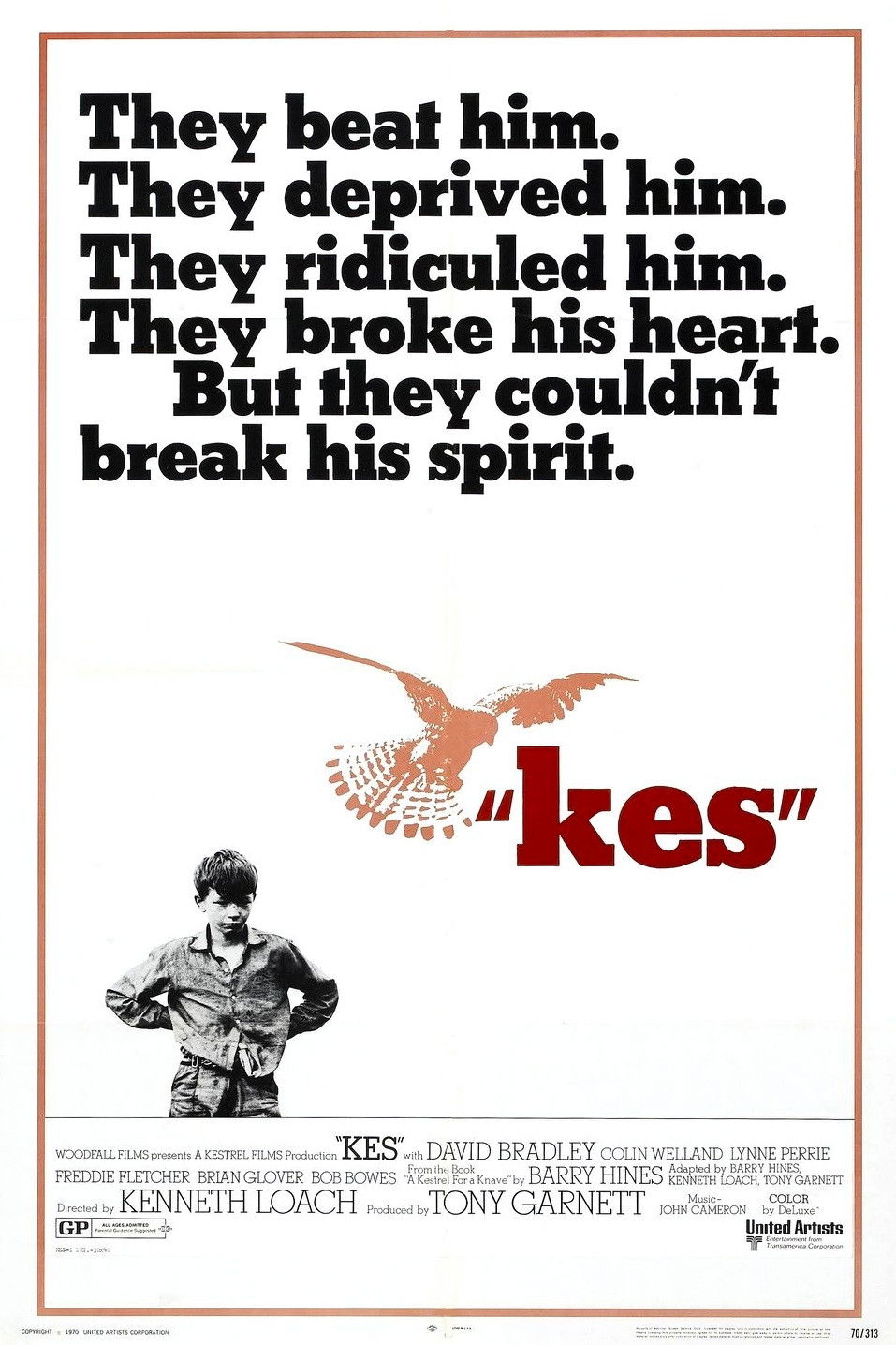
The critic calls Kes a masterpiece of British cinema that endures across audiences. They single out Loach’s observational aesthetic, use of nonprofessional actors, and sincere handling of dialect and character for praise, noting how tragedy lands without sentimentality.
The critic praises the film's humanity, realism, and humour despite some technical imperfections and unconventional style. They single out the authentic non-professional performances, especially David Bradley as Billy, and the central relationship with the kestrel as a powerful image of freedom and survival amid a spirit-crushing system.
15 November 2011 · festival review · Michael Sragow
85*
Sragow describes the film as fierce and heartbreaking, praising its conveyance of the restorative power of wild things through beautiful cinematography of the boy and his kestrel. He singles out the emotional climax in the English class and Bradley's tremendous performance.
Loach's debut feature remains a landmark of British cinema for its quasi-documentary realism and natural performances from non-professionals. The simple beauty of the story about a boy and his kestrel shines through in this re-release.
The critic calls Kes an English classic and praises its portrayal of a working-class boy's bond with a kestrel amid harsh circumstances. Loach's naturalism and the nonprofessional lead performance are singled out as deeply affecting.
Kes remains Loach’s most elegiac and powerful portrait of working-class struggles, transcending time through its poetic allegory and lyrical falconry scenes. It stands out as one of his rare forays beyond blunt didacticism into something more timeless and humane.
Loach is at his best with this warm, moving story of a misfit boy in a harsh class-biased system who finds purpose training a kestrel. The film has heartbreaking humanity and reaches emotional peaks in its handling of the boy and his bird.
The film captures the gritty quality of Northern life and the mix of rural and industrial elements in Barnsley. Loach succeeds with his young players and non-professional cast, though it lacks some autobiographical depth compared to similar films.
Kes is an honorable, decent sort of movie that is never quite as interesting as the people within it. Director Kenneth Loach has a remarkable talent for handling actors and obtaining memorable performances from nonprofessionals.
Kes marked a new maturity and stillness in Loach’s work while retaining energy, humour and compassion. The film is astute about education and what excites children to learn, with tender scenes of Billy and his kestrel standing out.
The filmmakers vividly capture the drab Yorkshire background and the boy's life through local non-actors, highlighting the grim side of education and home. Performances are strong, especially the lead, with dedicated direction and superb moorland footage despite a rough style.
The critic calls Kes a true classic and milestone of British cinema, a deeply personal and humble film that blends socio-political commentary with emotional human drama. They single out the authentic, compelling performances (many by non-actors) and the contrast between the boy's stifling town life and his liberating connection to nature and the kestrel for praise.
Ordered by the weight we give each publication, then by score. Scores are normalised to 100; * means inferred from an unrated review. Summaries are ours, not quotations; follow the links for the reviews themselves. How we rate