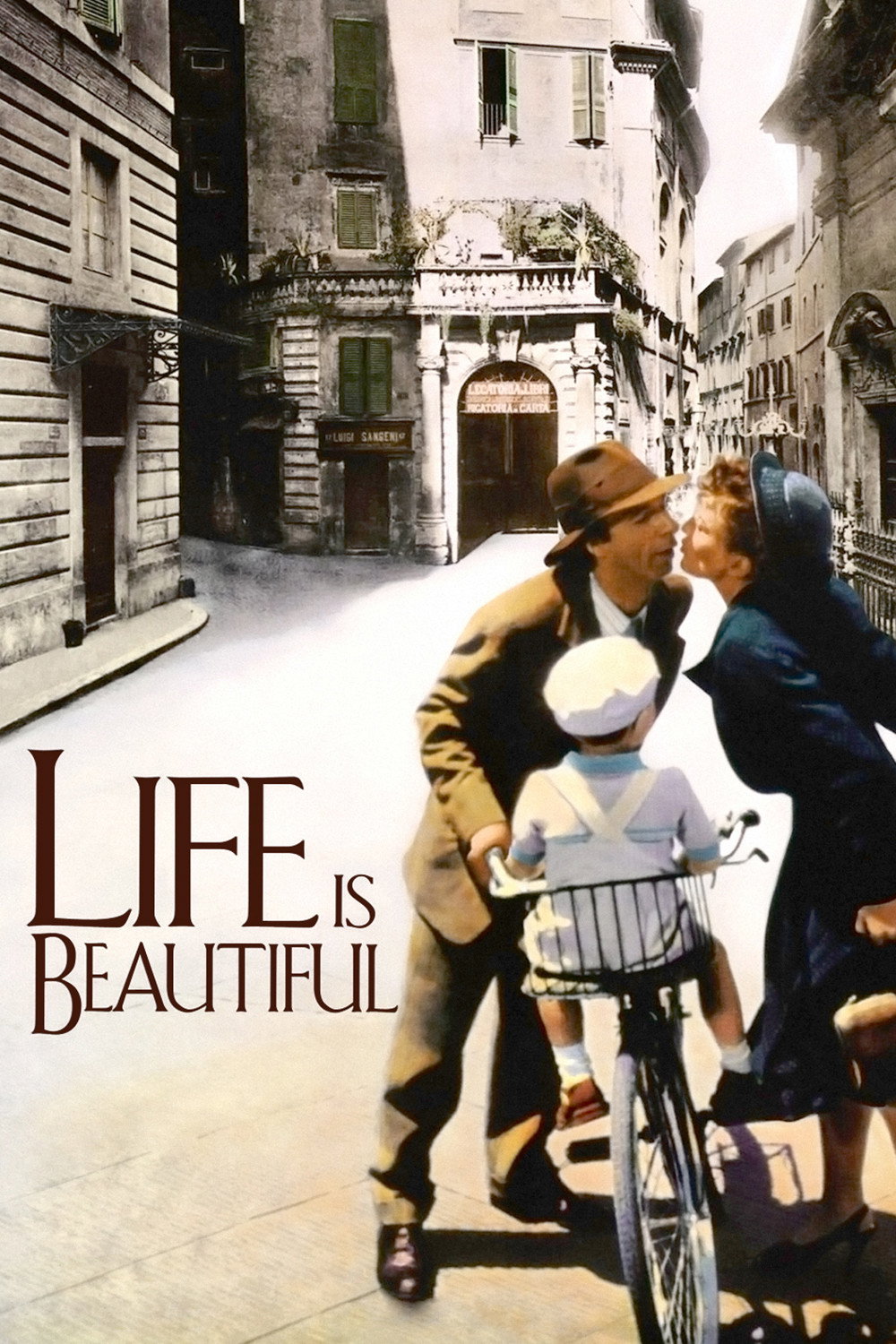
Benigni's film is monumental for its daring mix of humor and the Holocaust, portraying the camps as a game to shield a son's innocence. The critic highlights the surreal weirdness of evil captured by making viewers laugh amid terror, as in the early romantic farce turning ominous with anti-Semitic imagery.
Benigni has crafted a genuinely remarkable film as powerful, moving, and capable of indelibly etching itself on the brain as Schindler's List. It transcends controversy over its subject with sheer inventiveness and energy, its emphasis placed firmly on the beautifully staged romance between Guido and Dora.
The film is a soothing but unconvincing and self-congratulatory fable that trivializes the Holocaust by turning it into a game and protects the audience from its true horror.
Benigni uses comedy as a weapon to protect his son in a concentration camp, showing human ingenuity and hope amid horror rather than making light of the Holocaust itself.
The critic praises Benigni's audacious attempt to make a comedy about the Holocaust, highlighting the film's recognition of the impossibility of representing such horror while affirming life through comedy rooted in commedia dell'arte and Chaplin. The first hour's depiction of Guido's love for Dora is singled out for its emotional strength and beauty.
The critic finds Benigni's comedy sincere but horribly misjudged and fundamentally mendacious. It presents the Holocaust as a gently touching tragedy with a happy ending while denying the depth of its horrors through softened camp scenes, kitsch imagery and self-deception as a survival tactic.
Benigni daringly finds humor and tenderness in a Holocaust story, creating an entertaining and passionate fable that works despite its difficult subject.
The review calls the film audacious but misguided, finding the early romantic comedy section amusing but the concentration camp sequences sickly, disingenuous, and overly sentimental. It criticizes the manipulative approach to the Holocaust as inadequate and maudlin.
The critic praises the film's brave blend of comedy and tragedy, highlighting Benigni's masterful performance as the father who protects his son in the concentration camp by turning it into a game. The review notes it as a genuine classic that evokes strong emotions.
The critic discusses the film's bold approach to the Holocaust through humor, noting unease with the light-hearted treatment but acknowledging Benigni's courage; praises the fable-like quality but finds admiration tempered by discomfort with the deception of the child.
Ordered by the weight we give each publication, then by score. Scores are normalised to 100; * means inferred from an unrated review. Summaries are ours, not quotations; follow the links for the reviews themselves. How we rate