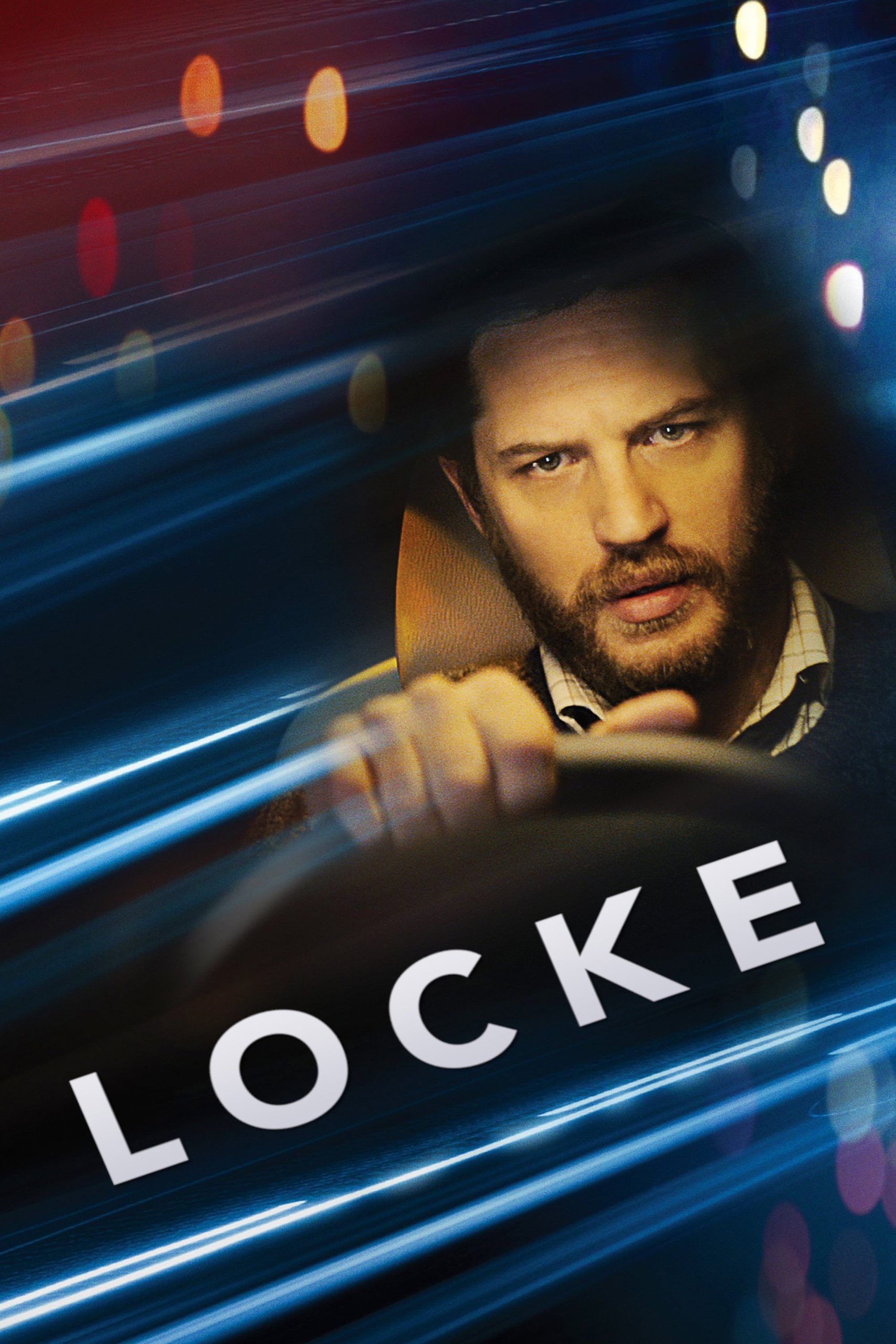
Most critics respond warmly to Locke, with praise centred on Tom Hardy’s controlled performance and the tension Steven Knight sustains inside a single car. The reviews repeatedly single out Hardy’s voice, precise delivery and expressive close-ups as enough to make a life beyond the vehicle feel present. For the majority, the restricted setting gives the personal and professional crises an urgency that needs little physical action.
The spread is wide, however, and the central disagreement concerns how much cinema Knight makes from his premise. Some admire the reflections and close framing; others find the images repetitive and the drama too theatrical. The AV Club sees contrived phone conversations and an acting exercise with limited cinematic imagination. Slant Magazine admires the phone-call structure but objects to explicit symbolism, while even several favourable reviews acknowledge the strain of the setup. Hardy attracts praise across the divide.
E
Empire
13 February 2014 · Olly Richards
90*
The critic calls the film a daring experiment brilliantly executed, highlighting its thriller elements of whispers and silences rather than action. Tom Hardy's economical and riveting lead performance is singled out as one of his career bests.
Tom Hardy's mesmerizing acting and Steven Knight's whip-smart direction turn the single-location premise into something continuously involving and tense. The critic notes how the micro-budgeted film's hypnotic execution outpaces more expensive productions despite its contrived setup.
The film succeeds as a cinematic stunt thanks to Tom Hardy's mesmerizing one-man performance as a man driving through a night of personal and professional crisis. The critic praises the way the constrained format deepens the portrayal of moral choice and emotional weight.
Tom Hardy proves he can act in a minor key in this compelling portrait of a man in transit and in crisis. The film is a bold, evocative drama in which voices, intonations and noises off build up a detailed picture of a world and a man's life, as elegantly and economically as the best radio play.
The critic calls it a virtuoso narrative and technical experiment in real-time minimalist storytelling, driven by Tom Hardy's knockout performance as a man whose life unravels during a fraught car journey.
Locke is a gripping and deeply cinematic human and ethical drama and one of the few real revelations of the Venice Film Festival; Hardy gives a magnificent performance as a decent man determined to do the right thing.
The critic finds the film a clever stage play transposed to screen that just fulfils its remit as a movie, thanks to a stunning central performance from Tom Hardy.
Tom Hardy gives the performance of a lifetime in this self-contained tour de force; it is an unexpectedly thrilling real-time drama shot almost entirely inside a car.
Knight delivers a taut story that could hardly be more contained; it is a brilliant performance from Hardy and a masterclass in how local stories can reverberate with universal themes.
The critic praises the daring one-man, one-car setup as an extraordinary tour de force powered by Tom Hardy's volatile, memorable performance and Knight's classical execution.
The minimalist road movie keeps viewers engaged through intimate close-ups of Tom Hardy as a construction foreman navigating family and work crises via phone calls while driving. The critic highlights the film's focus on emotional geography and the power of the human face in close quarters.
Tom Hardy is increasingly unhinged in this gripping, nocturnal road movie. Locke is a compact, nocturnal character study using the car as a vehicle to cruise through competing male preoccupations, with Hardy unmasked as a performer of considerable skill.
The critic views it as a conceptually austere but ultimately unsatisfying glorified acting exercise, undermined by contrived phone conversations and limited cinematic imagination despite Hardy's effort.
The review finds Tom Hardy's mellifluous voice very good value in this low-budget drive-time drama but criticizes the script for trying too hard to make the protagonist likable and the visuals for being repetitive. It concludes the film will work better on television than in cinemas.
The critic finds Knight's screenplay thrilling in its prismatic phone-call structure but faults the literalizing symbolism and theatricality that reduce it to square drama therapy.
Locke is a daring British film that sounds rather contrived when you try to explain it, and yet works with silky ease. It is a movie with a pace that never slackens, and yet still allows you to feel you’re being given time to recollect, reflect, look about.
The critic calls the film a daring, riveting drama that succeeds brilliantly as a theatrical experiment confined to one car. Tom Hardy's contained, tour de force performance is singled out as the captivating anchor that creates a complete character through voice alone.
The critic finds the film a surprisingly captivating picture created under its strict constraints. He singles out Tom Hardy's meticulous line delivery and ability to hold the screen alone for praise.
The review praises the film as an impressive achievement that offers a complete portrait of its protagonist through nuanced writing and performance, highlighting the lead actor's range.
The film is a rewarding and at times brilliant tight thriller driven by a magnetic lead performance. It singles out Tom Hardy's steadfastly calm portrayal as the key to selling the single-location concept.
This is a well-judged, well-acted absorbing drama and an exciting break from the norm. It singles out Tom Hardy's mesmerising performance for praise, heightened by the moving background.
Locke is a thrilling single-person piece that must be considered a modern equivalent of Beckett. It singles out the intense close-ups on Tom Hardy's face and the visual stimulation of reflections in the car for praise, while noting the obvious metaphors as a minor flaw.
The critic finds the film an incredible acting exercise centered on Tom Hardy's solo performance but notes it functions more as a one-man play than a fully cinematic experience, lacking visual dynamism.
The review is mixed on the minimalist exercise, finding the writing contrived and themes heavy-handed while ultimately viewing it as a banal midlife crisis tale. It praises Tom Hardy's genuine performance and the film's hypnotic visual style.
Ordered by the weight we give each publication, then by score. Scores are normalised to 100; * means inferred from an unrated review. Summaries are ours, not quotations; follow the links for the reviews themselves. How we rate