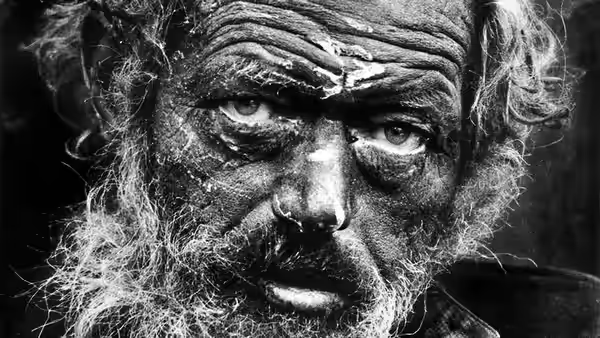
Don McCullin’s thoughtful commentary makes this a moving portrait of a life shaped by work in war zones. David Morris and Jacqui Morris listen sympathetically, though their film could use a little more questioning.
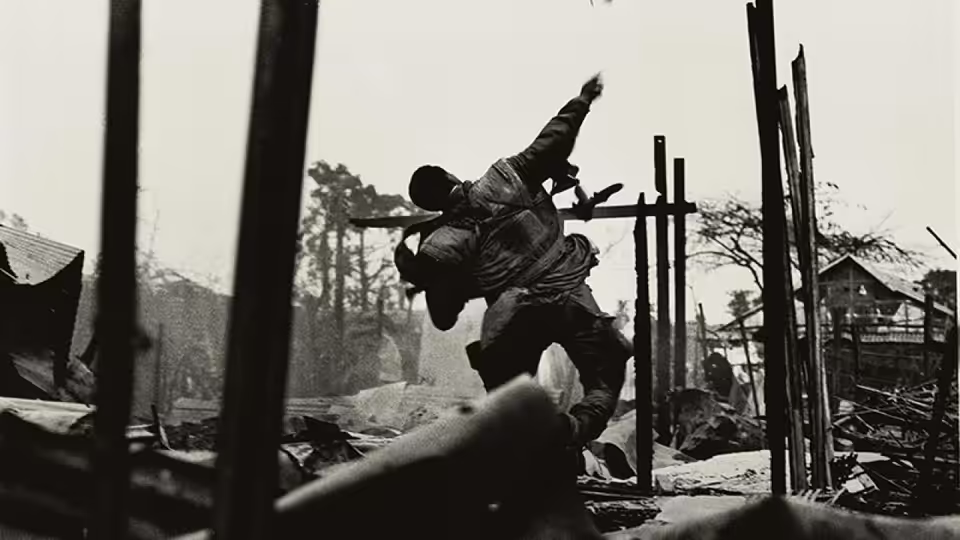
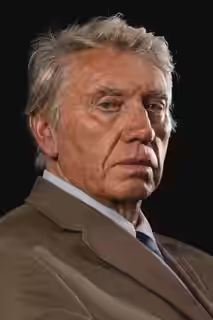
McCullin is an affecting documentary, worth seeing for the thoughtfulness of the man at its centre, though we wanted a more questioning film around him. David Morris and Jacqui Morris attend closely to Don McCullin’s account of work in war zones and its effect on his life. He is an eloquent subject, able to explain experiences that might defeat a less reflective speaker. The interest lies in listening to him consider what they mean.
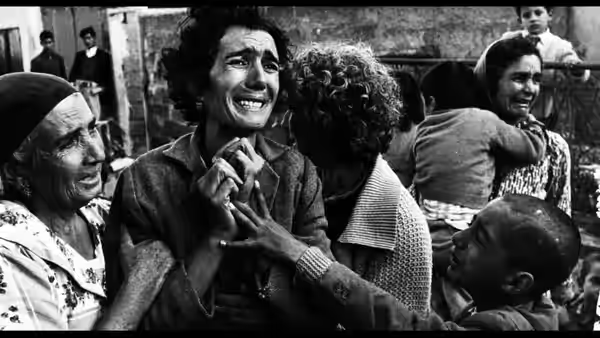
The filmmakers’ sympathy is understandable. McCullin describes a life committed to looking at things other people cannot bear to see, a purpose that can sound forbiddingly grand when reduced to a sentence. His sensitive commentary makes the person behind that purpose easier to understand. A documentary like this needs to establish why we should spend time with its subject beyond the fact that he has been somewhere dangerous, and McCullin gives it that reason.
The directors make good use of his ability to speak for himself. Giving an articulate subject space is a sensible choice, and the commentary supplies the film’s most persuasive moments. We can follow a thought rather than simply register that something terrible has happened, which makes the experience more involving. The danger of this approach is that a persuasive account can begin to feel sufficient in itself; we would have liked the filmmakers to be less readily satisfied.
We were moved by the care in McCullin’s reflections on how his work has shaped him. What affected us was his willingness to consider the personal consequences of continuing to look at suffering. He comes across as someone for whom the subject remains difficult, however well he can speak about it. That thoughtfulness makes it possible to stay with material whose seriousness could otherwise produce only a dutiful, rather distant kind of concern.
Our reservation is that sympathy leaves some of the harder questions insufficiently tested. We wanted a stronger challenge to the idea that facing suffering is, by itself, enough to justify the work of a witness. The film’s attention to McCullin as a sensitive individual makes that challenge feel less urgent than we think it is. An admirable person can still benefit from being asked an awkward question, particularly when he answers the other questions so well.
Documentaries about war also ask something of those of us sitting safely at home, and this one encourages thought about the ease of being a concerned spectator. Listening seriously is worth doing. It should not allow us to assume that we have discharged every obligation merely by paying attention. McCullin’s account is absorbing enough that the distinction needs keeping in mind, especially when our sympathy comes so readily.
At 89 minutes, the film is a manageable introduction to a man whose work has left him with much to consider. His company is its clearest recommendation. We would have preferred more resistance from the filmmakers, but the time spent listening is worthwhile. Watch it prepared to ask questions of someone the film gives us good reason to respect.